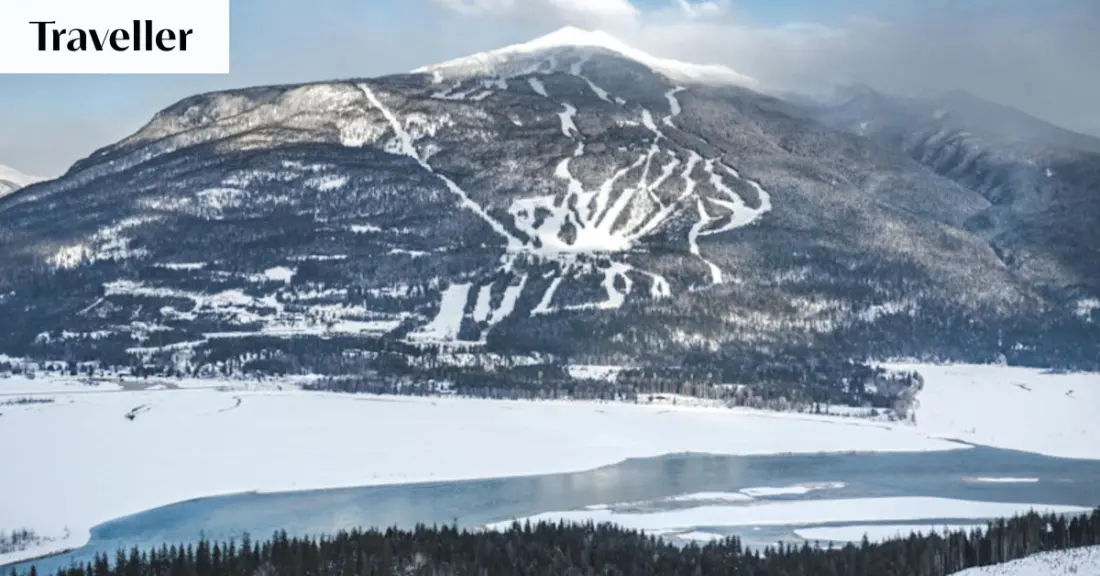
Named after a British lord who financed the railway through the mountains in the late 1800s, Revelstoke in British Columbia has turned its aristocratic inheritance into a whole identity – hence the bumper stickers urging you to "get Stoked". Sitting between the Selkirk and Monashee ranges on the Columbia River, it has become one of North America's most talked-about ski destinations without turning into a generic resort strip.
The headline numbers are at Revelstoke Mountain Resort: 1,265 hectares of skiable terrain and a 1,713-metre vertical descent, which puts it among the biggest verticals on the continent. The base village is still growing, with hotels, apartments, cafes and rental shops established and under construction, which means you can arrive to a resort that feels unfinished in a good way – more workmanlike than polished.
Big-mountain skier and filmmaker Nat Segal, an ex-Melburnian who competed on the Freeride World Tour, moved here in 2018 and calls the mountain home. Her local wisdom: the gondola is the main artery, with long blue groomers ideal for warming up legs. The Stoke Chair opens up North Bowl and Greely Bowl, plus ungroomed, off-piste terrain below Mackenzie Peak for anyone stepping up to harder lines. Powder-day strategy splits the locals – some beeline for the Stoke's steep, open bowls, others head for the lower Ripper Chair and its playful green and blue runs with forgiving tree skiing.
Revelstoke also has the highest concentration of Association of Canadian Mountain Guides members in Canada, and a dozen or so heli-skiing operations run out of town in winter. But what keeps people like Segal there is the town itself: a walkable downtown a few blocks from the main street, ice hockey games where week-long visitors cheer alongside lifelong residents, and no hard divide between tourist and local zones. She times it at seven minutes by car from downtown to the resort lot, with buses and shuttles linking the two.
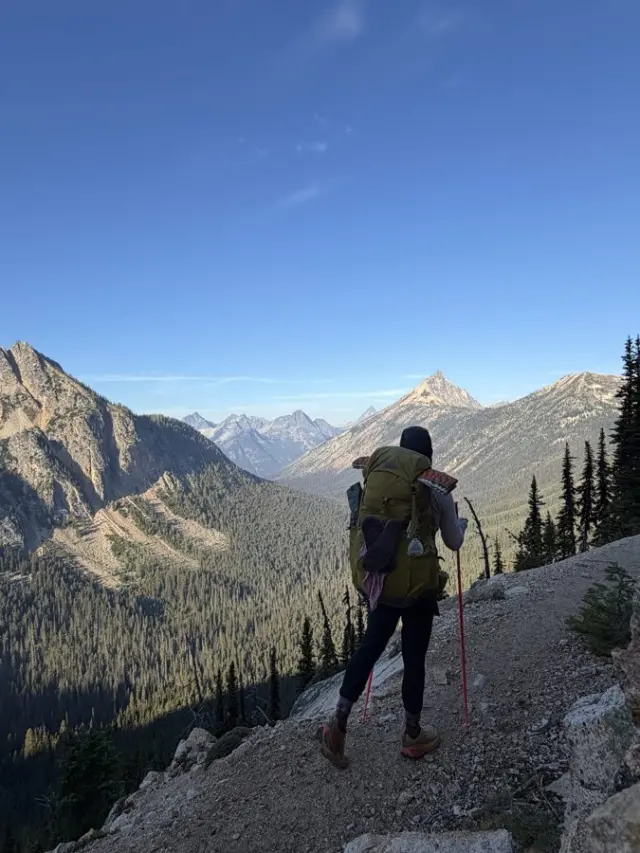
Summer flips the script – hiking, mountain biking and time on the Columbia River and glacier-fed lakes, which stay bracingly cold until late September.
Practicalities: choose between ski-in ski-out at the base (the Sutton Place Hotel runs from about CAD $469 a night in winter) or cheaper, cosier digs in town. The lift pass sits on the Ikon and Mountain Collective networks, so season pass holders from Australia's Mount Buller and Thredbo may already hold access. Fly into Vancouver, connect to Kelowna (roughly an hour in the air), then drive or shuttle about two and a half hours to town – and in winter, favour the Kelowna route over coming in from Calgary, where highway snow closures are more likely.
Who's it for? Skiers and riders who want serious vertical and steeps without resort-town artifice, and travellers happy to trade luxe polish for a genuine mountain community with real locals year-round.