
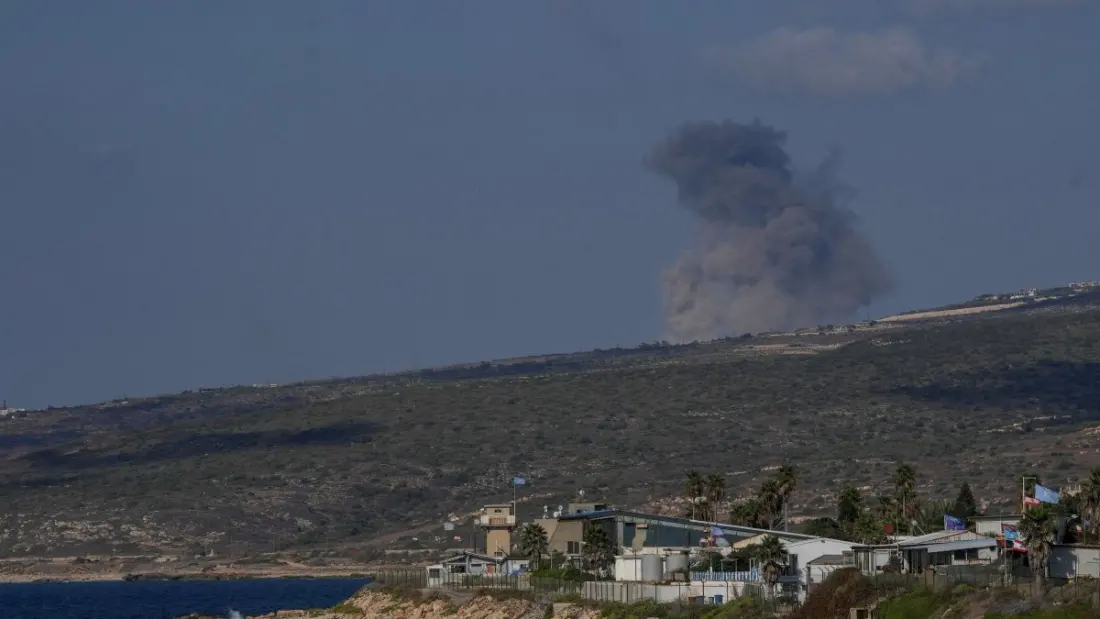
A government hospital in the town of Mays al-Jabal, in the Marjayoun district of southern Lebanon, was set on fire by Israeli forces on Friday, according to Lebanon's state-run National News Agency. Details on the scale of the damage and any casualties were not immediately available, and the Israeli army has not commented on the reports.
The hospital fire was not an isolated incident. The same agency reported Israeli military vehicles moving through Al-Mansouri in the Tyre district, an explosion in Al-Bayyadah, and artillery shelling on Al-Mansouri — all in the country's south.
What makes the timing significant is the diplomatic backdrop. In June, Lebanon and Israel reached a US-brokered framework agreement meant to see Israeli forces withdraw gradually from Lebanese territory while the Lebanese army deploys in the areas they leave. In practice, that withdrawal has not happened as planned. Israel continues to carry out strikes in the south and still holds parts of the territory — some areas occupied for decades, others seized during more recent operations.
The human cost is severe. Lebanese official figures cite at least 4,386 people killed and 12,407 wounded since March 2 alone. Since October 8, 2023, the Health Ministry puts the totals at 8,953 dead and 30,643 injured.
For anyone considering travel to Lebanon, this is a clear signal: southern Lebanon — including Marjayoun, Tyre district and the border area generally — is an active conflict zone and should not be visited. Most governments already advise against all travel to the south and many advise against all but essential travel to the country as a whole. Even Beirut, which has remained functionally open with restaurants, cafes and a working hospitality scene, sits within range of escalation, and flights can be disrupted at short notice. Anyone with trips planned should check their foreign office advisories, confirm their airline's status and review their insurance coverage, since many policies exclude destinations under 'do not travel' warnings.
The broader takeaway for travellers is that a signed agreement is not the same as calm on the ground. Until the withdrawal framework actually takes hold and the casualty numbers stop climbing, Lebanon's south remains off-limits, and any visit to the country warrants careful, current risk assessment rather than optimism.