
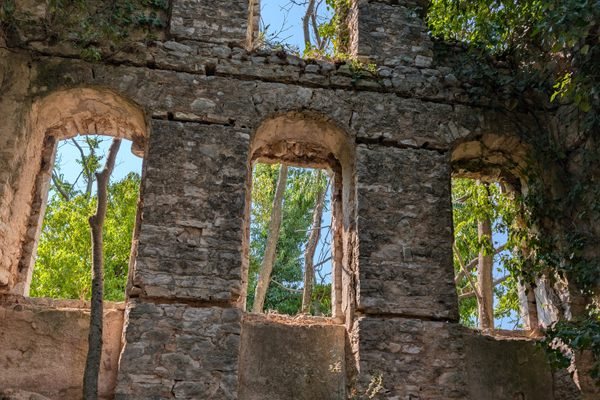
A short drive inland from the sandy beaches of Greece's northwestern coast, a whole village sits quietly falling apart. Old Sagiada, in the hills of Epirus near the Albanian border, was emptied during the Second World War, when its residents fled and the settlement was burned and looted under the German occupation. Nobody came back to rebuild. What remains today is a rare, open-air record of the town as it stood before 1940s.
What makes the site compelling is how much is still standing. Rather than scattered foundations, many of the original walls remain upright, so you can walk among the shapes of houses and read the local building traditions in stone and plaster. Nature has taken over large parts of the site — trees now grow directly inside several of the ruined homes — giving the place an overgrown, half-swallowed quality that photographers will love.
The church is the standout survivor. It remains mostly intact, and inside you can still make out fragments of frescoes on the walls. Its bell still hangs outside, and the acoustics of the hills mean it carries a long way — reportedly far enough to reach loungers on the coast below.
The setting adds a lot to the visit. Old Sagiada sits in the mountains, though not far from the shore, and the drive up is considered scenic in its own right. Once you're there, the ruined village offers views out over the Ionian Sea, which explains both why people settled here originally and why the beach-and-ruins combination works so well as a day trip.
One practical warning matters more than any other: the final stretch of road up to the village is unpaved, and not every rental car will manage it. If you're visiting in a low-clearance city car, expect a careful, slow climb or consider walking the last section. Sensible shoes help too — this is uneven, overgrown ground rather than a manicured heritage site.
For travellers, this is the kind of detour that breaks up a beach holiday with something genuinely different. The modern village of Sagiada and the coastal resorts of the Thesprotia region keep you close to tavernas and swimming, while Old Sagiada offers history you can wander through freely, with no tickets, queues or barriers. Come in the morning for cooler temperatures and softer light on the ruins, and give yourself an hour or two to poke around the church and the house walls before heading back down to the sea. It's a sobering slice of wartime history, but an atmospheric and easily paired stop on any Ionian coast itinerary.