
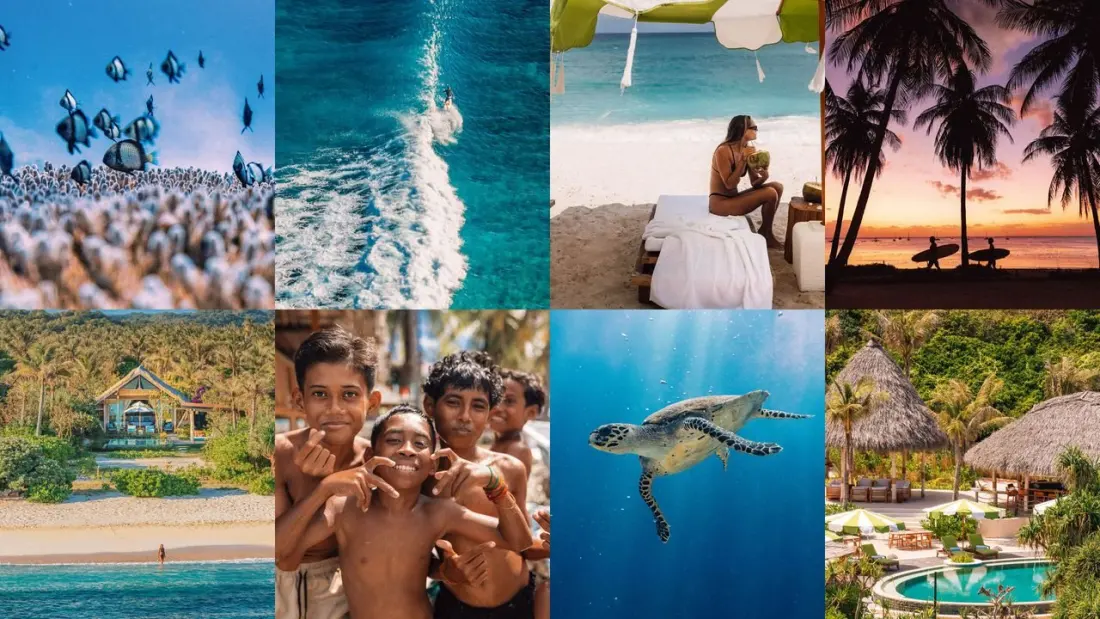
Closer to Darwin than to Jakarta, Rote sits at the far eastern edge of Indonesia, a dry-season island of coconut palms, white sand and long, clean waves that Australian surfers have quietly kept to themselves for four decades. Now the secret is under pressure: the island's first high-end resort, Nihi Rote and Hospitality Academy, has opened on Bo'a Beach, sister property to the celebrated Nihi Sumba. When fully launched in October it will have 21 villas with private pools, three shared pools, a spa, a pump track and even a golf simulator — plus multimillion-dollar residences planned alongside.
What makes the project unusual is its training arm. Local Timorese students at the Hospitality Academy, many in their first-ever jobs, hosted the writer for a night of traditional sasando music, dance and a feast of coconut rice, rendang and grilled fish with sambal. It's a considered model of development on an island where seaweed farming and fishing were, until recently, the main livelihoods.
Rote still runs on island time. The coastal road is potholed and near-empty; the main traffic hazard is chickens, and petrol is sold roadside in decorative glass bottles. The island is fervently Christian in a distinctly tropical way — huge churches of competing denominations, lavishly painted roadside crucifixes, and Easter processions with locals dressed as Roman soldiers. Cultural markers include tenun ikat weaving and the ti'i langga, a lontar-palm hat with a brim spike that looks like a cowboy hat gone rogue.
On the water is where Rote earns its reputation. Boats are the best way to reach offshore reefs, fruit-bat caves and consistent breaks; snorkellers drift over triggerfish and parrotfish in water so clear you can watch fish in the coral below, with manta rays and whale sharks said to pass through. The far side of Ndana Island — Indonesia's southernmost point — offers waves you may have entirely to yourself. The next landfall south is Australia.
The accommodation scene beyond Nihi is small and characterful. Bo'a Vida has six climate-conscious villas overlooking the Bo'a break; Sardine Beach Rote brings ex-Bali restaurant pedigree and serious breakfasts to five acres of gardens; 81 Palms serves the island's best dinner, with a former Michelin-starred Spaniard cooking paella near the T-Land break; Mick's Place Rote offers three solar-powered, self-catering bungalows with a one-week minimum; and Rote Island Huts channels proceeds into local education ahead of a handover to Rotenese management. Natural World Safaris packages an 11-day Bali-plus-Rote trip from £5,800 per person.
The mood among expats who've stayed is telling: people arrive "passing through" and end up buying land. One resident calls it "a retirement village for surfers" — no nightclubs, no drugs, just tide timetables and early nights. For travellers who liked Bali thirty years ago, or who want world-class waves and genuine remoteness before the runway arrives, Rote is the moment to go. Just be prepared for the inconvenience — that's the whole point.
Story via Condé Nast Traveler.