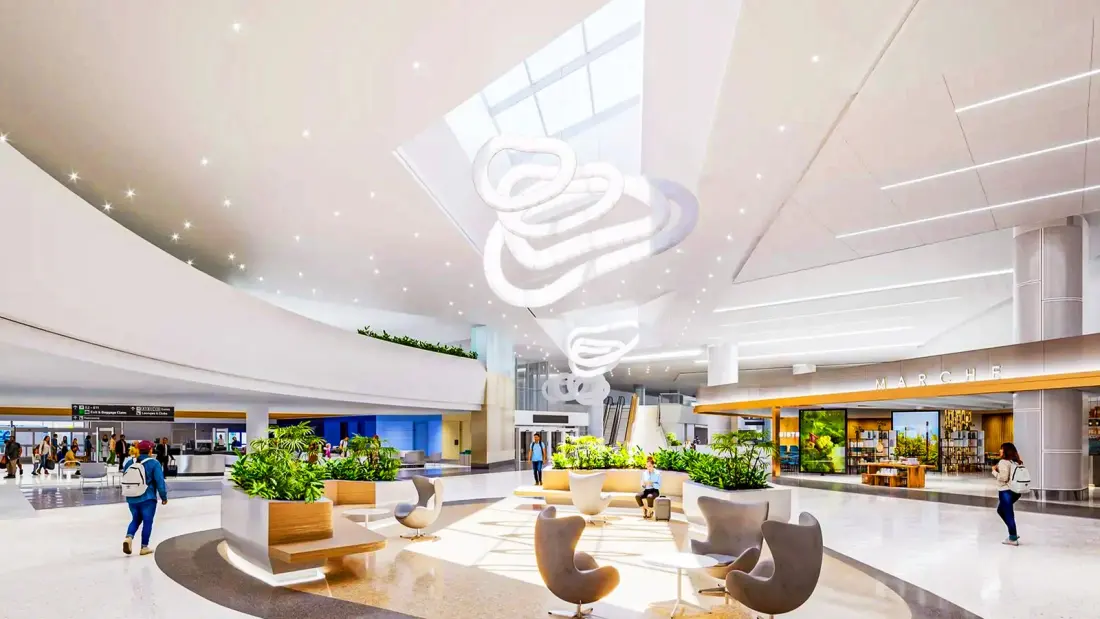
San Francisco International Airport is mid-way through a $2.6 billion overhaul of Terminal 3 West, and it matters far beyond the Bay Area. United Airlines has treated SFO as its Pacific fortress since it bought Pan Am's Pacific Division back in 1985, and today the carrier holds roughly 48% of the airport's market share — a long lead over Delta, the next-biggest player at just 7.6%. The new terminal is the airport's way of locking in that position, with completion targeted for autumn 2027.
The project, run by Turner Construction with structural engineering from Magnusson Klemencic Associates, is funded entirely by the airport itself through revenues and bonds rather than by United. When it's done, travellers get a seismic retrofit, a bigger security checkpoint, 200,000 square feet of extra space for food and retail, and three widebody-capable gates built with long-haul flying in mind. United may follow its Chicago O'Hare playbook and share gates with Star Alliance partners like ANA and Lufthansa. A dedicated walkway will also pipe international arrivals straight into the Customs Hall, smoothing one of the trip's most tedious moments.
What makes SFO the right bet is what its West Coast rivals can't offer. San Diego has a single runway and a cap on passenger numbers. LAX has scale but ferocious competition and slot pressure. Seattle belongs to Alaska and Delta's transpacific ambitions, Vancouver sits outside the US domestic network, and Anchorage is a cargo hub with only seasonal passenger appeal. SFO is the one US West Coast airport where United can run long-haul aircraft at consistently high load factors to Asia, Australia, Hawaii and the Pacific islands.
If you're flying through SFO before 2027, expect some friction. Departure doors 6-13 are closed, United check-in has shifted (use Terminal 2 counters for D/E gates, T3 east counters for F gates), the T3 AirTrain station is shut, and the Amex Centurion lounge has moved to Terminal 2. Pickup is least congested near arrival doors 10-12, and interim post-security walkways keep every terminal connected without re-clearing security. Non-precleared international arrivals must clear customs and re-check bags as usual.
The economic stakes are real too: the project is expected to employ 500-600 construction workers at peak and direct more than $173 million in contracts to local businesses. It cements SFO as Northern California's global gateway — Oakland and San Jose combined offer just one transpacific route, a seasonal ZIPAIR Tokyo service. United, meanwhile, is weighing further expansion elsewhere, with CEO Scott Kirby openly mulling a Miami hub that would put the carrier head-to-head with American in a fifth major metro. For now, though, the West Coast future runs through San Francisco.