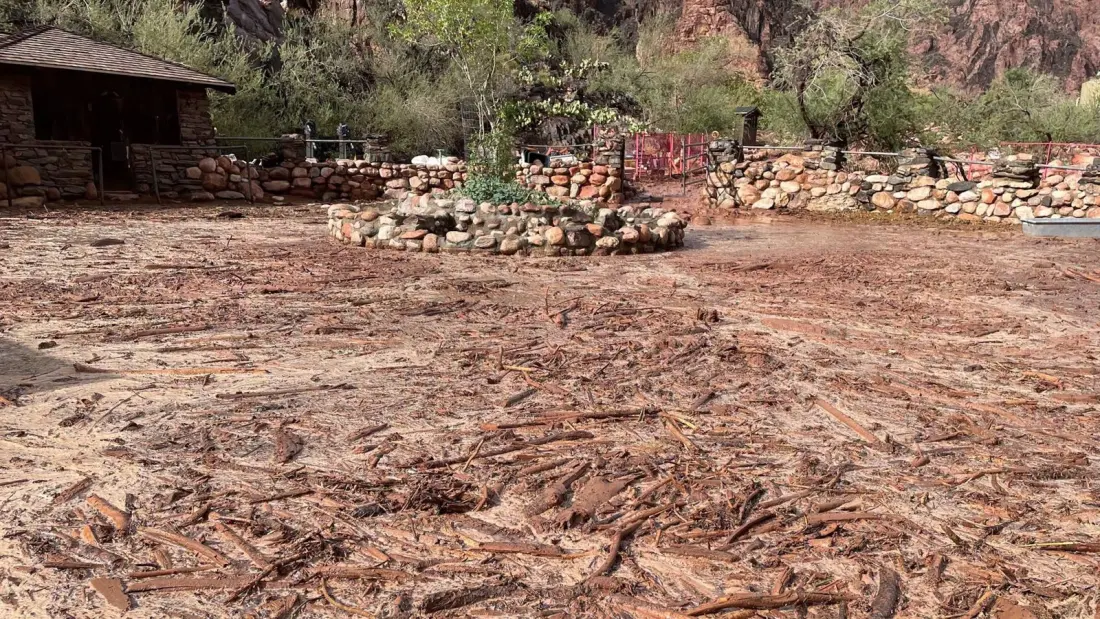
Grand Canyon National Park has been hit by a second flash flood in under three weeks, and the knock-on effects for visitors are significant. On September 16, storm water tore through Bright Angel Canyon — the same corridor slammed by a deadly flood on August 29 — sweeping away temporary housing for construction crews and dumping fresh debris into the Colorado River. Park officials had pulled most staff out ahead of the warnings, and everyone still in the canyon reached safety. No injuries were reported.
The second flood is a setback for repair work on the Transcanyon Waterline, the fragile 12.5-mile pipe that supplies drinking water to South Rim hotels and roughly 2,500 residents. The August 29 flood damaged about 40 percent of it, and crews had only just set up in Bright Angel Canyon to fix it when the latest storm hit. Some good news: Phantom Ranch, the lodge and campground at the bottom of the canyon, came through the September flood undamaged, according to Xanterra, which runs the South Rim concessions.
The August disaster was far worse. Flash flooding stranded dozens of hikers and killed three men — John Guisti, 46, and Brent Rosenkranz, 42, of Granbury, Texas, and Timothy Allen Smith, 53, of Jackson, Wyoming. Smith had been missing for more than two weeks before crews found his body at Crystal Rapid, about ten miles downstream from Phantom Ranch, on September 14.
Here's the practical picture for anyone with a trip on the horizon. The park itself remains open for day use — dining, retail and overlooks on the South Rim are operating — but a long list of closures is still in force: Phantom Ranch, the North Kaibab Trail, several river bridges and South Rim lodging in Grand Canyon Village. Stage four water restrictions are in effect, and there is no potable water anywhere on inner-canyon trails or at Havasupai Gardens. Hikers and backpackers need to carry every litre they'll drink or bring a filter or treatment system.
If you had a rim-to-river hike or an overnight at Phantom Ranch booked, assume it's off until NPS says otherwise, and build in flexibility. Even day hikers should treat the inner canyon with real caution right now — monsoon-season storms can turn a dry side canyon into a torrent with little warning. The single most important step is checking the park's official alerts and conditions page immediately before you travel, because the situation, as Xanterra's Andy Stiles put it, remains fluid.
Who should still go? If your plan is viewpoints, rim trails, dining and sunsets, the South Rim remains very much open and worth the trip — you'll just want to book lodging outside the park or monitor for reopened inventory. If your plan involves going below the rim, wait for all-clears and carry your own water, full stop.
Story via Outside Online.