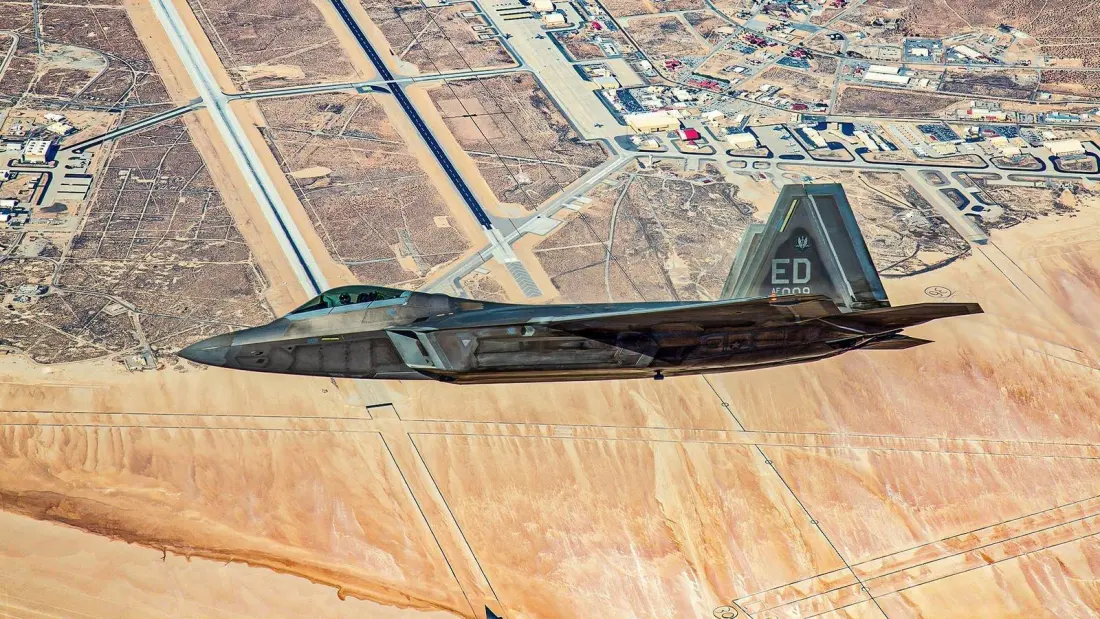
The longest single runway in the US Air Force sits at Edwards Air Force Base in California — a 15,024-foot concrete strip built for experimental flight testing. But longest strip and most tarmac are two different questions. Ranked by combined paved runway length at the primary airfield, the top spot belongs to a base most travellers have never heard of: Sheppard Air Force Base in Wichita Falls, North Texas.
Sheppard's total is a staggering 36,125 feet — more than six and a half miles of pavement — spread across four separate strips measuring 6,000, 7,021, 10,003 and 13,101 feet. One of them is even shared with civilian traffic under a joint-use deal with Wichita Falls Municipal Airport. The reason is the base's mission: it's an undergraduate pilot-training hub, and training pipelines need multiple parallel runways so formation flights, solo students and instrument approaches can all operate in separate traffic patterns at once.
That pattern repeats across the Air Education and Training Command. Columbus AFB in Mississippi runs three parallel runways totalling 26,325 feet; Vance AFB in Oklahoma has three strips for 23,458 feet; and Laughlin AFB, Texas — the Air Force's busiest training installation by sortie count — packs roughly 23,400 feet into a similar three-runway layout.
Edwards takes second at 27,024 feet for its Main Base alone, including a 12,000-foot strip laid in 2008 while the primary runway was resurfaced. Count its North and South Base landing areas, which handle drones, U-2 flights and light aircraft, and the full network reaches roughly 41,000 feet. The base has just rebuilt a disused 9,800-foot 'Inside Runway' with exceptionally thick pavement rated for the new B-21 Raider bomber — a pour that demanded 83 truckloads of asphalt a day.
Further down the table, the numbers tell you what each base is actually for. Nellis AFB in Nevada, home of Red Flag, has two parallels about 1,000 feet apart totalling 20,171 feet, built to launch and recover large mixed strike packages simultaneously. Andersen AFB on Guam pairs two long runways (11,200 and 10,528 feet) designed to recover fully loaded B-52s, with a $11 billion island-wide build-up adding apron space for the B-21 era. Altus AFB in Oklahoma, which trains C-17 and tanker crews, logs 22,441 feet across two runways — its rough 3,500-foot assault strip isn't counted, since it exists only for austere-landing practice.
For aviation enthusiasts, the takeaway is that runway numbers are a decode ring: many short strips mean a training pipeline, one very long strip means heavy bombers or test flights, and spaced parallels mean surge exercises. Sheppard's joint-use agreement with the municipal airport even makes it one of the few places a civilian flyer can share tarmac with Air Force trainers — and Wichita Falls hosts the region's aviation community year-round.