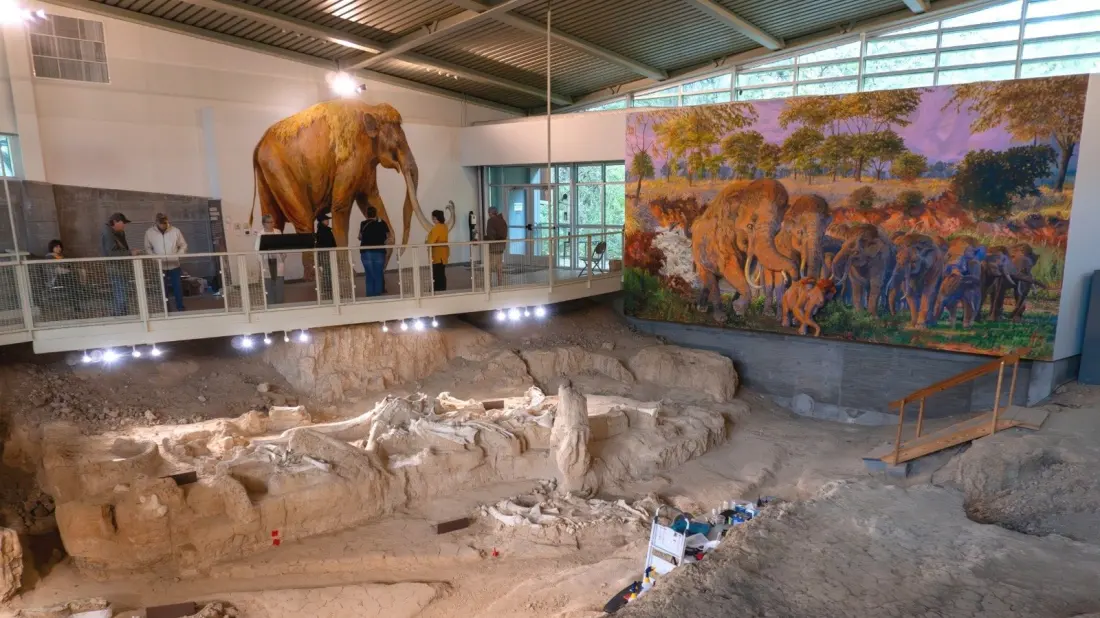
South Dakota's Badlands National Park may pull in over a million visitors a year with its famous fossil beds, but central Texas has a quieter, cheaper and arguably more focused alternative: Waco Mammoth National Monument. For anyone obsessed with Ice Age beasts, this 100-acre site has a claim Badlands can't make — it's one of fewer than 20 National Park Service sites designated a 'primary fossil park', meaning it was established specifically for its fossils.
The story here starts in 1978, when locals stumbled on bones buried along the Bosque. What's now protected under a covered Dig Shelter holds the remains of six Columbian mammoths, a Western camel, a saber-toothed cat and a giant tortoise, all roughly 67,000 years old. The standout detail: these mammoths are the first and only recorded evidence of a nursery herd of Ice Age Columbian mammoths in America — essentially a prehistoric family group, preserved in place and viewable from an elevated walkway.
Entry costs about $6 per adult, a fraction of Badlands' $30-per-vehicle fee, and the monument's compact size makes it an easy half-day stop rather than a commitment. Beyond the Dig Shelter there are short hiking trails: the half-mile Eagle Trail (narrow, sometimes rugged or muddy) with a Deer Loop spur that's good for birdwatching and links to the 250-yard Camel Trail, plus the flat, wheelchair-accessible 300-yard Mammoth Trail running from the welcome center past a picnic area and amphitheater. Check the NPS page before you go for guided tours, family story times and events like National Fossil Day celebrations and star parties.
Practical notes: pack bug repellent, keep pets leashed, stick to marked trails and take the Texas heat seriously — summer highs regularly top 80°F and can push past 100°F, so bring water and sunscreen.
Waco itself, a city of around 147,000 often called the 'heart of Texas', punches above its weight for a road-trip stop, with arts and history beyond the monument. If you've got kids or just want to cool off afterwards, Waco Surf across town claims the longest lazy river in the world. Put together, it's a low-stress, genuinely educational detour that slot easily into any Texas itinerary — no trekking to the northern plains required.