
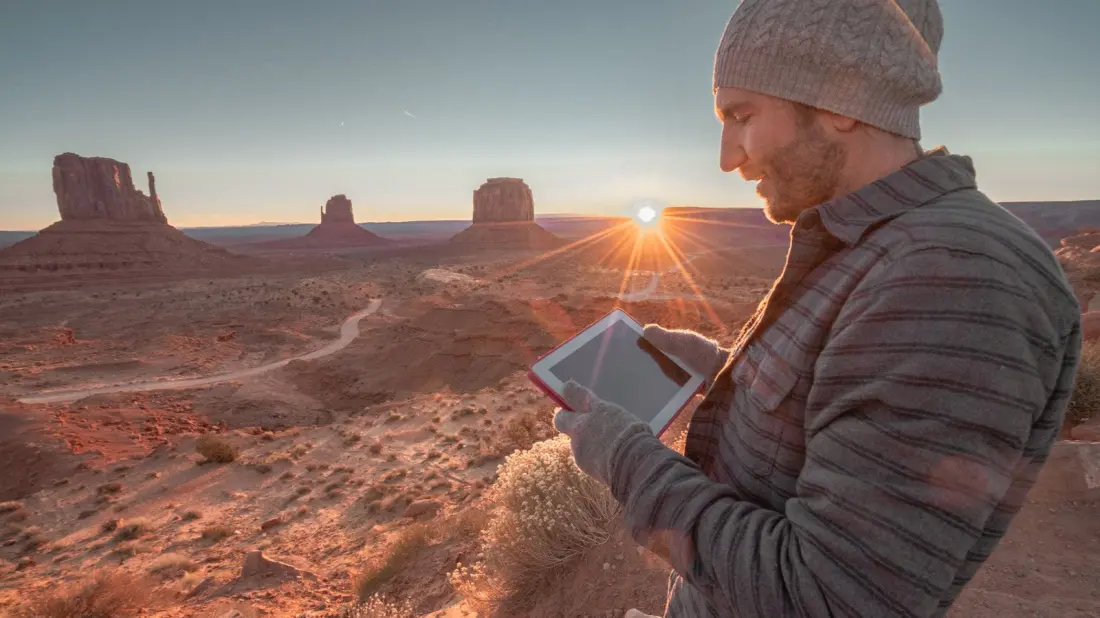
Drones and national parks don't mix. The US National Park Service banned unmanned aircraft from all of its parks and public lands back in 2014, and the rule shows no sign of softening — even for licensed, insured pilots with commercial certifications.
That ban applies everywhere, from Delicate Arch in Utah's Arches National Park to the depths of the Grand Canyon. It doesn't matter how good your footage might be or how carefully you fly. Bring a drone into a park and you're breaking federal regulations, with fines and confiscation on the table. Even carrying bear spray can get you in trouble in California's state park system, so it's no surprise rangers take a hard line on flying cameras.
The reasoning behind the ban is fairly straightforward. Drones are loud and intrusive in places people go precisely to escape noise and tech. They can spook wildlife — and, in a nice bit of irony, birds of prey have been known to attack drones mid-flight, apparently mistaking them for prey. There are safety issues too: collisions with visitors, and lost aircraft ending up as litter in rivers, mud pots, and Joshua trees. A drone sinking into Yellowstone's mud or snagged on a cactus isn't a good look for anyone.
US airspace is also a patchwork of FAA restrictions, and national parks sit squarely within restricted zones. So even pilots who've passed the FAA's Part 107 test and hold proper registration are expected to leave the drone at home when they pass through a park entrance.
There is one narrow exception: the NPS can grant written permission for a genuine, justified flight. Those approvals are rare, and you can improve your odds by offering to donate the resulting footage — the agency runs its own social channels and needs content. But for the vast majority of travellers, the answer is simply no.
The practical upshot? Plan your park shots around what you can capture from the ground. Honestly, you're not missing much — the light on the dunes at Indiana Dunes or the canyon walls at dawn look every bit as good from eye level, and you won't spend the visit worrying about a ranger's tap on the shoulder. If aerial photography is the whole point of your trip, research state lands, private property, or areas outside park boundaries where flying may be legal, and always check current FAA and local rules before takeoff. And a related tip: cruise lines have their own strict policies on drones too, so don't assume a ship is a workaround.