
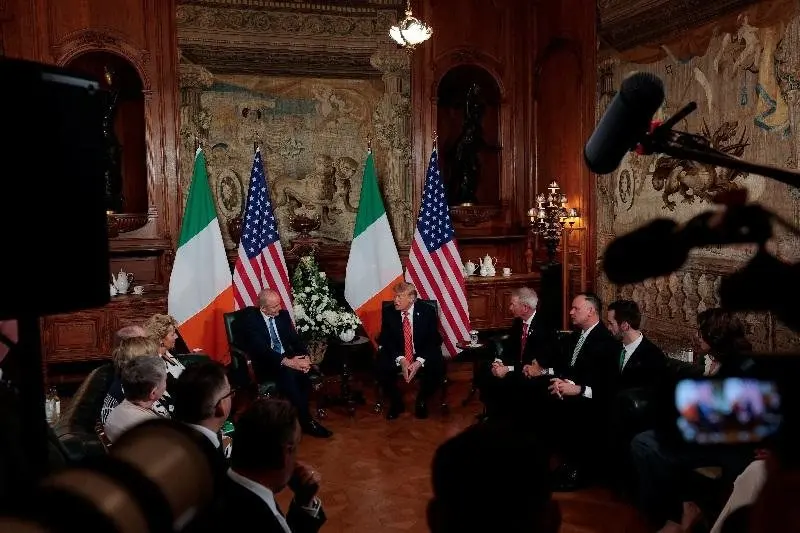
Donald Trump has broken with decades of careful US neutrality on Ireland, telling reporters in Dublin he would 'love' to see Northern Ireland unify with the Republic. Speaking beside Irish premier Micheal Martin after their meeting, he called it 'a fantastic thing' and predicted it would 'happen eventually' — comments that landed badly in Belfast within hours.
The timing is awkward. New British Prime Minister Andy Burnham recently said a referendum on Northern Ireland leaving the UK was 'off the table', and Downing Street confirmed that stance hasn't moved. Under the 1998 Good Friday Agreement, which ended three decades of violence, such a vote can only be called at the discretion of the British government — and polls still show a clear majority in Northern Ireland wanting to stay, though the gap has narrowed since Brexit.
Gavin Robinson, leader of the Democratic Unionist Party, swiftly rejected the prediction, warning that unification would mean 'the destruction of our country' and insisting the constitutional future would be decided by Northern Ireland's people, 'not by commentary in London, Dublin or Washington'. Even supporters of Irish unity were sceptical — one SDLP backer dismissed it as headline grabbing, noting the president 'doesn't give a toss'. Previous presidents, including Joe Biden, had deliberately avoided taking sides; the US helped broker the 1998 peace deal.
The visit itself was far from smooth. Trump met Irish President Catherine Connolly, a former left-wing lawmaker who once protested against his 2019 visit, and she reportedly told him that 'the normalization of war and genocide can never be accepted'. Hours after he left for a golf tournament at one of his western resorts, thousands marched through central Dublin chanting 'Free free Palestine' — one of Ireland's biggest anti-war protests in years.
Economics featured too. Premier Martin highlighted the deep ties: US companies, mostly in tech and pharma, employ roughly 10% of Irish workers. Trump, for his part, quipped that Ireland had 'fleeced' America of its medical companies and joked about getting a couple back.
Why should travellers care? Northern Ireland remains open for business and as welcoming as ever — Belfast and the Causeway Coast are thriving, and the border region between the two jurisdictions is easy to cross with no checks. But if you're visiting, this story is useful context. The constitutional question shapes the murals of West Belfast, the walking tours of Derry's walls and everyday conversation in pubs on both sides of the border. Peace has held since 1998 precisely because these questions are handled carefully, and visitors will find locals generally happy to explain the nuance — just don't expect any two to agree. For now, the status quo holds, and both jurisdictions continue to offer contrasting pleasures: the Wild Atlantic Way on one side, the Giant's Causeway on the other.