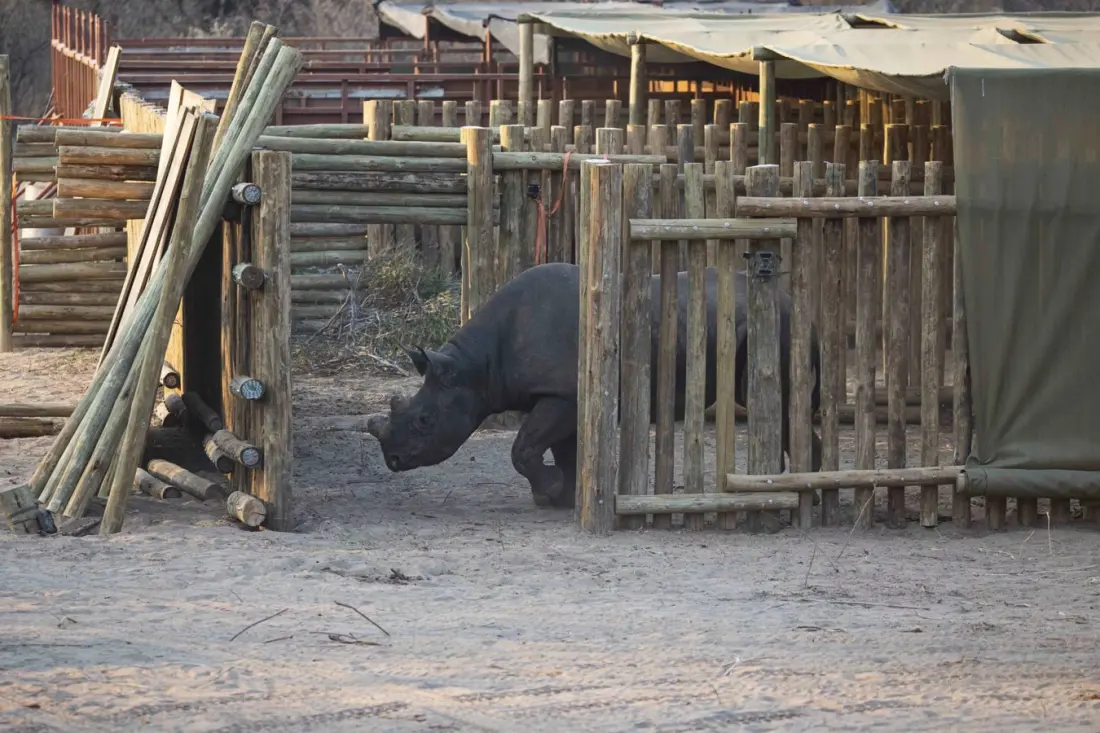
Botswana's black rhino story just got a major boost. In early September, 20 black rhinos were relocated from South Africa to a remote, secure spot in Botswana, effectively doubling the country's population of a species that has been hammered by poaching. Before the move, the International Rhino Foundation estimated only around 25 black rhinos remained in Botswana; the newcomers take that figure to roughly 45.
The operation was run by WWF South Africa's Black Rhino Range Expansion Programme (BRREP), and it was no small logistical feat. The rhinos were captured in KwaZulu-Natal in early June, held in quarantine in a boma, then transported over two 36-hour road journeys. Programme leader Jeff Cooke reports all 20 arrived safely and are settling in. It's only the second time BRREP has moved rhinos across a border — the first was to Liwonde National Park in Malawi back in 2019.
Why go to all this trouble? Space. BRREP has been relocating black rhinos since 2003 and increasingly struggles to find big enough blocks of suitable habitat — it typically looks for areas of 20,000 hectares or more where new populations can breed and grow. Cross-border moves are becoming the norm rather than the exception, and establishing populations in multiple range states gives the species a better shot at long-term recovery. The programme's track record so far: 18 new populations established, 310 animals moved, and more than 220 calves surviving on its sites.
There's a knock-on effect too. Persuading landowners to consolidate fragmented habitat into larger blocks benefits far more than rhinos — wide-ranging species like wild dogs, cheetahs and vultures gain from the same protected landscapes.
For Botswana, the timing matters. Poaching pressure around the Okavango Delta has hit black rhinos hard in recent years, so a new, secure population is a genuine lifeline. For travellers, it's a hopeful signal for the country's most famous wilderness: every rhino that survives and breeds improves the odds of spotting one of Africa's rarest big animals on a future Delta safari. Conservation tourism — park fees and community-linked concessions — helps fund exactly this kind of work, so a well-chosen Botswana trip is more than a holiday.