
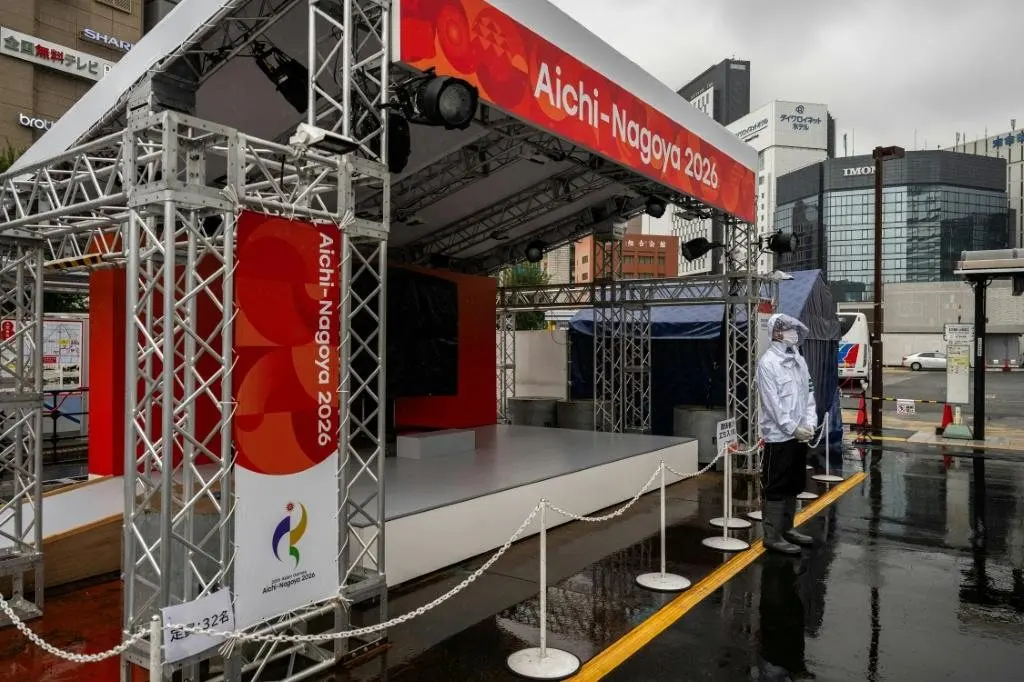
Japan's hosting of the Asian Games was supposed to be a showcase. Instead, organisers in Nagoya and Aichi prefecture are juggling soaked venues, a bed shortage and now a storm on the horizon, all before the opening ceremony has even taken place.
The numbers behind the event are big: more than 17,000 athletes and officials have arrived in the port city for one of the continent's largest sporting events. In a bid to cut costs, there is no permanent athletes' village. Competitors are spread across temporary container-style huts, hotels and the cruise ship Costa Serena, which is moored in Nagoya port and housing roughly 4,000 participants.
That arrangement is already under strain. Last week Nagoya recorded a staggering 104mm of rain in a single hour, prompting local authorities to issue evacuation orders for parts of the city and forcing athletes to briefly leave the container lodgings. Rainwater also found its way into several competition venues, and wet conditions meant the women's cricket match between China and Bangladesh was called off without a ball bowled. Several teams have grumbled about the huts too — including complaints that the beds are too short — and some say there simply aren't enough rooms to go around.
Now the weather has thrown up a fresh problem. Two days before the opening ceremony, forecasters flagged the chance of a typhoon reaching Japan's main island, where Nagoya sits, around Sunday or Monday. The greatest concern is the Costa Serena: if the storm tracks towards the city, one reported contingency involves sailing the ship out of the port entirely to safety. As one federation official told the Asahi Shimbun, all that's left to do is hope the worst-case scenario doesn't materialise. Forecasters caution the storm's path remains uncertain, and Japan's typhoon season runs through September and October, so the games are far from out of the woods.
Why should a traveller care? If you're heading to Nagoya or anywhere on Japan's Pacific coast in early autumn, this is a useful reality check. Typhoon season is a genuine planning factor, not a footnote — a few hours of extreme rain can shut down transport, cancel events and trigger evacuation orders even in a major, well-prepared city. Build flexibility into any September or October trip: travel insurance with weather cover, refundable bookings and a rough indoor backup plan all pay off. And if you're travelling for the Games themselves, keep an eye on official schedule updates, since postponements and relocations are clearly on the table.
For organisers, the next few days will show whether a budget-built Games can weather a storm that is, at this point, uncomfortably literal.
Reported by AFP via Japan Today.