
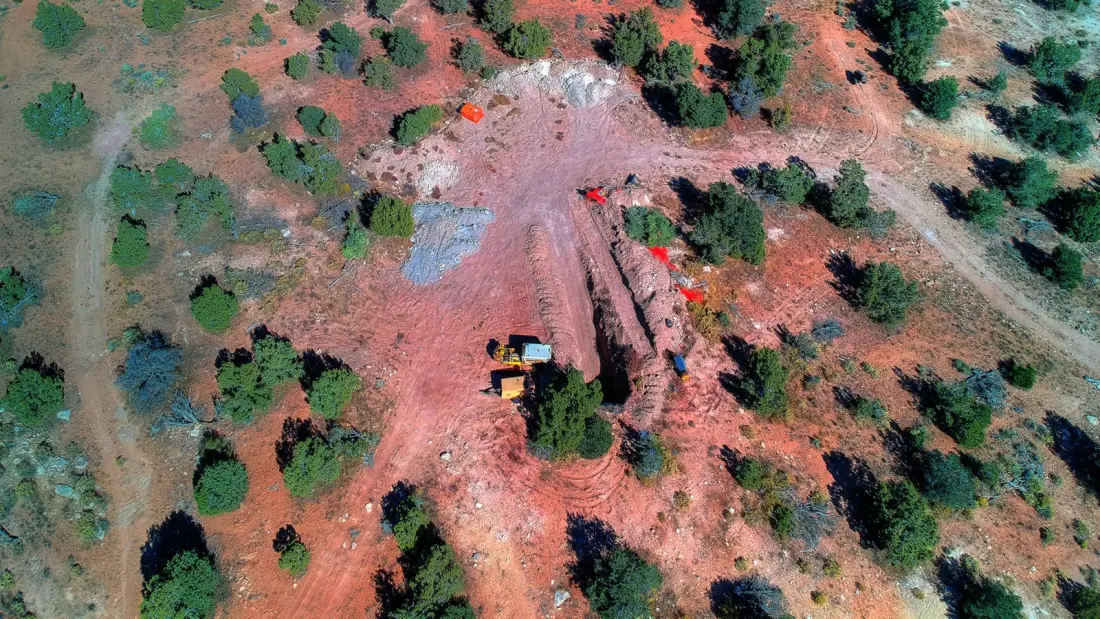
Sixteen new mining claims landed on the books in Bears Ears National Monument, Utah, on September 11 — the very day the Trump administration's proclamation shrinking the monument took effect. According to mapping data from the San Juan County Recorder's office, two mining interests staked the claims on land that was part of the protected monument until July, when an executive order cut Bears Ears and Grand Staircase-Escalante by more than 90 percent.
George W. Schultz filed three claims in the Lockhart Basin area in the monument's northern reaches, while Kimmerle Mining filed thirteen in the central-eastern section. Two of Kimmerle's are amendments tied to the Easy Peasy Mine, a site that was closed and reburied after the Biden administration restored the monument's boundaries in 2021 — a revival advocates hoped was permanent.
The exact footprint of the new claims isn't public yet. County records identify them in 160-acre segments, but most claims are likely far smaller, perhaps one to 20 acres. The Southern Utah Wilderness Alliance (SUWA), which is suing the federal government over the reduction, warns that claims can be amended to grow, and that even small operations can damage ecosystems and cultural sites in a region dense with Ancestral Puebloan ruins, rock art, and land sacred to several tribal nations.
Legal fights are playing out on both sides. SUWA, other conservation and Indigenous groups, and Patagonia have sued, arguing the president exceeded his authority under the Antiquities Act. Meanwhile, monument opponents — including Kimmerle Mining's managing member Kyle Kimmerle — won a procedural victory in June when an appeals panel revived their own suit against Biden's 2021 restoration.
Mining can't begin immediately: any claimant still needs Bureau of Land Management approval, which requires an environmental assessment. But SUWA staff attorney Hanna Larsen told Backpacker that on-the-ground digging within a few months is "certainly possible," and the group plans to contest BLM approvals where it can.
For travellers, this is a reminder that one of the American Southwest's most extraordinary archaeology and hiking destinations is in flux. Boundaries that appeared on maps for decades have shifted dramatically, and areas once managed as monument land now face development pressure. If Bears Ears is on your list — for its cliff dwellings, dark skies, or the edge-of-the-map feeling of Cedar Mesa and Valley of the Gods — the character of the place you visit may look different soon, and visiting respectfully matters more than ever in a landscape where access, legality, and conservation are actively contested.