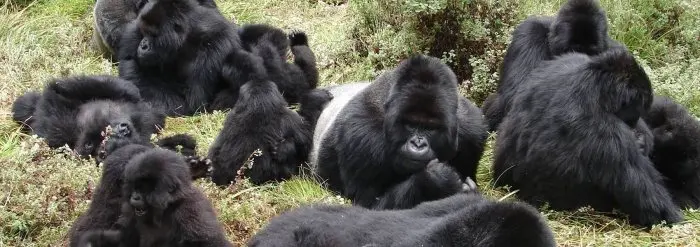
Mountain gorillas can't be saved by fences alone. Around Bwindi Impenetrable National Park, conservationists are widening the battle to village land, one seedling at a time.
The numbers explain the urgency. Only about 1,060 mountain gorillas survive in the wild, and Bwindi, in southwest Uganda, shelters roughly half of them. Ahead of World Gorilla Day on September 24, groups including Change a Life Bwindi and the Uganda Wildlife Authority staged tree-planting drives in communities bordering the park. At one recent session, students at Ruhija Seed School planted indigenous species such as Croton, the same trees that grow inside the forest itself.
The logic, as Joseph Muhindo of the Bwindi Impenetrable Conservation Area explains, is simple: local households need wood for building and medicine, and when community land runs bare, people head into the protected park to get it. Planting native trees outside the boundary gives villagers their own supply, stretches the effective forest belt, and helps stabilise the rainfall patterns that both the gorillas and neighbouring farms depend on. Change a Life Bwindi has so far planted 56 indigenous species across an 85-acre forest, though founder Tina Katushabe admits land scarcity and increasingly unpredictable rains make the work harder. Her organisation deliberately starts in schools, betting that children who plant trees grow into adults who defend them, and works with women's and Batwa community groups too.
For travellers, this is the backdrop to one of Africa's great wildlife experiences. Gorilla trekking in Bwindi means hiking steep, mist-soaked montane forest thick with ferns, vines and old hardwoods, with treks lasting anywhere from half an hour to several hours depending on where the gorilla family has moved. The regulated daily treks put you metres from a calm silverback — an encounter few places on earth can match. Bwindi is one of only four destinations worldwide for mountain gorillas, alongside Uganda's Mgahinga, Rwanda's Volcanoes and DR Congo's Virunga.
The human side matters just as much. The forest edge is home to the Bakiga and Batwa communities; the Batwa, often described as the region's original forest people, were displaced when Bwindi became a protected area in 1991. Today visitors can join Batwa-led walks, storytelling and dance sessions, browse craft cooperatives, or hire local porters — hundreds of whom earn a living on trekking days. That's exactly why conservation here is built around community benefit rather than wildlife alone: gorilla tourism brings jobs and revenue, and the people living closest to the forest now have a stake in keeping it standing. If you're planning a Uganda trip, a trek here supports a model that genuinely works both ways.
Via Breaking Travel News.