
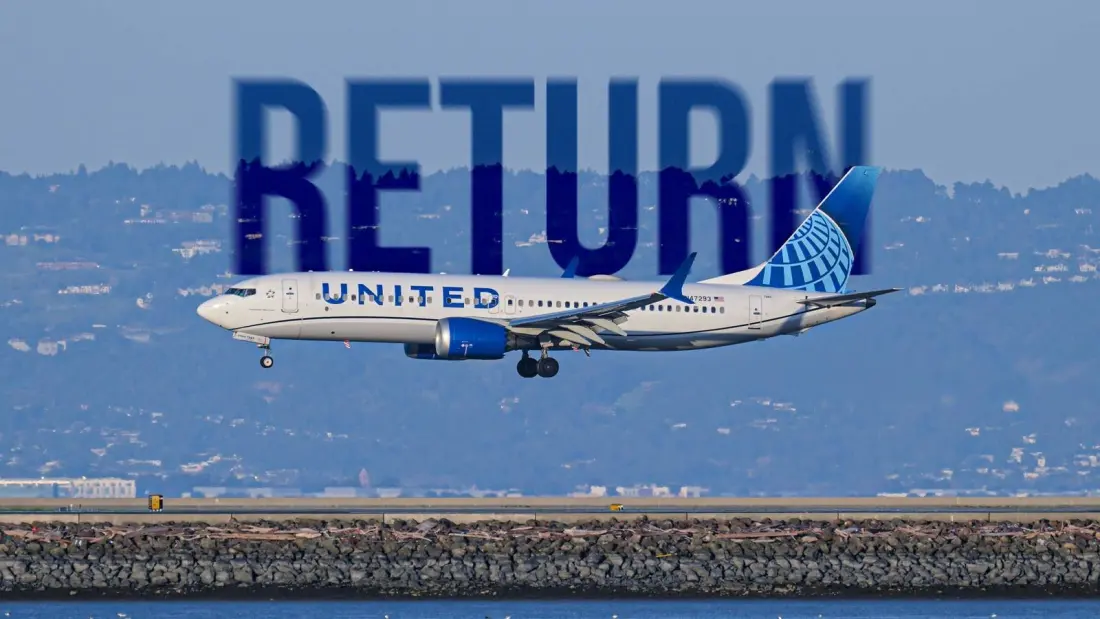
Cincinnati/Northern Kentucky International Airport has an unusual story. It was once a Delta fortress with more than 600 daily flights at its mid-2000s peak, then lost that status entirely by 2017. The vacuum was filled by budget carriers — Allegiant, Frontier and especially Breeze — which picked off routes the big airlines had abandoned. Now United is poking its head back in, and the way it's doing so says a lot about where US domestic flying is headed.
The headline move is the return of nonstop service from Cincinnati to San Francisco, a route United flew from 2017 to 2020 and has now revived with Boeing 737-800s. United isn't trying to become CVG's next hub tenant — executives would reportedly look at Cleveland first if they ever wanted a bigger presence in the region. Instead, Cincinnati–San Francisco is a test case for a broader formula: connect United's hubs to mid-sized cities where low-cost carriers have proven the demand exists.
And the demand is proven. Breeze has run the Cincinnati–San Francisco route three times weekly with Airbus A220s, and per Bureau of Transportation Statistics data it launched with an 85% seat load factor — well above its 73% average across Cincinnati and above the US domestic industry norm. Between April 2025 and April 2026, nearly 99,000 round-trip passengers flew between the two cities, though only 23% got a nonstop; the rest connected elsewhere. Add nearby Oakland and San Jose traffic and the Bay Area market looks even bigger.
United's bet is that a full-service product can beat a budget one on these routes. Passengers get premium cabins, MileagePlus earning, and one-stop access through SFO to places like Calgary, Puerto Vallarta, Okinawa and Manila. The airline is applying the same logic elsewhere: Albany–Denver, Hartford–Houston, Columbus–Los Angeles, Pittsburgh–Los Angeles and Kansas City–Los Angeles are all new or resumed daily routes that put United head-to-head with Breeze and Southwest. Its newer narrow-bodies — 737 MAX 9s and A321neos — deliver double-digit cost improvements over the retired 757s, making these 900-to-1,600-mile routes economically sensible.
There's also a safety net. The route is backed by a minimum revenue guarantee from Ohio's JobsOhio Air Service Restoration program (figures undisclosed), and local analysts estimate a $36.4 million regional economic impact, thanks to Cincinnati's corporate base — Procter & Gamble and Kroger among them — plus the Amazon Air cargo hub at CVG.
Why should a traveller care? If you live in a mid-sized city that budget airlines served with bare-bones, a few-times-weekly service, you may soon have a full-service alternative with better connections and nicer seats. United is also famously quick to cut unprofitable routes — it axed underperforming flying during recent fuel price spikes — so these routes will need passengers to survive. Fly them early if you want them to stay. Watch, too, whether rivals respond: Delta and American have actually been trimming mid-sized-city routes, leaving United as the only legacy carrier leaning into them.