
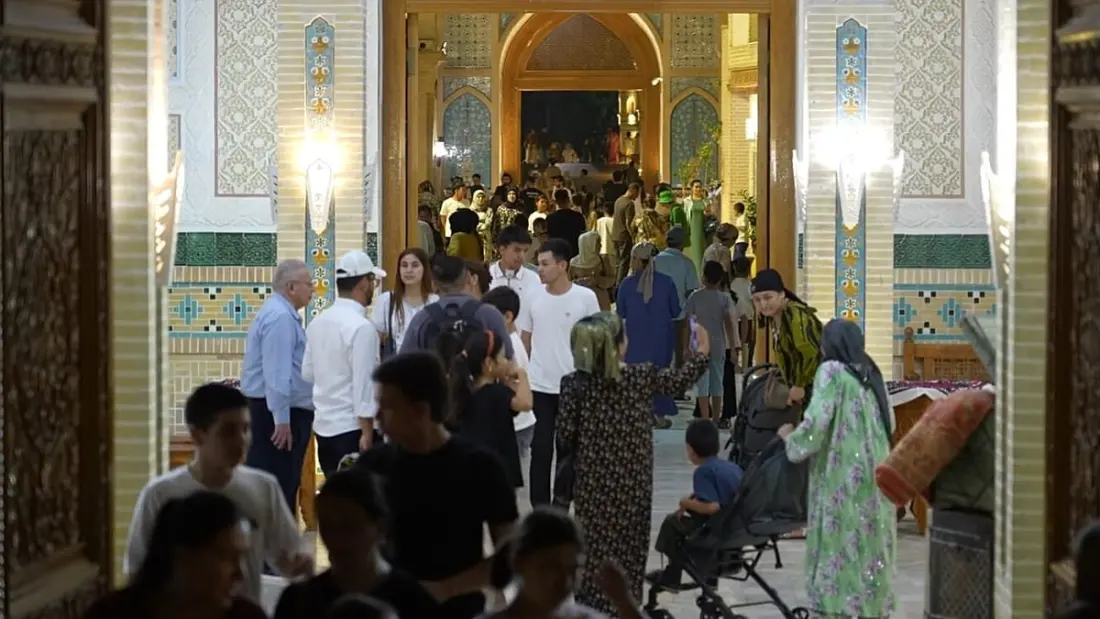
Uzbekistan is having a moment. The country logged 9.1 million visits by foreign nationals in the first eight months of 2026, up 21.1% year on year, while tourism services exports jumped 53.5% to $4.6bn. The headline number comes with a caveat: it includes business travellers and people visiting family, not just holidaymakers. But the spending data tells a clearer story — average spend per tourist has hit $503, more than double the $197 recorded in 2017, and surveys in May and June put the average stay at eight days.
Crucially, visitors are pushing past the classic Tashkent–Samarkand–Bukhara–Khiva circuit. Tourism officials point to rising interest in the Fergana Valley, Kashkadarya, Surkhandarya, and the far-western region of Karakalpakstan, home to the ship graveyard at Muynak and the Nukus art museum.
Long-haul markets are driving much of the growth. Chinese arrivals increased 2.3-fold in the first eight months of 2026, helped by reciprocal 30-day visa-free travel — Chinese visitor numbers in 2025 were over six times the 2023 level. Malaysia doubled, Japan rose 1.5-fold, Germany grew 25% and both France and the UK were up 21%. Visa-free entry now covers citizens of 94 countries, though allowed stays vary by nationality. Uzbekistan also ranked fifth in Much Better Adventures' 2026 list of top solo adventure destinations, based on safety, cost, entry rules and hiking.
Getting around has improved too. The new Jaloliddin Manguberdi high-speed train linking Tashkent and Khiva launched in May, cutting the trip from roughly 14 hours to about seven and a half — nearly 30,000 passengers rode it by late July. Direct international flights into Urgench, the airport nearest Khiva, are adding capacity, and hoteliers there report competition heating up. Between January and July 2026, 705 new accommodation facilities opened nationwide, adding 22,296 beds; the country now has 7,440 registered properties capable of hosting more than 202,000 guests.
Travellers themselves seem pleasantly surprised. Romanian visitor Cezar Marksteiner-Ungureanu said he felt secure the whole time and found locals eager to help, while British traveller Tessa Bradford came after seeing photos of the architecture — and confirmed the pictures weren't exaggerating.
For holidaymakers, this is a country at a sweet spot: the monuments of Samarkand and the walled old town of Khiva are as photogenic as ever, but the infrastructure has caught up enough that independent travel is genuinely easy — and the crowds haven't arrived yet. If you've been waiting for a sign to book that Silk Road trip, this is probably it.