Day two of the Camino de Santiago is where the walk starts to feel real. This account from a pilgrim trio covers the 13.4-mile stage from Roncesvalles to Zubiri in Spain's Navarre region — and it's a good preview of what anyone considering the Camino can expect: ancient buildings, cheap pilgrim menus, and a rhythm dictated by church bells and Spanish mealtimes.
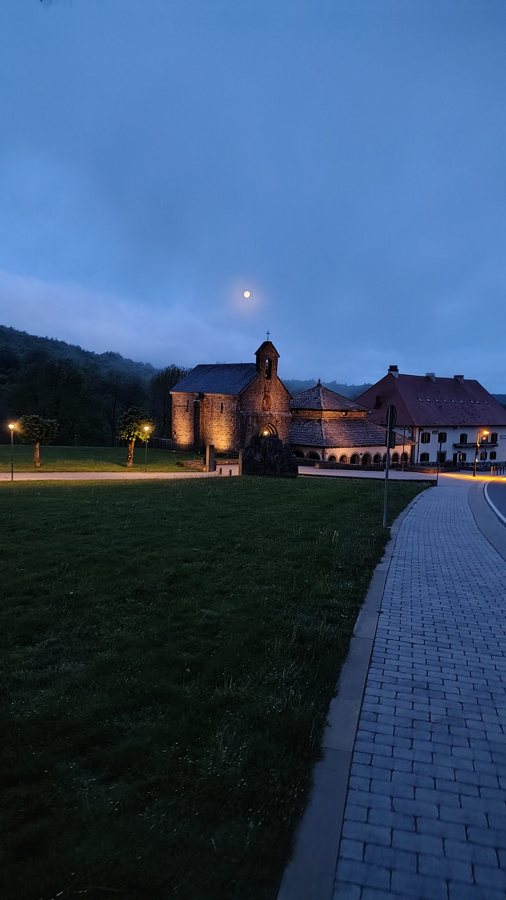
The night was spent in the Roncesvalles monastery itself, a massive former religious complex converted into an albergue run by nuns and monks. Behind plain exterior walls hides a cathedral dating to 1230, complete with carved retablo altarpieces. Pilgrims sleep in huge dorm floors, though four-bed alcoves offer a bit of privacy. Before lights out there's a blessing mass and the classic three-course pilgrim dinner — bread, water, wine and dessert for around $15. Wake-up comes not from an alarm but from monk chanting. Don't skip the credential stamp here: the design is the monastery's original from the year 1200.
The morning route passes through old beech forest — the same woods where the Spanish Inquisition burned nine accused witches in the 1600s, remembered now in stone crosses along the trail. Breakfast in Burguete (pastries, coffee, egg sandwiches for three people at roughly $20 total) is a reminder that on the Camino you barely need to carry food; villages appear every few hours, and pilgrims are treated well rather than gouged.
The day's practical lessons stack up. There's the group-sticking problem — one hiker sped ahead through Espinal (founded in 1269, ironically, to protect pilgrims from bandits) and lost his walking companions with no eSIM to reach them. Then there's the big one: Spanish siesta. Shops and cafes close around 2pm and don't reopen until 7pm, which for a hiker is effectively midnight. Hence a new trail rule: eat before siesta. The stage also includes a short steep climb known as the Dragon's Tooth, cowbell soundtrack included, before a steep descent into Zubiri across a 2,000-year-old Roman bridge.
For anyone eyeing the Camino Francés, this stage captures why it's different from a typical backpacking trip. You sleep in historic buildings, eat hot meals daily, and share the trail with an ever-recurring cast of pilgrims — the Scottish man recovering from brain surgery, the Phoenix hiker you keep meeting at every town. It's a thru-hike softened by culture, cheap wine and stone villages.
Story via The Trek.