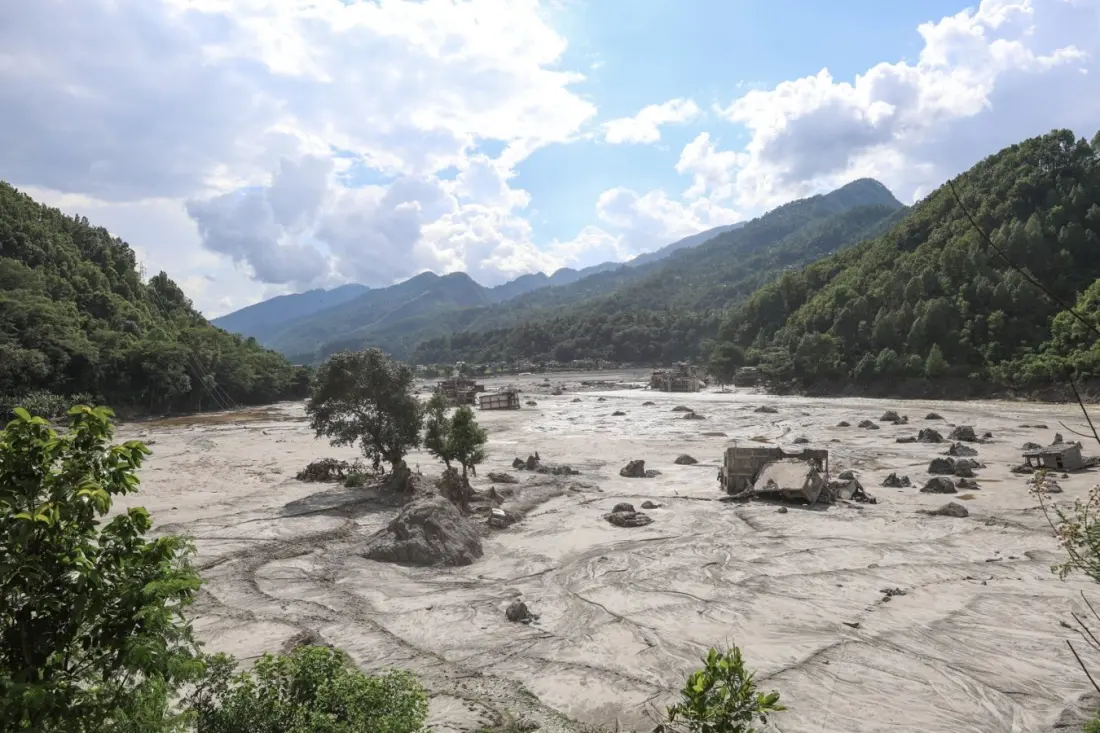
On the morning of 26 August, a mountainside below Tsangbu Ri in the Langtang Lirung massif collapsed. Around two square kilometres of rock and glacier ice fell roughly 1,400 metres, heating and liquefying as it went, and raced down the valley at an average of 188km/h. Seven minutes later it hit Rasuwagadi, and the resulting flood ran some 200km down the Trisuli river through six districts.
For anyone planning to trek in Langtang or cross into Rasuwa, the details matter. Nepal's flood warning system did work downstream: a gauge near Syaprubesi stopped transmitting at 08:50, and by 09:15 the Department of Hydrology and Meteorology had confirmed a major wave and issued warnings. That was enough for a headteacher in Nuwakot to move 900 schoolchildren to high ground minutes before the water arrived — though he acted on informal calls, not any official protocol, because no legal procedure turns a forecast into an evacuation.
The harder truth, argued in Nepali Times, is that Nepal's planning documents cover glacial lake outburst floods and monsoon flooding — but not a dry rock-and-ice avalanche like this one. The hazard had no name in the plan, so no budget line, no sensors and no watcher. Satellite data later showed the slope deforming from June, and Chinese seismic networks recorded the collapse within seconds; nobody was reading it in real time. Nepal has received under 5% of the $1 billion it said it needed for glacial risk reduction, while Pakistan has claimed more than half of all regional glacier funding since 2002.
The bill is enormous: recovery needs are estimated at 12% of last year's national income, more than half of it in the energy sector, where public hydropower projects were uninsured. A World Weather Attribution assessment found human-caused warming added about 1.5°C to summer temperatures at the failure site, and that Langtang Lirung's ice has been retreating roughly four times faster since 2010 than in the two centuries before.
Why should a traveller care? Because the 2021 Chamoli disaster in India killed 204 people, many of them workers at hydropower sites — and because Nepal's own record-keeping shows how blind spots persist: its regional hazard database logs 697 lake bursts since 1833 but returns no avalanche data for Langtang National Park in 2015, the year the original Langtang village was buried. Travellers heading to Rasuwa, the Trisuli corridor or anywhere in the high Himalaya should treat mountain hazards as broader than lake floods, follow DHM notices closely, and know that downstream warnings now demonstrably save lives even when the mountain itself gives no time. Prime Minister Balendra Shah is taking the case to the UN General Assembly this week, framing it as a global climate responsibility — but the article's point stands: the knowledge to watch these slopes already exists in Kathmandu. What's missing is the mandate.
Nepali Times