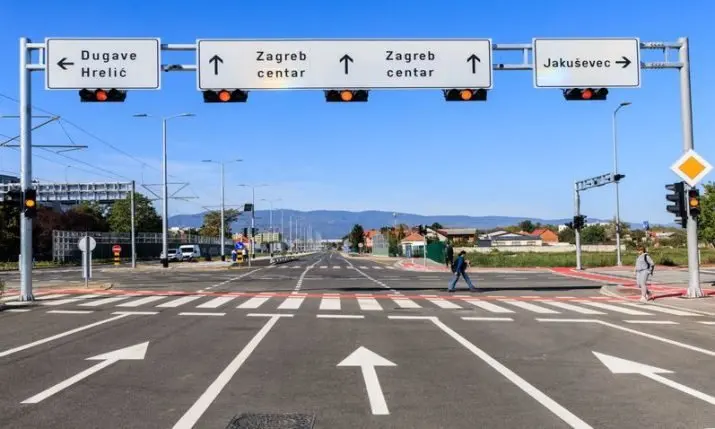
Zagreb has a new front door. On 2 October 2026, the reconstructed Sarajevska Road opened to traffic after two years of works, giving the Croatian capital a wider, faster southern entrance. Nearly two kilometres of road have been rebuilt with three lanes in each direction, plus new footpaths, cycling paths and noise barriers along the route.
Sarajevska matters because it's one of the main ways into Zagreb from the south, connecting Novi Zagreb and the surrounding districts with the city centre. The upgrade boosts capacity on this heavily used approach and should ease some of the daily congestion that's built up as the capital grows and commuting pressure increases.
There's more to come, too. A new tram line on the route is expected to start running next month, adding a proper public transport option for people living along the corridor — good news for visitors staying in Novi Zagreb's more affordable hotels and apartments who'd rather not drive into the centre. Further ahead, planners want to build an overpass linking Sarajevska Road directly to the Zagreb bypass, which would tie the southern part of the city into the wider motorway network and reshape traffic flow around the southern approach.
For anyone road-tripping through Croatia, the practical takeaway is simple: arriving from the south — say, heading up from the Dalmatian coast or across from Bosnia — your entry into Zagreb is now smoother and less frustrating. The six lanes should absorb the summer holiday traffic that routinely clogs the approach roads in peak season. And once the bypass connection lands, drivers may be able to skip city streets altogether when passing through towards Slovenia or Hungary.
Even if you're not driving, the project is a small sign of how much Zagreb is changing. The city has been steadily upgrading its transport network, and the mix of lanes for cars alongside dedicated space for pedestrians and cyclists reflects the direction of travel. Novi Zagreb, long treated as the practical, residential side of the river, is becoming better connected and easier to base yourself in — think quicker tram rides into the old town, easier access to Bundek Lake and the Jarun recreation area, and fewer reasons to pay centre prices for accommodation.
If you're planning a stop in the capital, the new road won't change what you see once you're there — the market stalls of Dolac, the upper town's cobbled lanes, the Museum of Broken Relationships — but it does make getting in and out less of a headache. That counts for a lot on a trip that combines city time with a coastal drive.
Story via Croatia Week.