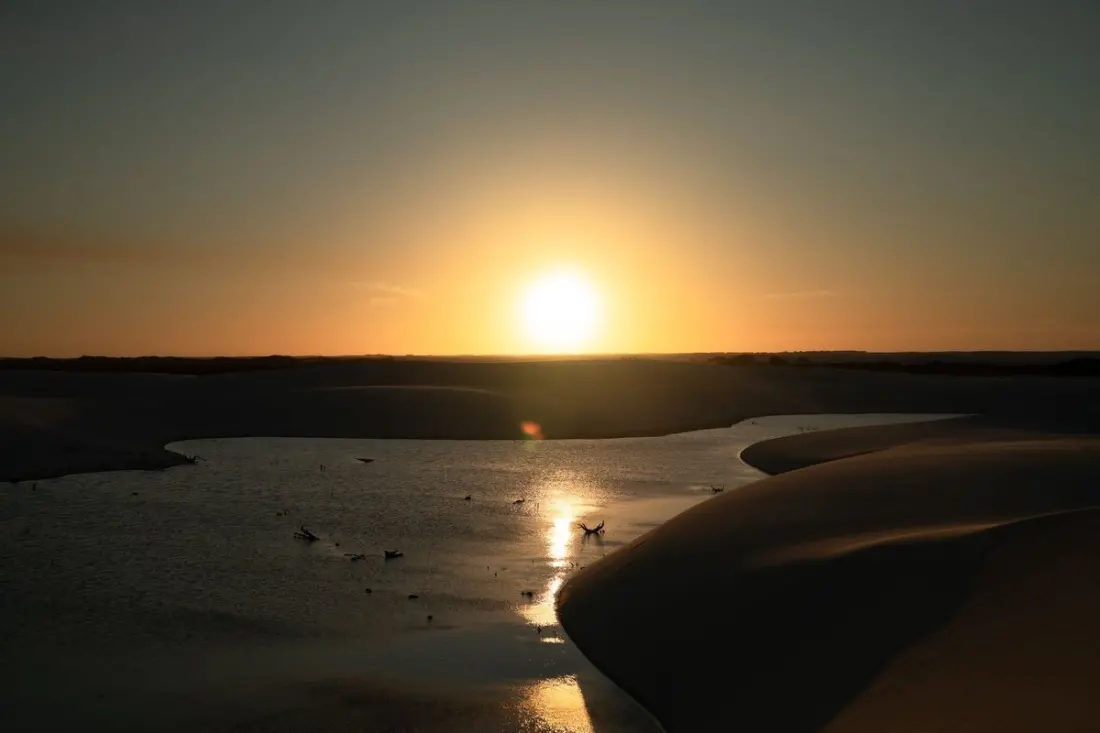
Brazil's Lençóis Maranhenses is having a moment. Fresh off UNESCO World Heritage status, the national park with its endless white dunes and rainwater lagoons pulled in 656,388 visitors in 2025 — a 41% jump on the previous year, according to park authority ICMBio. That surge is exactly what a new short documentary from Brazilian operator PlanetaEXO is pushing back against.
The film, "Lençóis Maranhenses: Far From The Crowds, Close To What Matters," is just five and a half minutes long and free to watch on YouTube. Rather than pointing a camera at the famous lagoons near the entrance, director Lucas Ribeiro takes viewers deep into the park to the Baixa Grande oasis — hours from the nearest road — where a small number of trekkers cross the dunes on foot and sleep in local family homes.
The numbers behind the film are the interesting part. Over two seasons, PlanetaEXO took just 583 travellers on the multi-day dune crossing, deliberately capping volume. The company says 80% of gross revenue stayed at the destination, with more than 1.4 million BRL (around $250,000 USD) paid directly to guides, drivers and host families — no middlemen. Founder Ribeiro is blunt about the model: if most of the money doesn't stay with the people who host, cook and walk with the traveller, it isn't community-based tourism at all.
The human stories carry the argument. Seu Moacir, a former subsistence fisherman in Baixa Grande, says two decades of fishing earned him next to nothing, while hosting trekkers now provides a steadier income. His wife, Dona Dete, has expanded their guesthouses with the proceeds. Testimonials from European trekkers echo the theme — French visitor Morgane Meyer says she chose the crossing specifically to avoid big groups, and Portuguese traveller Diogo Melo notes how visibly the overnight stays lift family incomes.
For anyone eyeing the park, the takeaway is practical as well as ethical. The day-trip lagoon circuit near Barreirinhas is where the crowds concentrate, especially in the July-September high season when the lagoons are full. The multi-day crossing to remote oases like Baixa Grande offers a completely different experience — empty dunes, no phone signal, and a bed and dinner in a family home — while keeping your money in the community rather than with tour-batch operators. Independent travellers can research local operators running small-group or private crossings, and should expect basic facilities: think simple rooms, generator power and home cooking, not hotels.
With visitor numbers climbing and UNESCO attention only set to grow, the window for seeing Lençóis Maranhenses quietly is narrowing. This film is a short, honest look at what the alternative looks like — and a decent bit of pre-trip inspiration you can watch in the time it takes to drink a coffee.