
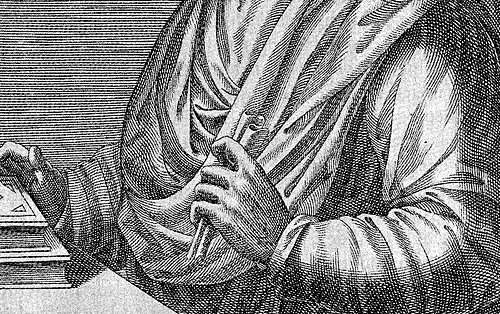
Here's a travel tip from 37 BC that turns out to be surprisingly sound: don't build your holiday home next to a swamp. The advice comes from Marcus Terentius Varro, a Roman scholar who wrote it into De Re Rustica, his practical manual on farming and estate management. What makes the passage famous is not the property guidance but the reasoning behind it — a description of germs nearly two millennia before anyone could see them.
Varro warned landowners that marshes breed "minute creatures which cannot be seen by the eyes", which float in the air and enter the body through the mouth and nose, causing serious disease. Swap "creatures" for "pathogens" and you have a rough sketch of germ theory, a concept that wouldn't be scientifically proven until Louis Pasteur and Robert Koch got to work in the 19th century. Varro had no microscope, no experiments, no evidence — just an unusually sharp guess.
He was reacting to a real pattern. People around the ancient Mediterranean had long noticed that those living near wetlands fell sick. The standard explanation involved bad vapours rising from stagnant water. Varro's neighbours were right about the danger and wrong about the mechanism: marshes are mosquito nurseries, and mosquitoes carry malaria. But the Romans had no idea insects spread disease, so Varro's leap — that the danger was living things, not just foul air — was genuinely extraordinary for its time. Born in 116 BC and one of the most learned figures of the Roman Republic, he wrote on everything from language to philosophy, yet his sharpest medical insight ended up buried in a farming guide.
He wasn't working in a vacuum, either. Greek atomists like Democritus had proposed invisible particles making up all matter, and the poet Lucretius suggested unseen "seeds" could spread illness. Varro pushed one step further by making those particles alive. Ironically, the idea went nowhere: medicine spent the next 1,400 years on the four humors theory, and physicians had little reason to read an agricultural manual.
Why does this matter to a traveller? Because the places Varro wrote about are still there. The low-lying plains around Rome — drained and re-drained over centuries — were malarial wetland well into modern times, and visiting the Roman countryside means walking through the same landscape that prompted his warning. It's a good reminder that the history of a destination isn't only ruins and art; it's also the slow, often accidental story of how people learned to live safely on the land.