When Hunga Tonga-Hunga Ha'apai exploded on January 15th, 2022, the blast was heard in Fiji. University of Fiji Vice-Chancellor Professor Shaista Shameem was driving when she heard the boom; minutes later came the news from Tonga. Local journalist Marian Kupu, living near the shore in Kolovai, described families fleeing as ears rang and hearing failed. It was a regional wake-up call — and, for Shameem, the start of something new.
What shocked her wasn't just the eruption. It was what happened when she went looking for expertise: Fiji had no volcanologists at all. Earth scientists existed, but none with real volcano knowledge. Specialist training sat almost entirely in Australia and New Zealand, and even there it was rare. The Pacific — stitched through with fault lines, underwater volcanoes and the Ring of Fire — had been relying on outsiders to understand its own backyard.
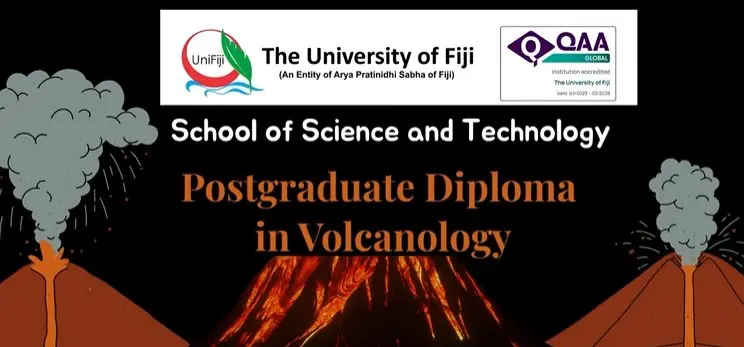
The university set about fixing that. It now offers a postgraduate diploma in volcanology, approved by Fiji's Higher Education Commission and supported by local student loans and scholarships, with a broader Earth and Planetary Sciences undergraduate pathway planned. The scope grew quickly from a single volcano course into a fuller earth sciences programme, one that blends planetary science with Pacific realities in a way no other regional institution does.
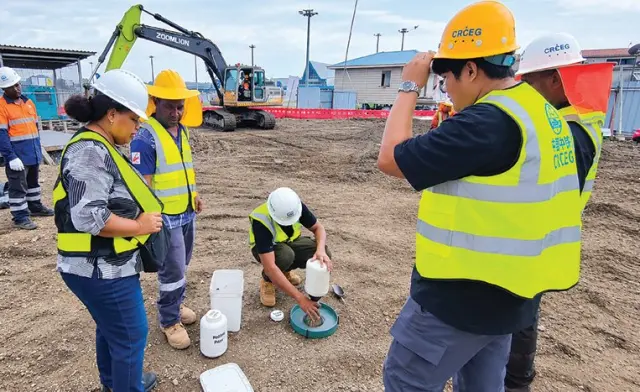
The teaching is deliberately hands-on. Students will map historical eruptions, work with data patterns and head into the field — potentially to Tonga itself, or New Zealand's Mount Ruapehu. There's a modern twist too: the university plans to use AI for prediction and pattern recognition, an approach Shameem compares to how traditional Pacific navigators read stars and currents.
Interest is already regional. Tuvalu has signed an MOU to send at least five students a year, and Shameem hopes other island nations will follow, ending the dependence on visiting foreign experts. Entry needs a 3.0 GPA or equivalent professional experience. Her argument is blunt: the real risk is not knowing, especially for small island communities. "It'll never happen to us" isn't an option in a region where volcanoes, cyclones and rising seas are all part of life.
For anyone who travels in the Pacific, this matters more than it might first appear. Destinations like Tonga, Vanuatu and Fiji sit on some of the planet's most active volcanic terrain, and visitors share the same risks — and the same need for good local warning systems — as residents. A generation of homegrown volcanologists, trained on local eruptions and local knowledge, should mean faster, better-informed responses the next time the ground rumbles. The 2022 eruption cut Tonga's communications and stalled its tourism recovery for months; preparedness is an industry issue as much as a scientific one. The next big one may be a matter of time, as Shameem puts it — but the region is now working to meet it with its own experts.