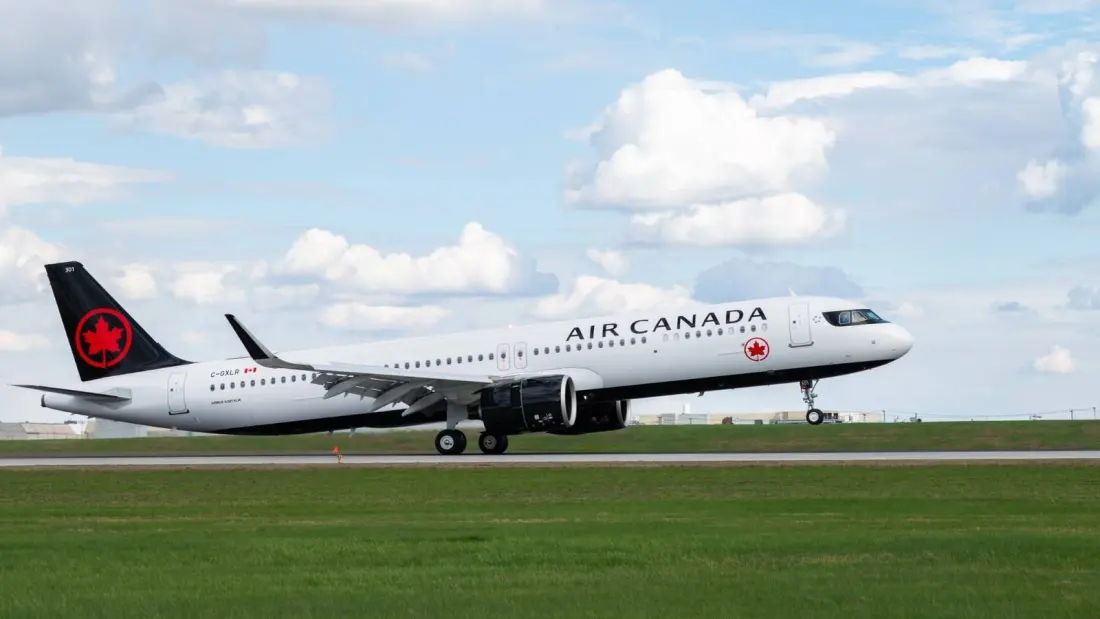
A single-aisle jet on an eight-hour hop across the Atlantic still sounds odd, but that is exactly what Air Canada is about to make routine. Starting 16 December 2026, the Star Alliance carrier will fly its Airbus A321XLR nonstop between Ottawa and London Heathrow — the first time the type has served the Canadian capital. The westbound leg back from Heathrow is blocked at up to eight hours, so it is genuinely long-haul flying in a narrowbody shell.
The Ottawa route is a seasonal play: the A321XLR runs three times a week through late March, then hands over to a bigger A330-300 for four weekly flights as the summer timetable kicks in. It is a neat example of how airlines now use fuel-efficient small jets to keep long routes alive when demand is soft, then swap in widebodies for the peak.
A day after the Ottawa launch, on 17 December, the same type replaces the Boeing 737 MAX 8 between Halifax and Heathrow. Unlike Ottawa, this one is a permanent switch, scheduled through at least August 2027. Frequencies start at four weekly flights each way, rising to daily when the summer schedule begins. Halifax has long been Atlantic Canada's main long-haul gateway, so the upgrade matters for anyone in the Maritimes who would otherwise connect through Toronto or Montreal.
The third route is arguably the most interesting for UK-bound travellers: from 28 March, an A321XLR will operate a daytime rotation between Toronto Pearson and Heathrow, daily, in both directions. If overnight red-eyes wreck you, a daylight crossing is a genuinely appealing alternative. At summer peak, Air Canada plans five daily Toronto-London departures, with the small jet flying alongside A330s and 777s.
So what is the plane actually like? Air Canada has three A321XLRs so far from an order of 30, with the first delivered in April 2026. The cabin is two-class: 14 Signature Suites in a 1-1 layout with lie-flat beds, 19-inch screens and wireless charging, followed by 168 economy seats in Collins Meridian+ slimlines at a fairly standard 31-inch pitch. Extra legroom is available in rows 13-15 (34 inches) and rows 19-20 (35 inches), and economy screens are a generous 13.3 inches. Airbus pitches the type as burning roughly 30% less fuel per seat than the jets it replaces, and it can run on up to 50% sustainable aviation fuel.
For travellers, the practical upshot is more direct options between Canadian cities and Heathrow without changing planes, a proper lie-flat business product on routes that previously had none, and — for the Toronto route — the rare chance to watch the Atlantic roll by in daylight. Book the Ottawa route before late March if you want the narrowbody experience; after that you will be on a widebody. If legroom matters, aim for one of the flagged extra-pitch rows when selecting seats.