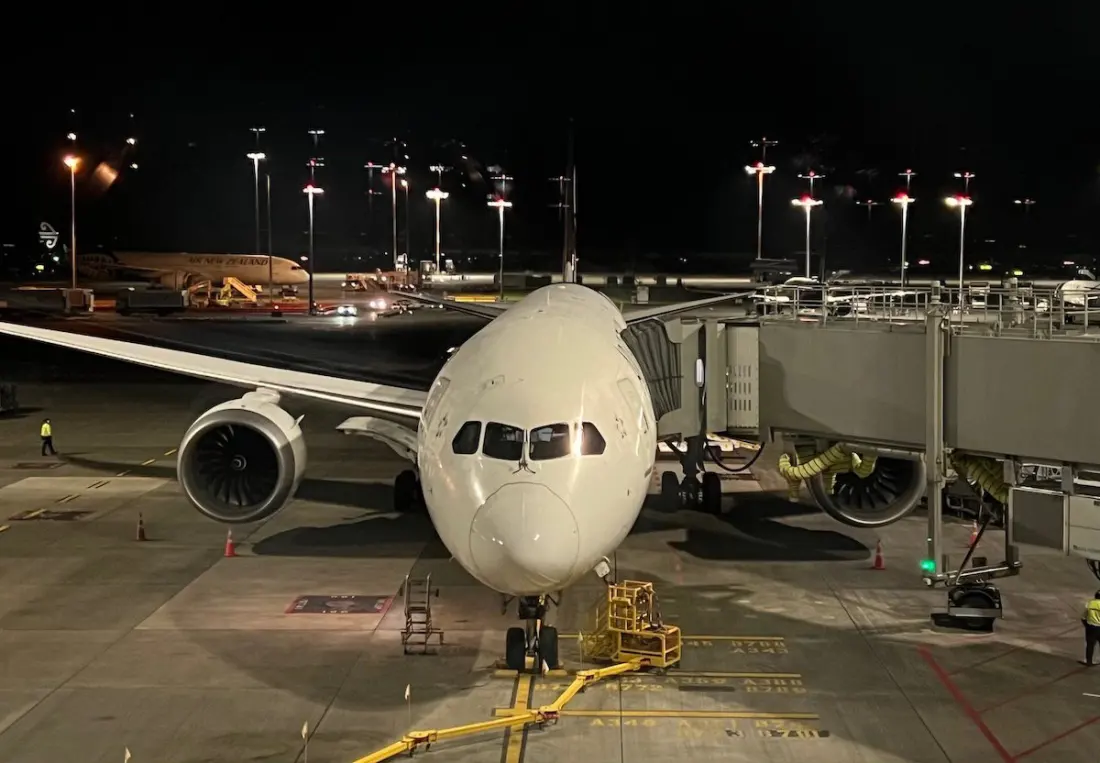
An Air New Zealand 787-9 bound from San Francisco to Auckland never left the gate on September 7, and the reason is stranger than the usual late-night delay: the pilots reportedly couldn't stand each other.
Passengers on flight NZ7 were told by email that the scheduled pilot was out sick. Plausible on the face of it — there's rarely a spare Air New Zealand pilot hanging around San Francisco — but reports soon pointed to something else entirely. Word circulating among the airline's pilots is that two crew members fell out during the inbound Auckland-San Francisco leg, with the dispute escalating at the layover hotel until it allegedly turned physical. One pilot reportedly reported the other to the company. The pilots were then flown home to New Zealand as passengers, apparently on separate aircraft.
The airline has been careful with its language. Chief Safety and Risk Officer Nathan McGraw confirmed the carrier is 'aware of a matter between two crew members off duty in the United States', while insisting there was no incident onboard the aircraft. New Zealand's Civil Aviation Authority has been notified and is weighing whether any regulatory action is warranted.
For the affected travellers, the disruption was real: with a replacement crew having to be flown in and mandatory rest requirements before the return leg, passengers were rebooked onto a flight the following day.
Pilots are paired with different colleagues on each trip and are trained in crew resource management precisely so personality clashes don't affect operations. But it happens, rarely, that a crew simply cannot work together — and in this case, whichever way you slice it, a self-declared unfit crew beats an unsafe one. Better a grounded 787 than two pilots flying twelve hours across the Pacific while barely on speaking terms.
What does this mean if you're booking the route? Practically speaking, almost nothing day-to-day — this is a one-off, and airlines rebook long-haul passengers quickly when crew issues strike. But it's a useful reminder that long-haul schedules carry built-in fragility: a single missing crew pair in San Francisco can cost you a full day. Travel insurance that covers delay-related costs, flexible plans for the first day of a trip, and knowing your rebooking rights go a long way on routes like this one. For the pilots involved, the question now is whether the regulator sees it the airline's way.
One Mile at a Time