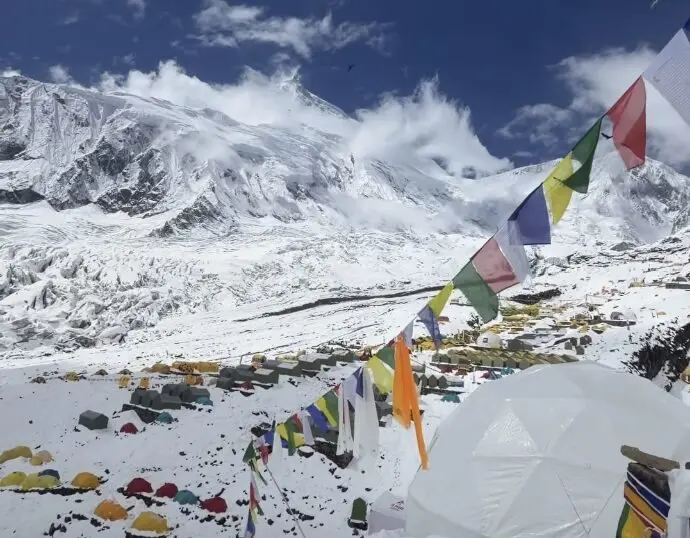
Nepal's Manaslu climbing season is over before it really began. Outfitters have pulled all climbers and even the rope-fixing teams back to Base Camp after heavy snowfall loaded the upper slopes with unstable slabs. The retreat follows a slab avalanche at Camp 3 on Sunday that killed two climbers in their tents, and a powder avalanche close enough that its shock wave rattled Camp 1.
Seven Summit Treks, the biggest operator on the mountain, made it official: the 2026 Manaslu season is closed. Helicopters have been shuttling people from Base Camp to Samagaon, Pokhara and Kathmandu, ahead of a cyclone expected to arrive from the Bay of Bengal within days — the kind of storm that buries trails in snow and grounds flights for days or weeks.
Here's the awkward part: the 493 foreign climbers holding permits this autumn each paid $3,000 just for the permit, and a guided expedition with a personal Sherpa and oxygen typically runs around $25,000. Permits are usually valid for a month and can be extended to the November 30 season close, so waiting out the storm was technically possible. Whether climbers were actually offered that choice is unclear, and nobody knows yet what, if anything, will be refunded after such an early cancellation. The roughly 500 guides, meanwhile, lose their summit bonuses entirely.
Some climbers are devastated. German teenager Nick Schubert, who hoped to become the youngest person to climb Manaslu without supplemental oxygen at 19, described sacrificing his savings, his youth and his personal life for expeditions that ended through no fault of his own.
The economics matter here. Operators now compress Manaslu into September and early October, then move Sherpa staff to Ama Dablam and smaller peaks for the rest of the autumn. Rope-fixing teams are due to leave for Ama Dablam and Himlung later this week regardless of the weather, so anyone who wants to stay and wait may find Base Camp dismantled around them. History suggests climbing after a cyclone is possible — after Cyclone Montha last late October, which triggered avalanches that killed nine people, teams still made successful ascents throughout November, including on Himlung, Ama Dablam and several unclimbed or rarely climbed peaks.
A record 659 people summited Manaslu in 2025, all in a nine-day window from September 20 to 29. That's the modern model: narrow windows, big logistics, little flexibility. For travellers eyeing an 8,000-metre peak, this story is a useful reality check — the mountain doesn't sell guaranteed summits, and operator scheduling can end your season whether the conditions justify it or not. It also signals a coming shift: with Nepal planning to require an prior 7,000-metre climb before allowing anyone on Everest, outfitters are pushing peaks like Himlung hard, which may reshape where the crowds (and the money) go in coming autumns.
ExplorersWeb