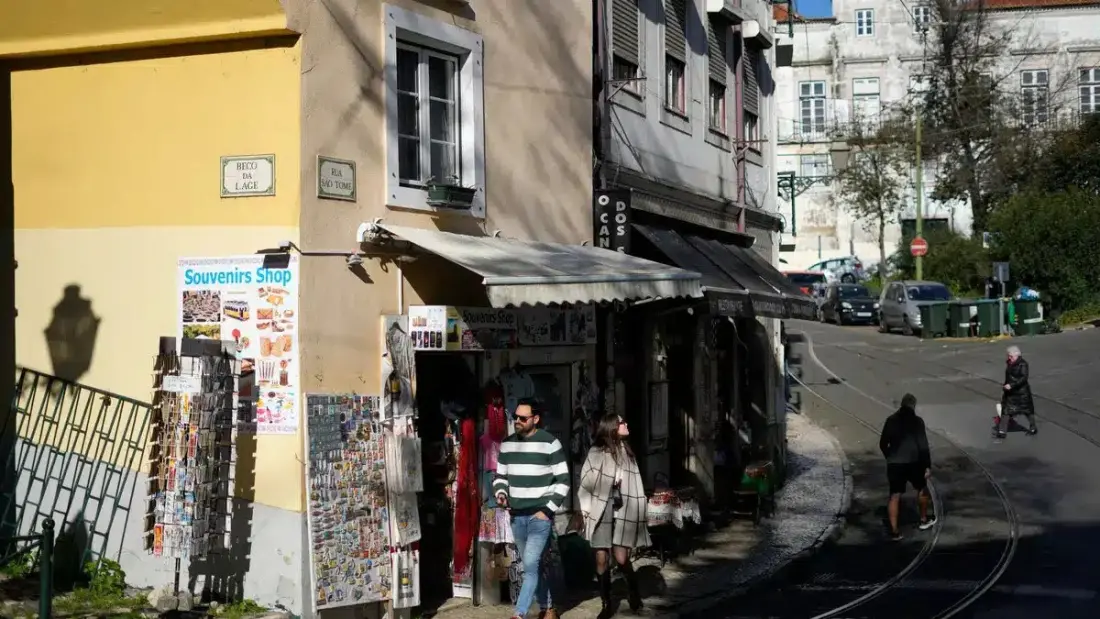
Portugal's government is preparing to hand local councils a say over which businesses open in the country's most sensitive urban areas — and travellers will notice the difference on the ground.
Economy Minister Manuel Castro Almeida told parliament that a new exception to the so-called 'zero-licensing' rule will be written into the Business Licensing Code currently being drafted. Under zero-licensing, entrepreneurs can open commercial premises without any input from the local council — a fast-track regime credited with cutting red tape, but one that has had side effects. The minister admitted that some initiatives have taken advantage of the system to run activities or use buildings illegally.
The fix: councils would be allowed to designate up to roughly 15% of their municipal urban territory — subject to municipal approval — where any new commercial licence needs a green light from the town hall first. The priority zones are those under high tourist pressure, or sitting near monuments and buildings of major significance. Think the baixas and old quarters of Porto, Lisbon, Évora or the Algarve's resort towns, where a flood of near-identical souvenir shops, llágrima-and-pastelaria clones and dubious front businesses has eroded local character.
The stated aim is to protect shops with genuine historical significance and promote what the government calls 'appropriate commercial uses' in historic centres. In practice, that could mean the corner grocery, the third-generation hardware store or the family tasca stands a better chance of surviving next to a monument than yet another fridge-magnet emporium.
Why should a visitor care? Because the character of a Portuguese old town is exactly what most people come for. This policy won't transform any street overnight — it still needs the law to pass and then each council to draw up its own protected zones — but it signals a shift in the tug-of-war between ease of doing business and keeping city centres liveable. Travellers frustrated by cookie-cutter high streets in otherwise gorgeous historic cores have, in effect, an ally in the town hall.
The detail worth watching: 15% is the target share of urban territory, not a hard cap for every council, and the exception applies only where municipalities opt in and define the zones themselves. So the impact will vary wildly — a proactive council in a tourism hotspot could move quickly, while others may never use the power. Amendments are being prepared 'in conjunction with local authorities', so expect the usual municipal politics over where exactly the lines get drawn.
If you're planning a city break to Portugal in the next year or two, nothing changes yet. But longer term, this is the kind of quiet policy tweak that decides whether Lisbon's or Porto's historic quarters feel like living neighbourhoods or open-air gift shops. One to keep on the radar — Source: Portugal Resident.