
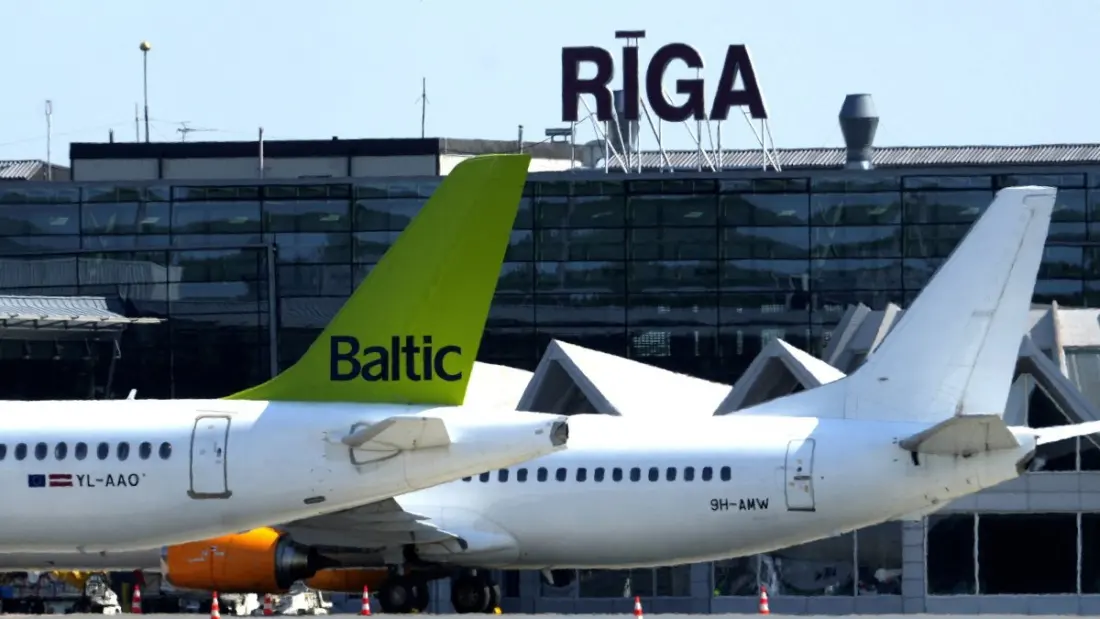
Latvia's national airline airBaltic has filed for Chapter 11 bankruptcy protection in New York, the latest carrier to buckle under the strain of the US-Iran war, which has doubled jet fuel prices and triggered the air travel sector's worst crisis since the pandemic. The good news for passengers: flights are operating as scheduled, and the airline expects the court-supervised restructuring to wrap up by June next year.
The filing is essentially a reset rather than a shutdown. airBaltic has lined up a commitment for €350 million (about $405 million) in fresh financing from lenders including Strategic Value Partners, Barclays, Morgan Stanley, Oaktree and Hayfin — albeit at a painful interest rate of roughly 12%, and still subject to court approval. CEO Erno Hilden, who notably steered SAS through its own Chapter 11 between 2022 and 2024, says the airline is chasing around €44 million in annual profit improvements and wants to cancel or defer deliveries tied to a $3.5 billion Airbus order for 40 more planes, plus $106.7 million in extra engines from Pratt & Whitney.
The numbers tell the story of how tight things got. airBaltic carries roughly $583 million in funded debt and finance lease liabilities, plus around €106 million in unpaid payroll and airline taxes. Revenue in 2025 was about €779 million. Prime Minister Andris Kulbergs said the airline had already burned through €380 million raised in 2024 bonds and exhausted a €30 million emergency government loan by June. Crucially, bondholders holding more than 70% of the debt had opted for liquidation — the Chapter 11 filing pre-empted that outcome.
There's a simple strategic mismatch at the heart of it: airBaltic flies a fleet of about 50 Airbus A220-300s and had dreamed of growing to 100 aircraft, partly by shuttling transit traffic from Russia, Belarus and Ukraine through Riga. That traffic is gone, and Kulbergs was blunt — Baltic routes really need only around 30 planes. The restructuring will shrink the fleet and scale back the wet-lease business that loans aircraft and crews to other airlines. Talks with unions about workforce adjustments are underway at a company that employs more than 3,000 people. The Latvian government, which owns the majority stake (Lufthansa holds 10%), is still hunting for a strategic investor.
Why should a traveller care? If you have a flight booked with airBaltic — the main carrier connecting Riga, Vilnius, Tallinn and a web of European cities — the airline says operations continue normally through the process, and Chapter 11 exists precisely to keep planes flying while debts are reorganised. Spirit Airlines, the other airline casualty of the fuel crisis, collapsed in May, and analysts warn that carriers with stretched balance sheets remain at risk. Anyone flying with smaller European airlines in the coming months would be wise to keep an eye on the news, book with payment methods that offer protection, and consider travel insurance that covers airline failure. For now, though, Riga's hub keeps humming — just with a smaller fleet ahead.
Sourced from Daily Sabah Travel.