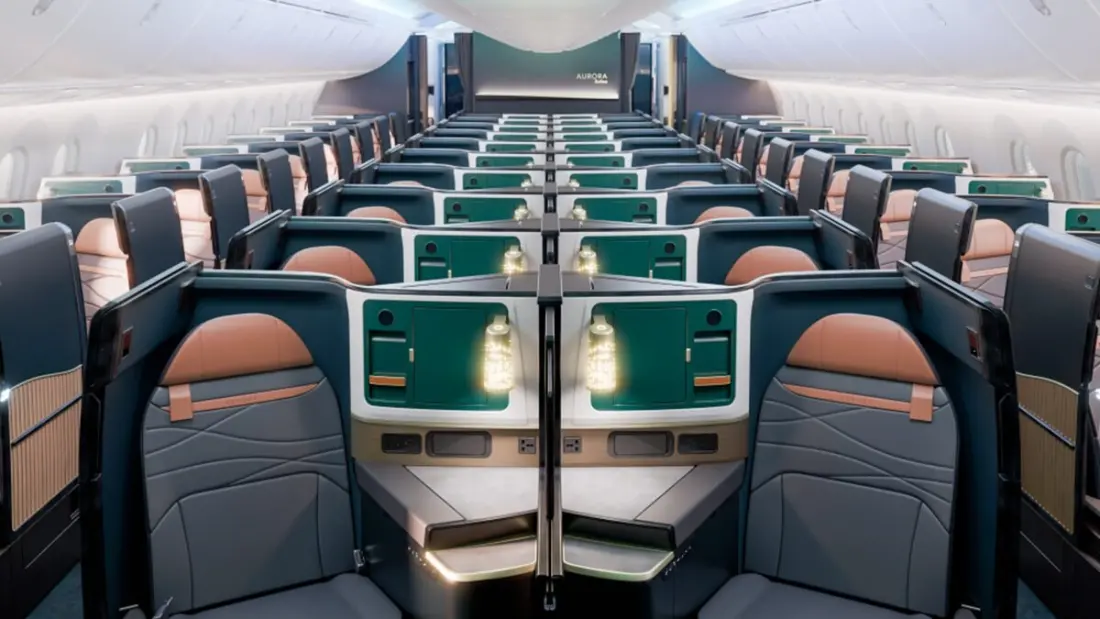
Alaska Airlines has long been the odd one out among the big US carriers: no lie-flat seats on any domestic flight. That changes in 2028, when at least 25 new Boeing 737 MAX 10s join the fleet, each with 12 'Aurora Suites' — lie-flat business seats angled toward the windows with direct aisle access — plus a new premium economy cabin the airline will call Premium Reserve, a recliner with a leg rest. The catch for eager flyers: certification timelines for the MAX 10 could shift, and Alaska hasn't said which routes get the jet first, though Seattle–New York and possible Boston services seem the obvious candidates.
The suites are a smaller cabin than rivals offer. American's A321XLR carries 20 Flagship Suites and United's upcoming Coastliner config has 20 Polaris seats. Twelve beds means fewer expensive seats to fill, so the product could work on a wider range of routes than just transcon trunk lines. It also means fewer upgrade slots, and Alaska hasn't explained how upgrades will work on these planes. One nice touch: the aircraft will wear the same northern lights-inspired livery as Alaska's Dreamliners, so you'll know from the tarmac whether you're getting the suites. Note they won't have doors — and so far, Alaska hasn't committed to letting domestic suite passengers into the new flagship lounge.
That lounge is part of a broader push. In Seattle, Alaska is building a business-class facility on the expanded C concourse opening in late 2027, answering Delta's Delta One lounge there. The complex, including the standard Alaska Lounge, will total about 41,000 square feet, with the exclusive section offering showers, wellness spaces and à la carte meals with table service.
Long-haul is getting attention too. Alaska's 787-9s get a refreshed 'Aurora' interior with roughly 46% premium seating including extra-legroom economy, while the real winner may be Hawaiian's tired Airbus A330s, which will be reconfigured so every business seat has direct aisle access.
There's also news for points collectors: Bank of America will begin transferring rewards points to Alaska's Mileage Plan, a long-rumoured move that makes the airline's valuable partner redemptions easier to reach.
For travellers, this matters if you fly Alaska's long routes or connect through Seattle. The airline is clearly positioning itself to compete with the big three on premium domestic and trans-Pacific product rather than relying on its old friendly-homework-airline image. If you hold Alaska miles or fly its routes often, 2027-28 is when the experience changes — just temper upgrade expectations with only 12 suites per plane.