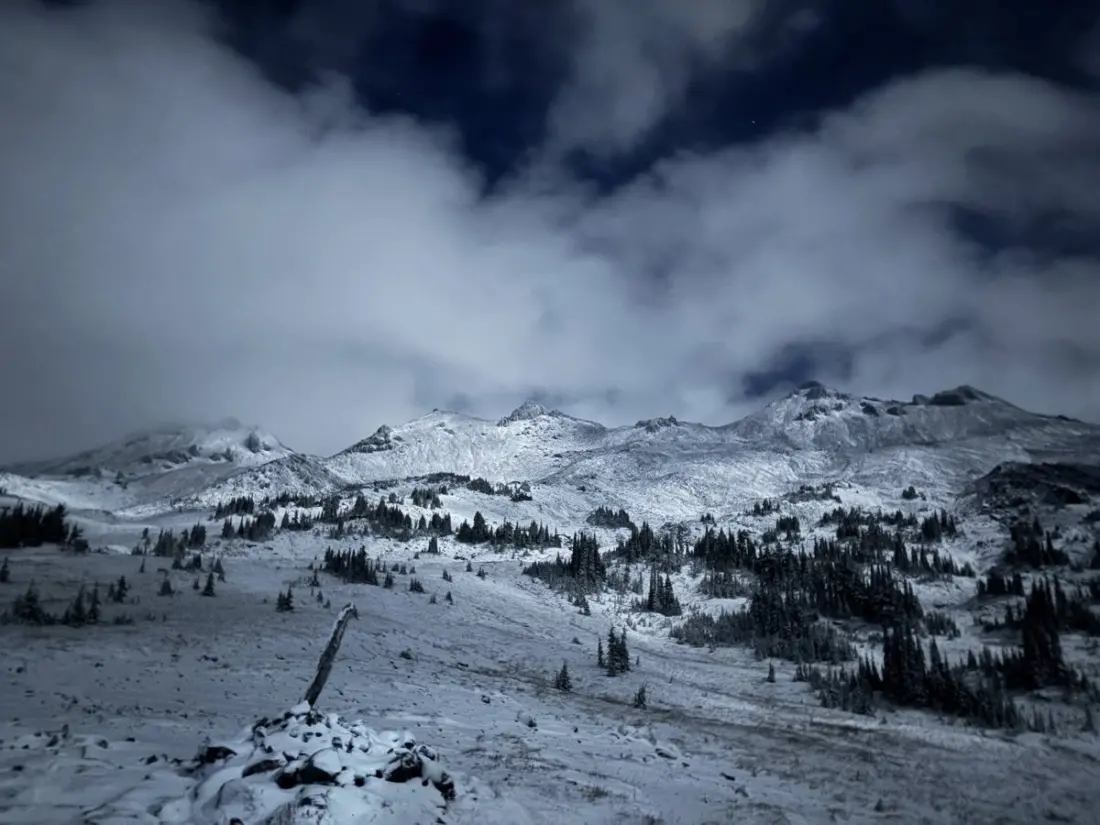
A winter storm in Washington state nearly claimed a thru-hiker's life this weekend — and the rescue is a sharp reminder to anyone heading into the mountains off-season that conditions up high can flip from autumn to full winter fast.
The hiker, a man in his 20s, was camped at around 7,000 feet on the Pacific Crest Trail in the Goat Rocks area of Lewis County when the storm hit. Snow and wind gusts reaching 60mph collapsed his tent, and he became hypothermic and unable to walk. His lifeline was a Garmin inReach satellite messenger: he triggered an SOS on Saturday night, alerting Tacoma Mountain Rescue hours before anyone else would have known he was in trouble.
Because helicopters couldn't fly in the storm, five rescuers set out on foot, hiking eight miles through the night to reach him around 1:30 a.m. Sunday. They stabilised him in a tent, and two of the team stayed overnight using body heat to rewarm him. The whole party walked out Sunday morning, meeting rescuers from Pierce County Explorer Search and Rescue about five miles from the trailhead — who, in a nice touch, had hot chocolate waiting.
The broader takeaway is about timing. Early-season storms are becoming a real factor for hikers still on northern trails in autumn, and elevations above 6,000-7,000 feet in the Cascades can see serious winter conditions well before the calendar says so. Tacoma Mountain Rescue's advice: carry proper gear for cold and snow, pack more food than you think you need, and — crucially — carry a two-way satellite messenger. In this case, the SOS message got a rescue moving overnight rather than days later.
For travellers, the story doubles as a planning note. The Goat Rocks Wilderness is one of the PCT's most scenic stretches — alpine ridges, lake basins and views of Mount Rainier and Mount Adams — but it sits high and exposed. If you're hiking it in late September through October, build in weather escape routes and check mountain forecasts daily rather than relying on a valley forecast. Day hikers and backpackers in any shoulder-season mountain trip should treat a satellite communicator like the Garmin inReach as standard kit, not optional tech. Rescue teams can't launch helicopters in storms, so expect a ground-based, hours-long response — being warm, fed and locatable is what turns a bad night into a survivable one.
This wasn't a tourist tragedy in the making so much as a close call with a good ending, and the details are worth stealing for your own packing list: storm-worthy shelter, insulation layers, extra food, and a device that can call for help from anywhere.