
Neotropic Expeditions, one of the longest-running active travel operators in Ecuador and the Galapagos, has been certified as a B Corporation, scoring 94.3% in the independent audit of its social and environmental performance, governance and business practices. The credential is not handed out lightly: companies must document and measure practices that most tour operators keep informal, and then open them up for outside verification.
The company has history behind the badge. It started more than three decades ago and, in 2002, pioneered land-based multisport trips in the Galapagos — an alternative to cruise-based travel that swaps cabin life for hiking, kayaking and snorkelling, with time spent in the archipelago's inhabited communities. That model has since spread across mainland Ecuador, always with an emphasis on active journeys that put travellers face to face with local landscapes and the people who live in them.
The certification process pushed Neotropic to gather feedback from an unusually wide circle: staff, guides, suppliers, communities, commercial partners and past travellers. The point was to map where the company genuinely adds value and where it falls short — a useful exercise in an industry where the biggest impact decisions happen before a single guest lands. Which suppliers make the cut, how guides and local partners share in the revenue, what environmental standards are required of everyone in the chain: these choices shape what tourism actually leaves behind.
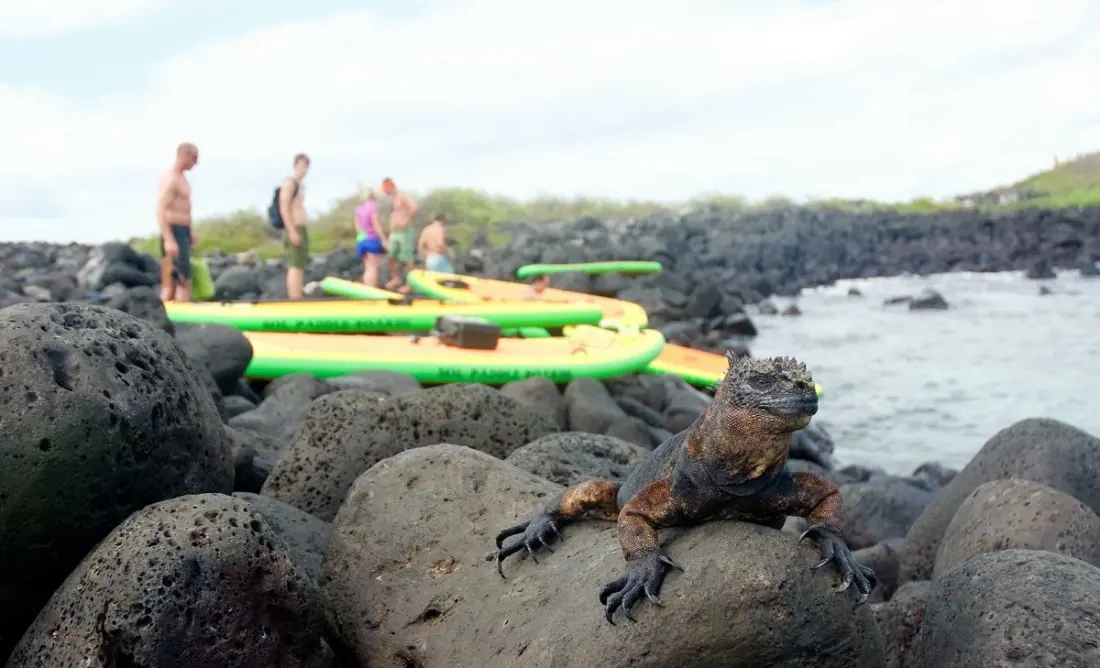
Some of that shows up in itineraries you can actually book. In the Galapagos, land-based programmes use naturalist guides and locally owned services, with conservation projects built into the route. On Isabela Island, select departures pair the classic Tintoreras Islets with rare access to coral reef restoration work in areas normally off-limits to visitors — meeting the people running the project rather than hearing about it secondhand. On the mainland, itineraries weave in farmers, cooks, artisans and community hosts, so local livelihoods become part of the trip rather than a token cultural stop.
Managing Partner Fernanda Villacís frames it simply: adventure travel already teaches you to pay attention to landscapes, people and limits — B Corp asked the company to turn that same attention inward and put evidence behind values it had long claimed.
Why should this matter to you as a traveller? If you're weighing up Galapagos or Ecuador operators, a 94.3% verified score gives you a concrete, independently checked signal that your money supports conservation work and local communities rather than leaking offshore. It's a template for what to ask of any adventure company: who's in the supply chain, where does the income go, and can anyone prove it?
Story via Adventure Travel News.