
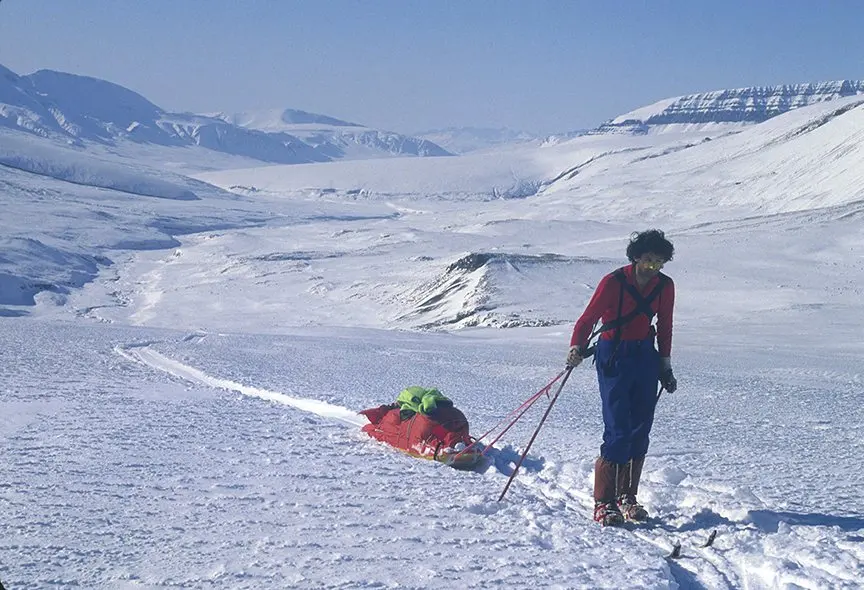
A veteran Arctic adventurer says he has never carried a satphone or an InReach into the wilderness — no radio even in the early days. That style of travel, he explains, only works if your body never breaks down. So he has built his entire life around avoiding injury, and in a piece for ExplorersWeb he lays out exactly how.
The origin story is mundane: a minor knee knock in a ball hockey league in his early 20s that took six months to settle. He quit the league on the spot and decided any future pursuit had to be injury-proof. Decades of polar travel later, the strategy has held.
Some of it is luck and genetics, he admits — including surviving a reckless free-soloing phase in his late teens. But most of it is deliberate. He sticks to what he cheerfully calls boring sports: swimming, long hikes, skate-skiing, brisk walking. No downhill skiing, no mountain biking, nothing fast or explosive. Arctic travellers, he says, prefer endorphins to adrenaline.
His other habits are worth stealing. He practises falling, quoting 19th-century explorer Richard Burton's advice to stay loose rather than rigid — useful when you're walking on hard snow in slippery sealskin boots and can go down several times a day. He engages his core for everything, including tying shoelaces. And he moves with expedition-level precision even on casual day hikes, as if he were 300km from the nearest person.
Twisges are treated as warnings, not annoyances. Feel a shoulder complain while swimming? He swaps in another activity for a few days and returns later. Before long trips he trains specifically for repetitive stress — building from 40-minute paddles to 2.5-hour sessions over months before a month-long kayak trip, then easing in with short first days.
Two quirks stand out. Since 17, he has put his shoes on standing up, and stretches his calves so his ankle is used to bending to 90 degrees under full weight — the result is that turned ankles have never caused him a strain. And he credits annual expeditions of 10-14 hours of daily movement for six to eight weeks a year, sometimes 60,000 steps a day on sledding trips, with keeping everything working. His baseline at home is 15,000 steps a day plus 40 minutes of aerobic exercise, six days a week. No breaks longer than a week since university.
Why should a traveller care? You don't need to cross an ice cap to use this. The core ideas — choose low-risk sports, respond to twinges early, prepare gradually for big trips, and keep moving consistently rather than in stop-start bursts — apply just as well to a hiking holiday or a week of kayaking as they do to the Arctic. It's a reminder that the trip of a lifetime starts with not getting hurt before you leave, or while you're out there.