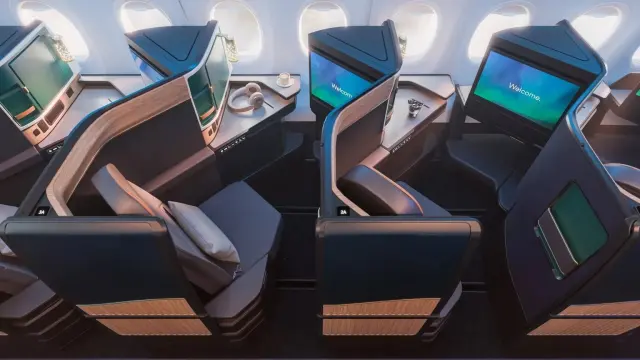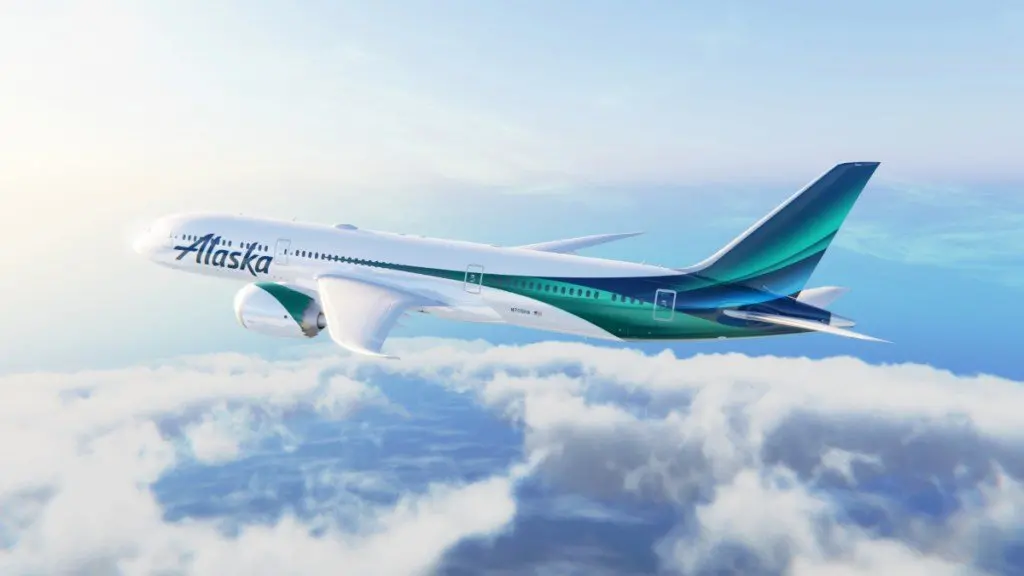
Alaska Airlines wants to look less like a regional carrier and more like a global one. The airline announced it is installing premium economy cabins and business class suites on its Boeing 787s, plus extra premium seating on transcontinental routes flown by its 737 Max 10s.
It is the latest step in a bigger pivot. Since closing its merger with Hawaiian Airlines in 2024, Alaska has been repositioning itself as a full-service international carrier rather than a West Coast domestic staple. It already flies from its Seattle hub to several destinations in Europe and Asia, and rolled out international business class seats earlier this year. The new premium economy product fills a gap: until now, passengers on its long-haul 787 routes effectively faced a choice between full business class and standard economy.
The timing is no accident. Premium cabins are where airlines make most of their money right now, as high-spending travellers keep paying up for lie-flat beds and extra legroom even when economy fares stay competitive. Alaska is chasing that revenue just like the big US network carriers already have.
There is pressure behind the move, too. Fuel prices have hit Alaska especially hard because of its heavy West Coast flying, and CEO Ben Minicucci said in July that fuel costs wiped out the airline's profit in the first half of the year. The carrier has suspended its 2026 guidance, which makes selling more expensive seats an obvious way to shore up the balance sheet.
What does this mean for travellers? If you are flying Seattle to Europe or Asia, you should soon have a mid-tier option that is neither cramped economy nor a four-figure business class fare. The same applies on premium transcontinental routes — think New York or Washington to the West Coast — where lie-flat business and added legroom cabins have become the norm on competitor airlines, and Alaska has been playing catch-up. With the Hawaiian merger also in the mix, Alaska's network now stretches across the Pacific, so these cabins are likely to show up on Hawaii and Asia routes operated with widebodies over time.
The caveat: Alaska has not yet detailed every route, seat count, or launch date for the new cabins, so anyone booking a long-haul flight in the next few months should check the aircraft and cabin layout before assuming a premium economy seat will be there. Still, the direction is clear. Alaska is spending money on the front of the plane, and passengers flying through Seattle are the ones who benefit — whether they are cashing in on a new mid-tier cabin or simply enjoying the fact that competition among carriers flying long-haul from the West Coast is heating up.
For frequent flyers, the interesting question is whether Alaska can match the big three US airlines on product quality while keeping the friendlier, less rigid feel it has long been known for. If it pulls it off, Seattle increasingly works as a one-stop gateway to both Europe and Asia — a genuine alternative to connecting through the bigger East Coast hubs.