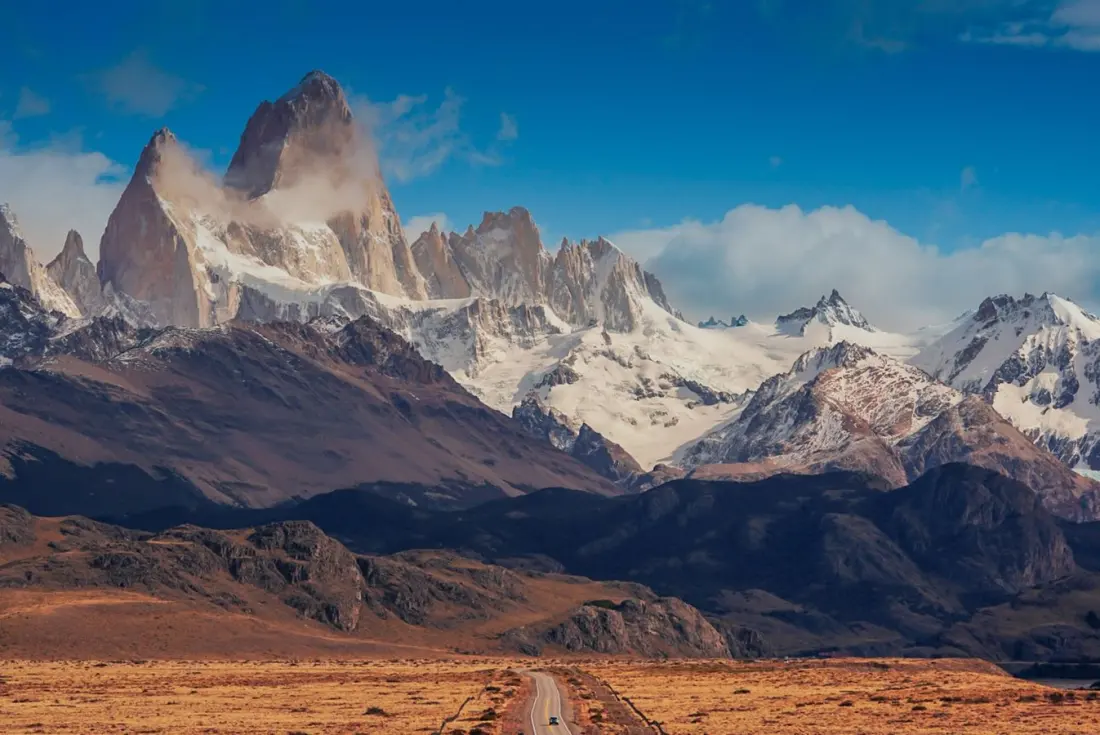
A new photo essay from Smithsonian Travel rounds up 15 images that capture what makes Argentina worth the long flight: jagged Patagonian peaks, Atlantic beaches, colonial-era streets and modern city blocks all sharing one very large country.
The scale is easy to underestimate. Argentina is the second-biggest country in South America by area, home to 46 million people, and two centuries into its independence from Spain. That size translates into serious variety for travellers — you could spend a week hiking in the south and another exploring historic towns in the north without ever repeating yourself.
The star of the photo collection is Mount Fitz Roy in Patagonia. Its granite spire climbs more than 11,000 feet above sea level and has become a magnet for hikers and climbers from around the world. The surrounding trails around El Chaltén offer some of the most rewarding day hikes anywhere in the Americas, with the peak revealing itself in glimpses between the trees.
But the essay makes clear that Argentina is far more than one famous mountain. Miles of coastline beckon swimmers and anglers, while the old towns show off quaint, colour-washed buildings from decades past. Set against those historic quarters, newer cityscapes have sprung up, so visitors get a blend of classic and contemporary — think tango-era cafés a short walk from glassy modern towers in Buenos Aires.
Why should this matter to you? Because Argentina rewards almost every style of trip. Adventure travellers get world-class trekking and climbing in Patagonia. Beach lovers have an extensive Atlantic shore, from the busy resorts of the east coast to wilder stretches further south. Culture-seekers can wander preserved historic neighbourhoods, and city fans get Buenos Aires' mix of European heritage and modern energy. Few countries pack this many holiday types into a single visa-free (for many nationalities) destination.
The practical catch is distance. Argentina is huge, so it pays to pick a focus — a Patagonia hiking trip, a city-and-wine route around Buenos Aires and Mendoza, or a northwest loop through Salta's colonial towns — rather than trying to see everything in one go. Internal flights are the realistic way to cover ground, and the seasons are flipped for northern-hemisphere travellers: the best Patagonia weather runs roughly November to March, which is summer there.
The photo essay itself is a quick scroll and a decent source of inspiration if you're on the fence about a South America trip. Treat it as a taster: the images cover the country's people, land and culture in one sweep, and they make a strong case that Argentina deserves more than a footnote on a wider continent itinerary.
First published by Smithsonian Travel.