
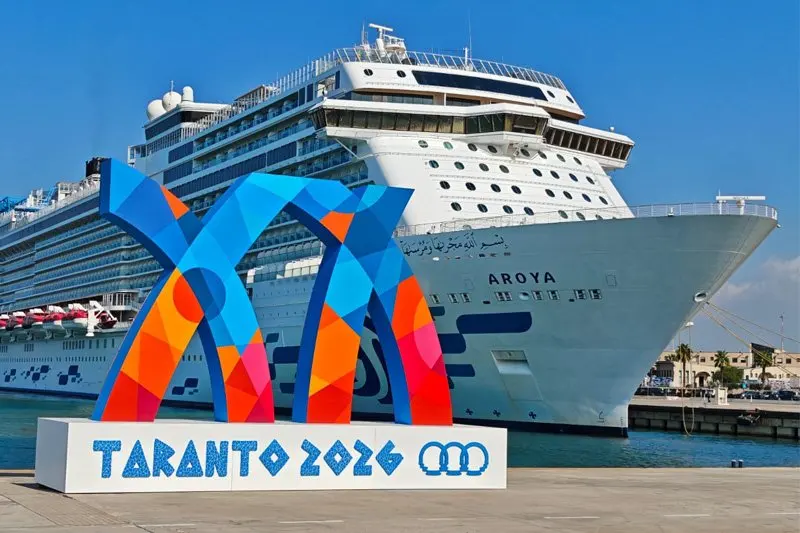
Taranto, the port city on Italy's Ionian coast, just hosted the Mediterranean Games 2026 — and one of its most unusual pieces of accommodation wasn't a hotel at all. Aroya Cruises, the Saudi-backed cruise line, docked its ship in the harbour for a 20-night charter, converting it into a floating Mediterranean Village for the Games.
The numbers give a sense of the scale. More than 4,000 athletes from 26 nations slept aboard, and across the charter period the ship welcomed over 15,100 guests in total, counting delegation members and visitors. Around 1,200 crew ran the operation, with 1,678 staterooms reconfigured to twin-bed layouts before anyone boarded.
Feeding competitors was a project in itself. A team of 273 chefs and culinary staff from 15 nationalities built the dining programme around athletes' nutritional needs, and because training and competition schedules rarely align with ship mealtimes, the galley produced roughly 550 packed lunches every day for delivery to venues. Recovery got its own space too: a fully equipped gym, dedicated studios and 20 treatment rooms that athletes could use alongside their own physiotherapists.
The ship also became a stage for official business. Dignitaries visiting during the Games included Prince Albert II of Monaco — treated to a special dinner onboard — plus the presidents of North Macedonia and Lebanon and Kosovo's acting president, along with ministers and Olympic committee leaders. The International Committee of the Mediterranean Games held a recognition event on the ship on September 1, two days before the closing ceremony.
Taha Nazer, acting CEO of Cruise Saudi, framed the charter as proof the young line can deliver at major international events. Behind the headline figures were less glamorous but telling details: a 24-hour laundry that processed 8,600 bags, team kits handled for entire delegations, and managed visitor access to keep daily operations moving.
Why should a traveller care? Two reasons. First, Aroya is an interesting newcomer — a Saudi cruise brand testing its hospitality chops in the Mediterranean, which hints at more itineraries and options in the region. Second, Taranto itself is having a moment. Long overshadowed by Puglia's headline towns, the city used the Games to show off its harbour, old town and seafood heritage, and ports that host big events tend to see better cruise and tourism infrastructure afterwards. If you're weighing a southern Italy trip, it's a name worth knowing.