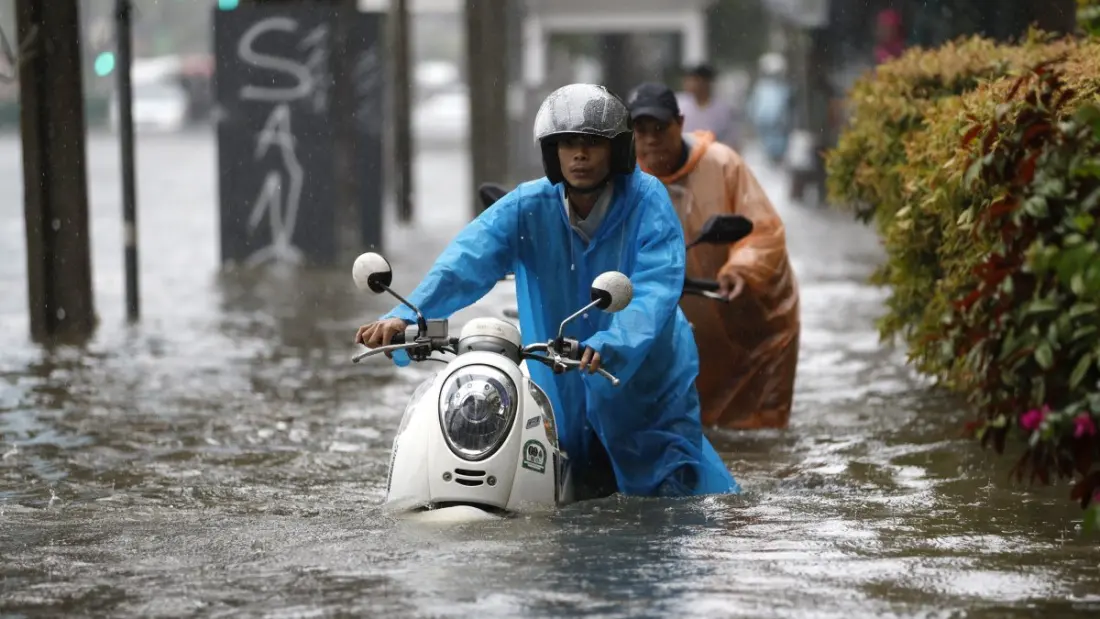
Bangkok has declared a flood disaster across all 50 of its districts after close to 48 hours of near-continuous rain swamped the Thai capital, submerging roads and pushing canal water into homes and shops. Governor Chadchart Sittipunt urged residents to stay indoors, while Prime Minister Anutin Charnvirakul cut short a trip to London to return and manage the response.
Nearly 300 millimetres of rain fell in the space of the deluge, overwhelming the city's canal network and pumping stations, which were already running at full capacity, moving around 1,200 cubic metres of water per second. At least 13 roads were flooded, and in neighbourhoods such as Ari and On Nut, residents waded through waist-deep water or filled sandbags to protect their homes. Around 980 people moved into temporary shelters and 36 bedridden residents were transferred to hospitals. One longtime canal-side vendor told AFP she believed this bout was worse even than the catastrophic 2011 floods, which killed more than 500 people nationwide and left parts of the country underwater for months.
By Saturday afternoon the governor said the situation had stabilised, and that with no further rain the floodwater should take two to three days to drain. Authorities are working with neighbouring provinces to divert water away from the city, and municipal crews are clearing rubbish from drains to speed things up. Officials stressed there is no need to panic about food shortages, even with some roads blocked.
The statistics behind the storm are striking: Bangkok recorded 487 millimetres of rain between 1 and 25 September, versus a 1991–2020 average of roughly 269 millimetres for the same window. September is always the peak of the monsoon, but this year has been notably wetter, and scientists continue to warn that warming driven by fossil fuel emissions is making extreme rainfall more frequent and more intense. Thailand's disaster prevention department also flagged low-pressure systems lingering over eastern, northeastern and central regions through Sunday.
For travellers, the timing matters. Bangkok, built on former marshland barely 1.5 metres above sea level, is always at its most flood-prone in September and early October. If you have trips planned in the coming weeks, keep an eye on forecasts, expect disrupted journeys on flooded roads, follow Bangkok Metropolitan Administration updates, and consider travel insurance that covers weather disruptions. Most of the city's airports, metro lines and elevated rail remain far less affected than street level, but riverside and canal-side accommodation can bear the brunt. The message from officials is calm rather than crisis: the water should drain within days once the rain relents.