
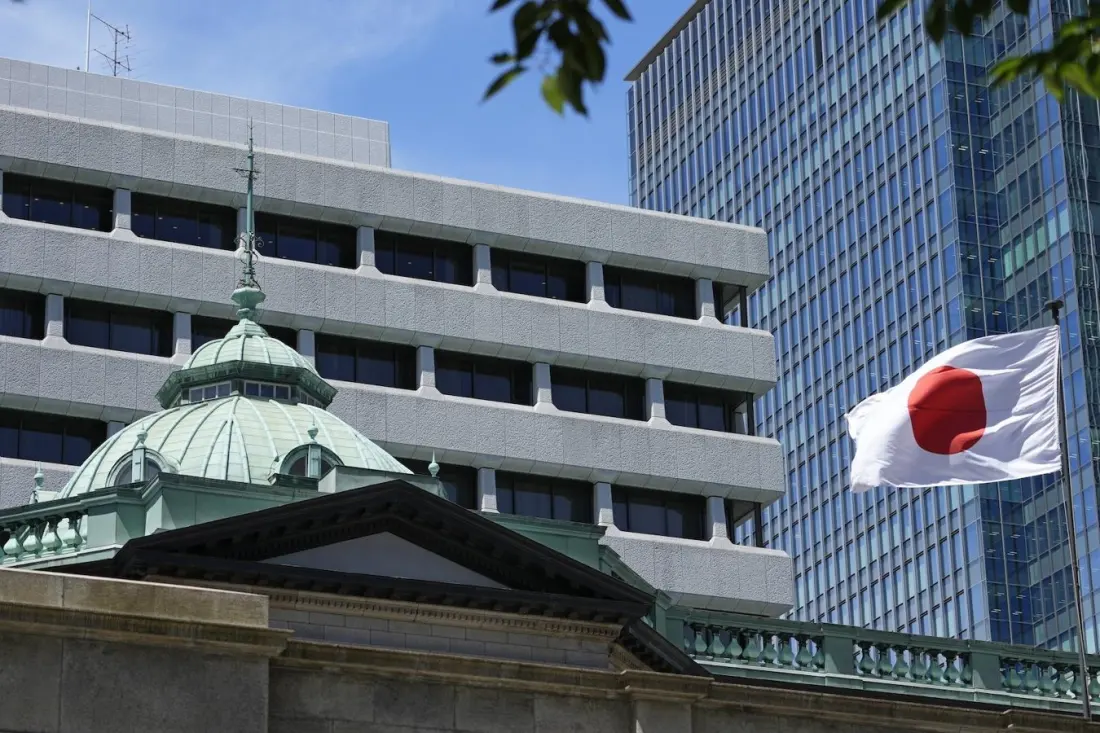
The Bank of Japan has pushed its benchmark interest rate up to 1.25%, a quarter-point rise from 1.0% and the highest level in 31 years. The decision came at the end of a two-day policy board meeting on Friday and landed exactly where markets expected it to, so global markets had largely priced it in beforehand.
The timing is no coincidence. It follows a week in which the US Federal Reserve also raised its key rate, keeping pressure on currency markets. Behind the scenes, Washington has been leaning on Japan to act, worried about the weakening yen. The two governments have even stepped into currency markets together recently to prop the Japanese currency up — a rare joint intervention.
Where does the yen stand now? The US dollar is trading at roughly 155 yen, still well off the levels that made Japan feel expensive to visitors a decade ago.
So why should a traveller care about monetary policy? Because the yen's value is basically the price tag on your entire trip. When Japanese rates rise and US rates stay high, the exchange rate picture shifts. At 155 to the dollar, Japan remains far cheaper than it was in the mid-2010s, when the rate sat closer to 110. Your hotel in Osaka, your ramen in Tokyo, your rail pass — all of it goes further when the yen is soft.
The wrinkle is direction. If Japan keeps raising rates while the Fed pauses or cuts, the yen could strengthen, chipping away at that bargain. travellers who have been sitting on the fence about a Japan trip might find that the strongest purchasing power they'll get is the one on offer now. Nobody needs to play forex trader about it, but if a Japan holiday is on your 2026 shortlist, the currency maths currently work in your favour.
Practical notes for anyone planning a trip: cards are now accepted almost everywhere in Japanese cities, but cash still matters in rural areas, small restaurants and some shrines and temples. Watch the rate when you exchange — airport kiosks tend to be the worst deal, and multi-currency cards or withdrawing yen from Japan Post and 7-Eleven ATMs usually beat the exchanges back home.
There's also a subtle knock-on effect worth noting. Higher Japanese interest rates tend to push up domestic costs over time — mortgages, borrowing, and eventually prices — which could slowly feed into hotel rates and tour prices. Nothing dramatic in the short term, but the era of Japan being absurdly cheap for visitors may have a shelf life.
For the travel industry, the story is bigger still: inbound tourism to Japan has been booming precisely because of the weak yen, and a sustained tightening cycle could cool that surge, changing flight and hotel availability in hotspots like Tokyo, Kyoto and Sapporo.
Bottom line: the rate rise itself is a finance-page story, but the currency it's propping up is the thing standing between you and a very affordable holiday. If Japan's on your list, the window remains wide open — for now.