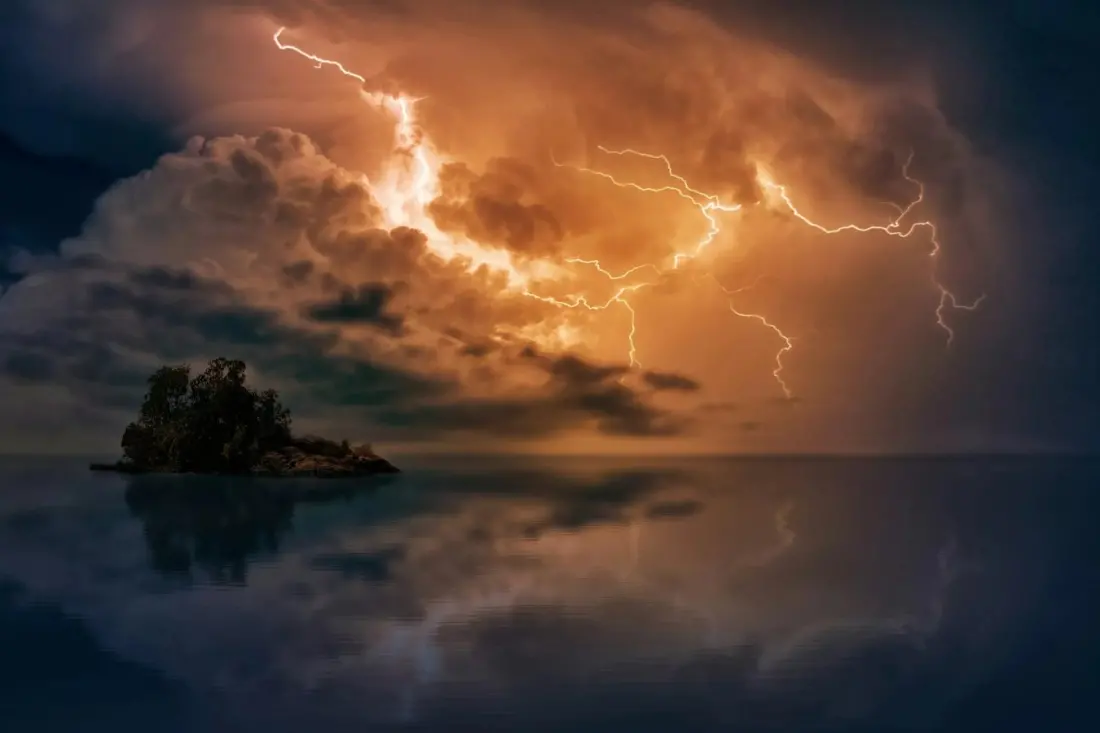
There's a spot on Lake Maracaibo in Venezuela where the sky puts on a light show nearly every night of the year. It's called Catatumbo Lightning, and it's not a metaphor: satellite data has flagged this lake as the planet's top lightning hotspot, with NASA recording hundreds of flashes on an average day and Guinness World Records rating it the highest concentration of lightning anywhere on Earth.
The science behind it comes down to geography. Lake Maracaibo is enormous — roughly 13,000 square kilometres and connected to the Caribbean Sea — and its warm surface pumps moisture into the air. That warm, humid air collides at night with cooler air sliding down from the mountain ranges ringing the basin, including foothills of the Andes. The result is thunderstorm after thunderstorm building over the same southwestern corner of the lake. Research suggests the storms fire on close to 300 nights a year, and a single display can run for hours.
Locals have known about it far longer than the satellites have. Sailors once used the distant glow as a natural navigation aid, earning the phenomenon the nickname the Maracaibo Beacon — a detail that gives a night on the water a bit of historical weight. References to the flashing sky go back centuries.
Seeing it isn't like visiting a monument. There's no visitor centre or viewing platform; the standard approach is to head out after dark in a boat and wait. That's also the point, says the source — from the water you're surrounded by the landscape rather than looking at it, and the fact that nature makes no promises about timing is part of the appeal. Displays vary in intensity with atmospheric conditions.
Travellers should also go in with clear eyes about the setting. Lake Maracaibo is a working body of water with a long industrial history, and it has faced real environmental strain — oil pollution, algae blooms and nutrient contamination among them. This is a lived-in landscape, not a pristine wilderness, and the lightning happens above all of it.
There's one more catch: safety. Current government travel advisories warn against travel to Zulia state, where the lake sits. Anyone seriously considering a trip needs to check the latest official guidance and local conditions before committing to anything. That single line of fine print may be the most important detail in this whole story.
Still, Catatumbo earns its place on the list of genuinely unrepeatable natural spectacles — the kind you can't book a slot for or guarantee with good weather apps. You pick the right part of the lake, get out on the water, and let the atmosphere do the rest. When it works, the payoff is simple and strange: total darkness, silent mountains, and a sky that keeps switching itself on above you.