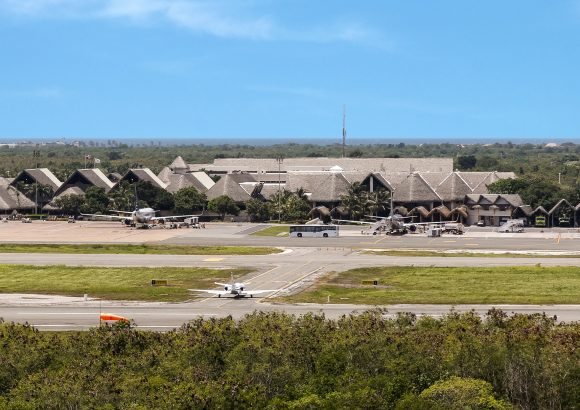
Punta Cana International Airport — the busiest gateway to the Dominican Republic's eastern resort coast — is set to receive a new Instrument Landing System with distance measuring equipment (ILS-DME), funded with RD$150 million for supply, installation and commissioning. The announcement came from the Dominican Institute of Civil Aviation (IDAC), whose director general Igor Rodríguez presented the project during Dominican Week in Washington, DC.
What does this mean for anyone flying in? An ILS-DME gives pilots radio-based guidance for approaches and landings, which matters most when visibility drops or storms roll in — a real consideration in a Caribbean destination with a June-to-November hurricane season. The upshot, according to IDAC, is safer landings, more efficient operations and, crucially for holidaymakers, fewer flights diverting to another airport because the runway conditions were marginal. Anyone who has had a Punta Cana trip derailed by a diversion will appreciate that.
The Punta Cana system isn't happening in isolation. A matching ILS-DME is planned for Las Américas International Airport near Santo Domingo, the country's main capital gateway. The wider modernization drive also covers weather monitoring: the Dominican Republic now operates three weather radars — in Punta Cana, Puerto Plata and at the Dominican Aeronautical Complex — giving forecasters and controllers a much better read on approaching storms.
Air surveillance is getting a boost too. IDAC plans to install a combined primary radar, secondary radar and ADS-B system at Cibao International Airport in Santiago by February 2027. Together, these investments build out the infrastructure pilots and air traffic controllers rely on, and improve the country's ability to track weather and traffic and respond before conditions disrupt flights.
For travellers, the takeaway is simple but useful: the Dominican Republic is investing heavily in the unglamorous nuts and bolts that keep flights on schedule. Punta Cana remains one of the Caribbean's best-served resort airports, with nonstop routes from North America and Europe feeding the all-inclusive strips of Bávaro and Cap Cana. Better landing technology and radar coverage should mean fewer weather-related knock-on delays — welcome news for anyone booking a winter sun escape or a shoulder-season trip when tropical weather can get lively.