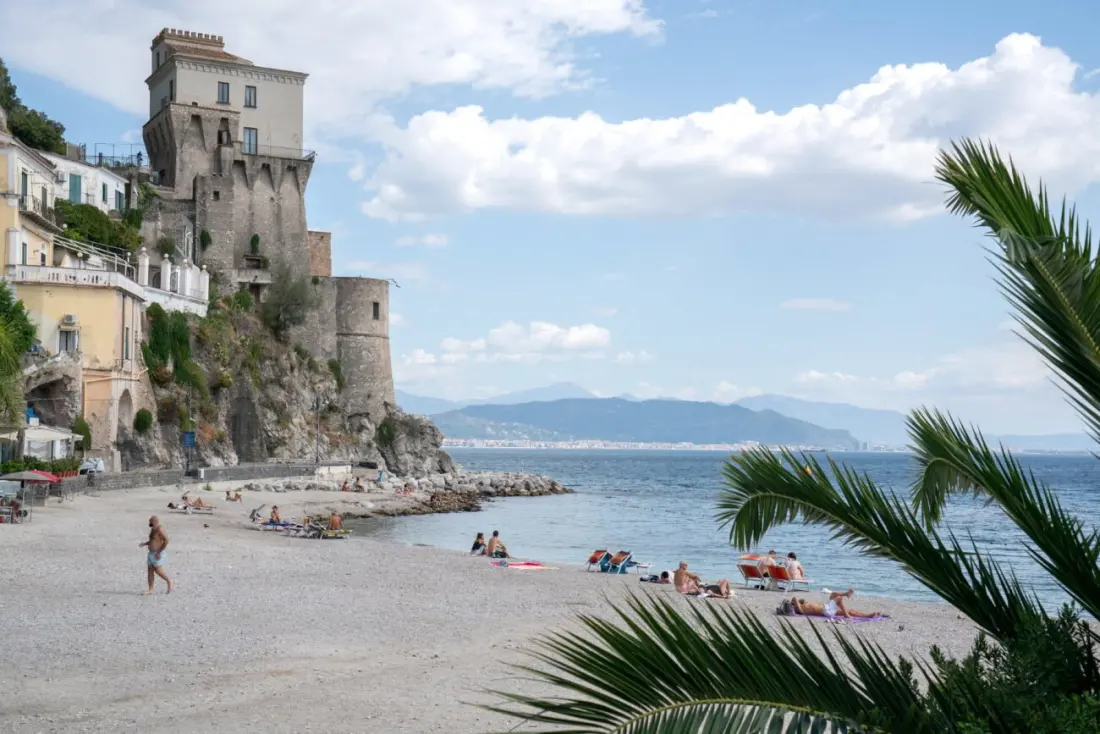
While Positano and Amalfi buckle under summer crowds, the fishing village of Cetara keeps a low profile at the eastern end of the coast. It has a small harbour with a working fishing fleet, a pocket beach watched over by a sixteenth-century stone watchtower, and a food tradition older than most nations: colatura di alici, an intense amber liquid made from salted anchovies, the direct descendant of the garum the Romans produced here two thousand years ago.
At Fabbrica Nettuno, a workshop on the hill above the village, the method has stayed essentially unchanged since the Middle Ages — and the same family has run it this way since 1950. Fresh anchovies are layered with salt in wooden barrels, pressed, and left to age. Over the months, a concentrated extract seeps out through the bottom of the barrel. That liquid is colatura: a few drops splashed over spaghetti with garlic and olive oil, or stirred into broth, delivers a savoury depth that chefs now chase far beyond Italy. The open question hanging over the workshop is succession — who in the next generation will keep this slow craft going.
Cetara's roots run deep enough that ancient Greeks considered this stretch of coast the edge of the known world, a place of feared peoples that fed into their myths. Just offshore lie three small islands that the geographer Strabo called the Sirenuse, home of the half-woman, half-bird creatures who lured sailors to their deaths until Odysseus sailed past. The sirens, arguably, are still working: the village has a habit of captivating visitors. When Anthony Bourdain filmed there in 2011 with local chef Pasquale Torrente for an episode of No Reservations, soothed by fried fish and local wine after a rough night, he reportedly said he wanted to buy the old watchtower and live out his days there.
For travellers, the appeal is simple. This is the Amalfi Coast with its texture intact — boats that actually fish, a eating scene built around anchovies, tuna and sea urchin rather than tourist menus, and a chance to taste one of Italy's most distinctive condiments at the source. Come for lunch, stay for a swim by the tower, and leave with a bottle of colatura in your bag.