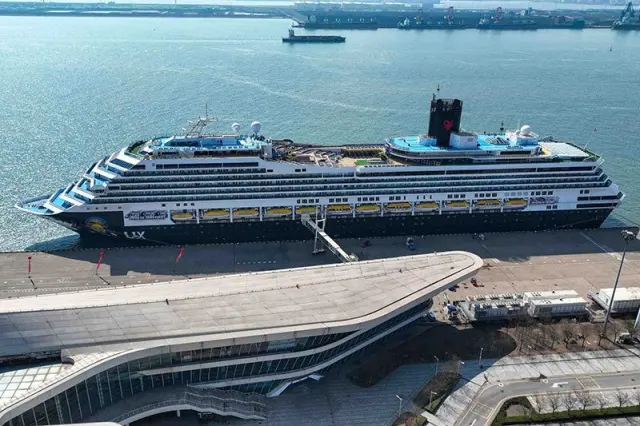
A 10-day small-ship cruise through Japan's southern islands sounds like smooth sailing — until you're briefed on Typhoon Jangmi bearing down on your route. That's how a recent Ponant voyage aboard Le Soleal began, and the trip turned into a masterclass in flexible itineraries, weaving from Osaka through Shikoku, Kyushu, the Ryukyu Archipelago and on to Taiwan while dodging a typhoon, an eruption and even a tsunami alert.
The captain sidestepped Jangmi by ducking through the calm Seto Inland Sea rather than confronting the open Pacific, arriving at Imabari on Shikoku under ice-blue skies. On Omishima Island, the guide insisted on a stop at Oyamazumi Shrine — dedicated to a god of mountains, ocean and navigation — before proceeding. A diversion to Fukuoka in Hakata Bay followed, with a visit to the Kyushu National Museum in Dazaifu, home to earthenware, scrolls and the fossilised jaw of a Naumann's elephant dredged from the Seto Inland Sea in the 19th century.
Kagoshima delivered drama of the geological kind: Sakurajima, an active volcano that's erupted around 30 times this year alone, looms over the bay, now fused to the mainland by its own lava after a 1914 eruption. Days after the ship sailed on, the volcano blew black ash into the sky.
South of the mainland, the character of Japan shifts entirely. UNESCO-listed Yakushima is described by locals as a "miracle island" — a layered mix of subtropical shoreline, temperate slopes and sub-Arctic peaks, sheltering the 1,000-plus-year-old Jomonsugi cedar, said to be Japan's oldest tree. Okinawa feels closer to Polynesia than to Tokyo: sugar cane, pineapple plantations and powdery beaches, plus a distinct cultural blend the locals call champuru — literally "stir fry" — mixing Ryukyuan, Japanese and American influences left from 27 years of US administration. In Naha, Spam sits on grocery shelves beside beni imo, pastries filled with purple sweet potato.
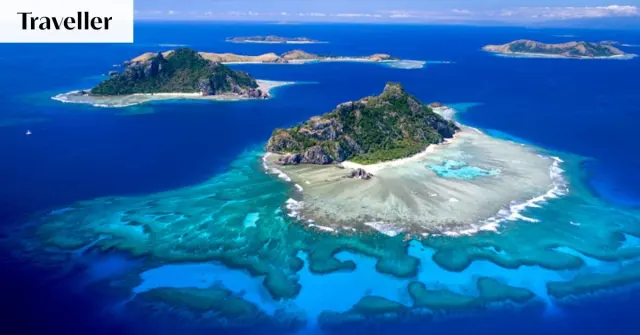
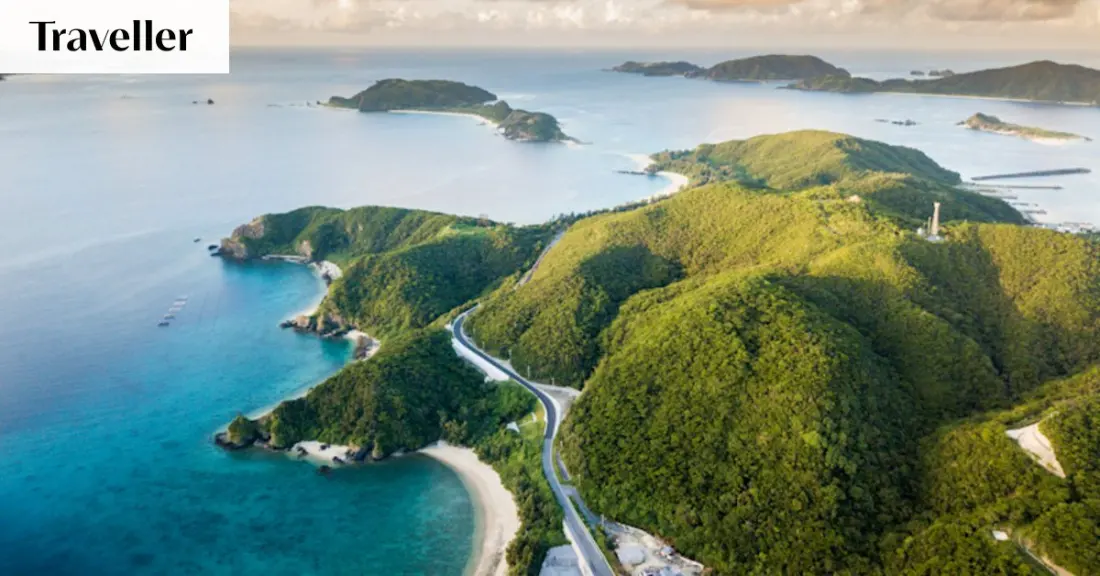
The Miyako islands are the postcard moment. The water is so improbably blue it has its own name — "Miyako blue" — and the Irabu Ohashi bridge, Japan's longest toll-free bridge, carries you to tiny Irabujima, where turtles paddle below and an observation deck shaped like buzzard wings sits 80 metres above the sea. The final call, Ishigaki, nearly ended in chaos when an 8.2-magnitude earthquake off the Philippines triggered a nationwide tsunami alert; the ship headed for deep water for several hours before Ishigaki was given the all clear.
Why it matters: Japan's island south is a genuinely different holiday from the golden route of Tokyo and Kyoto, and a cruise is one of the few practical ways to string these scattered islands together. Ponant's Odyssey in the Heart of Japan's Subtropical Islands alternates between Osaka and Keelung, Taiwan, with the next sailing on September 20, 2027, from $12,290 a person. Just be prepared for the itinerary to bend around the weather — that's half the story.
Traveller (Sydney Morning Herald)