
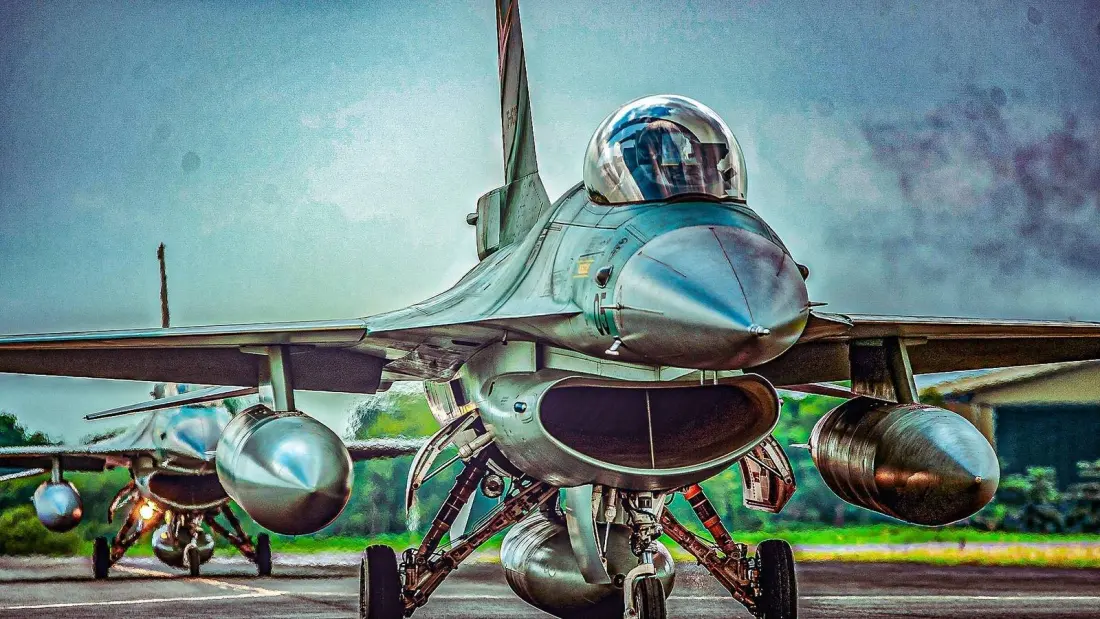
Some US military air bases are so large they swallow entire counties. Naval Air Weapons Station China Lake in California's Mojave Desert tops the list at roughly 1.1 million acres (445,000 hectares) — bigger than Rhode Island and the Navy's largest single landholding anywhere in the world. The base, spread across Kern, San Bernardino and Inyo counties, is where the Naval Air Warfare Center Weapons Division develops and live-tests air-launched missiles and electronic-warfare kit. Test squadrons VX-9 and VX-31 fly F/A-18s and F-35Cs there, but around 95 percent of the land is untouched desert, kept empty because weapons testing demands safety distances measured in miles, not metres. A 7.1-magnitude earthquake in July 2019 damaged thousands of structures on site, a reminder of how much infrastructure sits across this seismically active stretch of desert.
Second place goes to Eglin Air Force Base in the Florida Panhandle, the largest Air Force installation in the world at over 464,000 acres (187,800 hectares). It wraps around Choctawhatchee Bay near Valparaiso and Fort Walton Beach and shares its runway with the civilian Destin-Fort Walton Beach Airport (VPS). Founded in 1935 as a training field, Eglin is now the Air Force's hub for weapons and munitions testing, home to F-35A training squadrons and research into hypersonics and military AI, supporting close to 20,000 personnel.
Edwards Air Force Base, third at around 308,000 acres (124,600 hectares), is America's proving ground for experimental flight. Built around the hard-packed Rogers Dry Lake, which acts as a natural landing surface in almost any direction, it hosted Chuck Yeager's sound-barrier-breaking Bell X-1 flight in 1947 and later served as a Space Shuttle landing site. NASA's Armstrong Flight Research Center shares the base, and nearby North Base and Plant 42 in Palmdale have sheltered classified programmes like the U-2 and F-117.
Further down the list, Vandenberg Space Force Base on California's Central Coast covers about 99,600 acres (40,300 hectares), including 35 miles of Pacific shoreline — space needed for rocket-launch exclusion zones and habitat protection rather than buildings. Holloman Air Force Base near Alamogordo, New Mexico (59,639 acres) mixes MQ-9 Reaper training with a high-speed rail test track for ejection seats and sensors, while Kirtland Air Force Base on the edge of Albuquerque (44,052 acres under Air Force control) handles nuclear weapons storage and directed-energy research.
For context, Travis Air Force Base — one of the Air Force's busiest transport hubs — covers just 6,258 acres. Size on this list tracks mission, not headcount: flight testing, live weapons work and rocket launches all need vast buffers, which is why these installations dwarf normal airports.
Why should a traveller care? Several of these giants sit alongside airports and destinations you might actually visit: Edwards neighbours the Mojave's aviation sites, Kirtland shares runways with Albuquerque's main airport, and Eglin borders Florida's Emerald Coast beaches. Vandenberg even runs public rocket-launch viewings, and Edwards' lakebed is visible on the drive to Las Vegas or LA. For aviation geeks, these are the backdrops to some of the biggest moments in flight history.
Via Simple Flying.