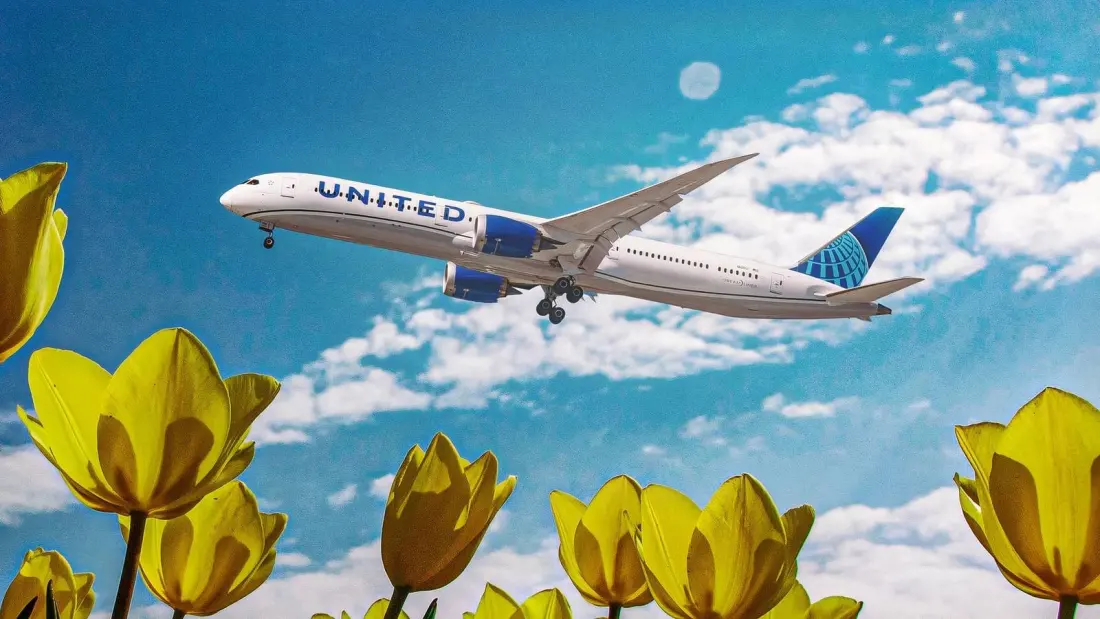
Kenya has just one nonstop link to North America today: Kenya Airways' Nairobi–New York JFK service, running since 2018. Now an airline network specialist argues United Airlines should break that monopoly with a route from Washington Dulles (IAD) to Nairobi's Jomo Kenyatta International Airport (NBO).
Behramjee Ghadially, a senior network planner and African aviation analyst, made the case to Simple Flying. The numbers behind it are compelling. In 2025, roughly 498,000 passengers travelled between the US/Canada and Kenya, and just over 50,000 round-trip local passengers flew between Dulles and Nairobi indirectly. Today they connect through Addis Ababa (Ethiopian Airlines, 18% of that traffic), Doha (Qatar Airways, 16%), Paris or Amsterdam (Delta, Air France or KLM, 11%), Frankfurt (United or Lufthansa, 10%) and Dubai (Emirates, 9%). Ghadially believes a nonstop service could stimulate demand by 35% or more.
The economics look promising too. The average one-way fare on the route last year was $933 excluding taxes, and premium travellers — think safari-bound high-net-worth tourists, plus US government and corporate traffic — would pay extra to skip the layover. Belly cargo would likely be full in both directions, adding revenue on top.
His proposal: three weekly flights starting winter 2027 on a Boeing 787-9, covering 6,585 nautical miles with an estimated 15.5-hour block time on the westbound leg. One dedicated aircraft would cover the schedule, and beyond Washington the route would feed connections across the US — with Minneapolis-St. Paul flagged as especially valuable. It's the third-largest US-Nairobi market (49,000 passengers in 2025) and, notably, Kenya Airways doesn't codeshare with Delta on the JFK–Minneapolis leg. New York (85,000 passengers), Toronto, Dallas, Seattle, Boston and Los Angeles round out the main connecting markets.
The biggest loser if the route launches would be Star Alliance partner Ethiopian Airlines, whose Addis Ababa detour currently carries Nairobi as its largest Dulles connecting segment. Even so, Ghadially doesn't expect lasting damage — Addis–Washington is a strong market in its own right at 49,000 passengers in 2025, and Ethiopian has plenty of African and South Asian routes to absorb any shift.
Why should travellers care? If United greenlights the route, a one-stop-free option between the US East Coast and East Africa's safari capital could shake up fares on what is currently a pricey, connection-heavy corridor. For anyone planning a Kenya trip from the US, competition on this route would be welcome news — and safari-goers, in particular, tend to pay up for the convenience. Whether United actually launches it remains to be seen; the suggestion is exactly that, a well-argued proposal rather than a confirmed route. But with United already the second-largest US operator to Africa behind Delta, running six routes from Newark and Dulles hubs, the appetite for growth on the continent is clearly there.
Story via Simple Flying.