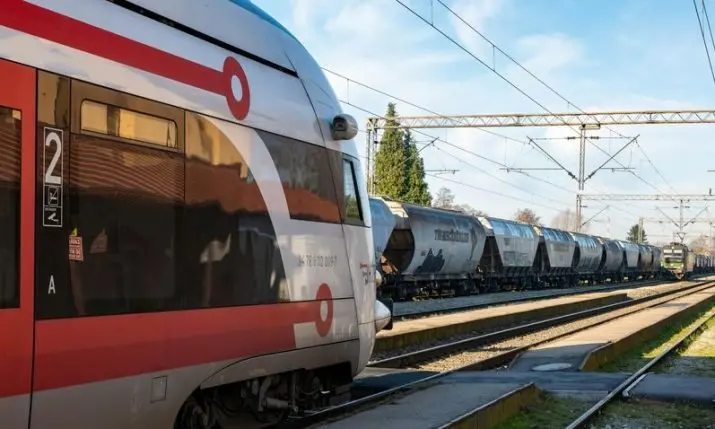
Train travel in Croatia has long been the slow option — scenic, sure, but hamstrung by speed restrictions on 237 kilometres of track. That's now set to change. Zagreb has unveiled plans to pour roughly €6 billion into the railway network by 2035, the biggest rail investment push in the country's history, on top of more than €2 billion spent over the past decade.
The scale of the problem first: Croatia has 2,617 kilometres of rail, but only about 400 are double-track and 166 kilometres aren't in service at all. Speed limits — mostly tied to worn infrastructure and ongoing works — hit some of the busiest routes hardest. In 2025 and 2026, the worst delay offenders were Zagreb–Koprivnica, Zagreb–Osijek and, crucially for holidaymakers, Zagreb–Split.
The upgrade plan sets targets of 160 km/h on international routes, 120 km/h on regional lines and 80 km/h local. Just as important is double-tracking: on single-track sections, trains constantly wait in loops for oncoming traffic, which can add hours. New second tracks should quietly do as much for journey times as faster engines.
Some projects are nearly done. The Dugo Selo–Križevci section is 99% complete after a rocky run that included the contractor DIV Grupa being dropped from the consortium in 2024, with Dalekovod stepping in. The Križevci–Koprivnica–Hungarian border line should finish construction this year, with speeds ramping up towards 160 km/h from the 2026/27 timetable. Next up is a contract worth almost €700 million for Dugo Selo–Novska, which would be Croatia's largest single railway project, plus the Hrvatski Leskovac–Karlovac rebuild (44 kilometres, new track, electrification, new stations) due in 2029.
The bigger prize is the "lowland railway" towards Rijeka — new sections from Karlovac to Skradnik and on towards the coast, with permit applications expected by end-2026. That's the link that would eventually slash train times between Zagreb and the Adriatic, good news for anyone who'd rather skip the summer traffic on the A1 and roll into Kvarner by rail. Smaller regional lines aren't forgotten either: work is under way on Knin–Zadar, the Čakovec–Varaždin corridor, routes in Istria and several Slavonian branches, backed by €1.4 billion planned for 2026–2028.
Caveats apply. The ministry openly lists the drag factors: slow permitting, property disputes, a shortage of designers and the tricky business of rebuilding lines while trains keep running. Everything currently in the pipeline is slated for completion by 2035, so this is a story of gradual improvement rather than an overnight transformation. For now, treat Croatian rail as improving but still patience-testing — check timetables, allow buffer time for connections, and expect the Zagreb–Rijeka and Zagreb–Split rides to get genuinely competitive later in the decade.