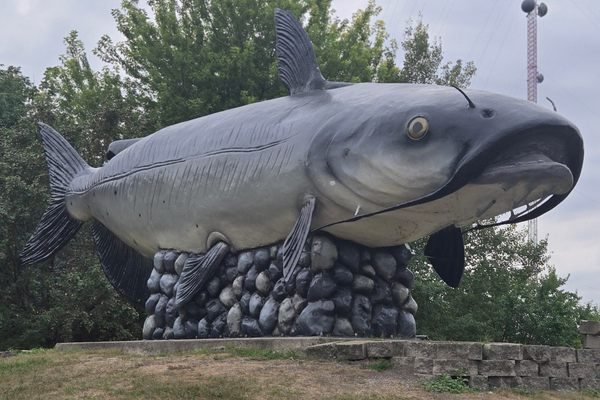
In Wahpeton, a small city on North Dakota's southeastern edge, the biggest catfish in town never actually touches the water. It's bolted to a concrete pedestal on the riverbank: Wahpper, a 40-foot-long, 12-foot-tall fiberglass giant weighing roughly 5,000 pounds, billed as the world's largest catfish sculpture.
The name is a wink — a mash-up of Wahpeton and the classic angler's excuse for the one that got away. Sculptor Dave Oswald, the man behind other upper Midwest icons including Salem Sue, the giant dairy cow at New Salem, built the fish in 1997. Local businesses, the Wahpeton Park Board, and the town's visitors committee split the bill, which came to about $12,000 — a bargain for roadside immortality. When the sculpture was unveiled on August 3, 1997, hundreds of locals turned out and celebrated, fittingly, with a community fish fry.
The setting is no accident. Wahpeton sits where the Bois de Sioux and Otter Tail rivers meet to form the Red River of the North, which flows north into Canada. That river is famous among anglers for trophy channel catfish, and real ones — genuine monsters — still cruise beneath the surface. Wahpper is essentially the town's mascot for that reputation.
Here's the fun part: the sculpture occasionally comes alive, sort of. The Red is prone to dramatic spring flooding as snowmelt rushes downstream, and in high-water years the river rises to wrap right around Wahpper's pedestal. For a few days each spring, the giant fish appears to be swimming across a submerged floodplain — a photo opportunity you won't find at many roadside attractions.
Wahpper also has a rival. About 900 miles east, in Dunnville, Ontario, Muddy the Mudcat stretches 50 feet and dates to 1983, giving Canada a claim on the longest catfish statue. Wahpeton's defenders counter that Muddy is a cartoonish figure, while Wahpper wins on weight, volume, and anatomical realism. The title fight remains unresolved, and honestly, visiting both is the only fair way to judge.
Wahpper lives in Kidder Recreation Area, free to visit year-round from dawn to dusk, with a paved path leading right up to it. The park also offers seasonal camping, boat landings if you want to catch a real catfish, picnic shelters, and riverside walking trails. One caveat: if you're passing through in late March or April, check Richland County flood notices first — high water can close access roads and trails just when the fish looks its most lifelike.
For road-trippers crossing the northern plains, this is exactly the kind of odd, lovable detour that breaks up a long drive: a two-and-a-half-ton fish, a flood-prone river, and a town that fried up a feast to celebrate a statue. Bring a camera, and if the timing's right, a fishing rod.