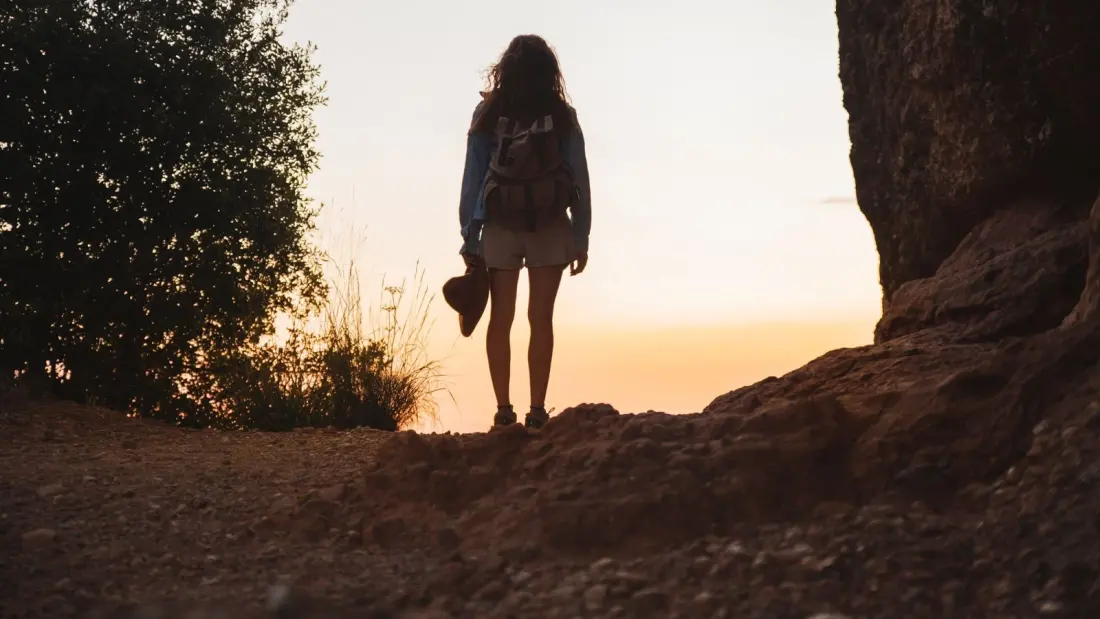
After nearly two decades and 75 countries, one veteran solo traveller has survived a knife assault on a trail in South Africa's Table Mountain National Park and a charge from a mother black bear while hiking alone in Montana. Her conclusion? Keep going — but change how you think about risk.
Her story isn't as rare as it should feel. This summer alone, a 27-year-old mother was slashed by a stranger on the Havasupai Trail near the Grand Canyon, a trail runner in Alaska's Chugach State Park had to self-rescue after a brown bear encounter, and 26-year-old Australian tourist Sally Grace Contarino went missing in Las Vegas in June after texting friends she was heading up Lone Mountain. For women travelling alone, weighing danger is a more complicated equation than for most.
What makes this piece worth reading is the practical playbook the writer has built. In Transnistria — the breakaway region near Ukraine with a Level 3 Travel Advisory — she paid for a security-staffed hotel instead of a cheaper Airbnb, hired a private guide and driver rather than using public transport, and shared her live location with family. She skipped souvenirs and spa days to fund the peace of mind. Elsewhere she's learned harder lessons: rip currents on a remote Nicaraguan beach, luggage and $600 cash stolen from a rental car in Spain's Teide National Park, and a costly tow-truck call in Montana's Beartooth Mountains.
Her current kit is simple and adaptable. A keychain personal alarm replaces pepper spray (TSA-friendlier, and screaming is what drove off her attacker in South Africa). Two cans of bear spray come on every hike. Phones and SOS-capable smart watches stay charged and on-body. Flights only get booked when the budget stretches to a safe neighbourhood. And the biggest rule: never override your gut. Moments before her South Africa attack, something felt off about a stranger on the trail — she kept walking toward him rather than seem rude.
Experts back the mindset. Nicole Snell, CEO of Girls Fight Back, teaches outdoor self-defense for hikers and trail runners and points out that statistically, repeat attacks like the Havasupai incident are unlikely. Counsellor Katie d'Autremont distinguishes between what's possible and what's probable — you could fall into a pool walking its edge, but you probably won't. Her takeaway: there's something genuinely empowering about navigating uncertainty rather than waiting for a world that will never feel completely safe.
For anyone hesitating over a first solo trip — or returning to travel after a bad experience — this is a realistic middle path between naive optimism and staying home. Assess the actual odds, prepare for the ones that matter, and trust your instincts when they fire. The writer has now reached all seven continents, and her verdict is that the rewards still outweigh the risks.