Costa Rica sells the dream easily — surf towns like Tamarindo, hillside homes in Escazú, a rental car with a surfboard in the back. The paperwork tends to show up later, usually at a property closing or a residency application. A recent explainer from Howler Costa Rica lays out the tax basics, and the headline is that there's no single answer: a two-week tourist, a remote worker and a Nosara restaurant owner face completely different obligations.
Costa Rica traditionally uses a territorial tax system, meaning income generated from a Costa Rican source is what generally gets taxed locally. That's a big part of the country's appeal for retirees and location-flexible workers. But territorial doesn't mean obligation-free: rent out a villa, run a business, or work remotely through a local setup and taxes can apply. US citizens and green card holders keep their worldwide US filing duties no matter where they live.
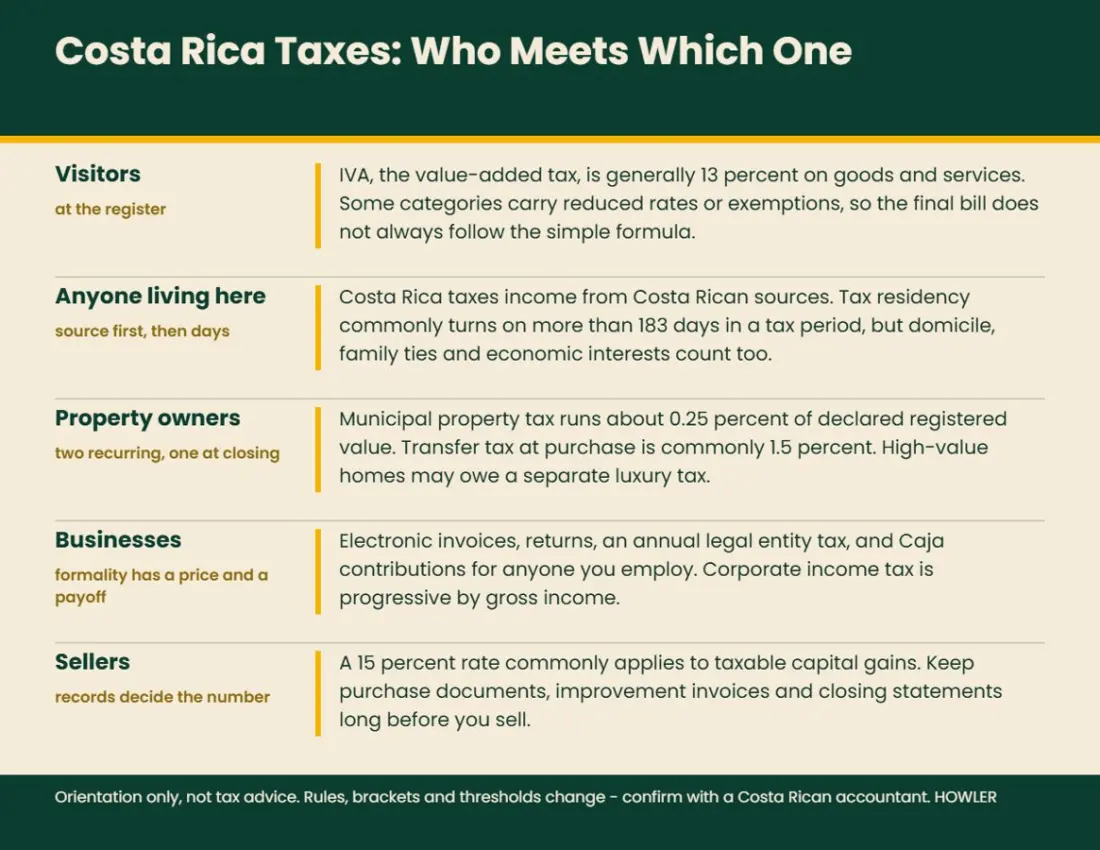
For visitors, the main encounter is IVA, the value-added tax, generally 13% on many goods and services — hotels, restaurants, tours, rental cars. Reduced rates and exemptions exist, so menu prices and final bills don't always match. Service charges can also appear at hotels and restaurants. Drivers should know about the Marchamo, the annual vehicle charge that includes compulsory insurance.
Property owners pay a municipal property tax of roughly 0.25% of the declared registered value. Qualifying high-value homes may owe a separate luxury home tax with a periodically updated threshold. At purchase, the transfer tax commonly runs 1.5%, with legal, notary and registry fees on top — buyers typically cover many closing costs by custom. Selling later? A 15% capital gains rate commonly applies to taxable gains, and improvement invoices can affect the final number, so keep records.
Residency is another area where beach-café advice gets expensive. Immigration residency and tax residency aren't the same thing. The commonly referenced threshold for tax residency is more than 183 days in a tax period, with domicile, family and economic ties also counting. Someone taking several long stays a year can build stronger ties than they realise.
Anyone running a business faces progressive corporate income tax, an annual legal entity tax, electronic invoicing requirements and payroll contributions to the Caja social security system. The consistent theme: formality pays. Clean books build credibility with banks and customers, while informal rentals can turn into a problem later.
For travellers, the takeaway is simple — budget the 13% and ask whether it's included in quoted rates. For anyone dreaming of buying property, renting out a home or relocating, the advice is to talk to a Costa Rican accountant and attorney plus a home-country adviser before signing anything. Rules and brackets change, and the cross-border picture rarely fits in one head. Full details come from Howler Costa Rica.