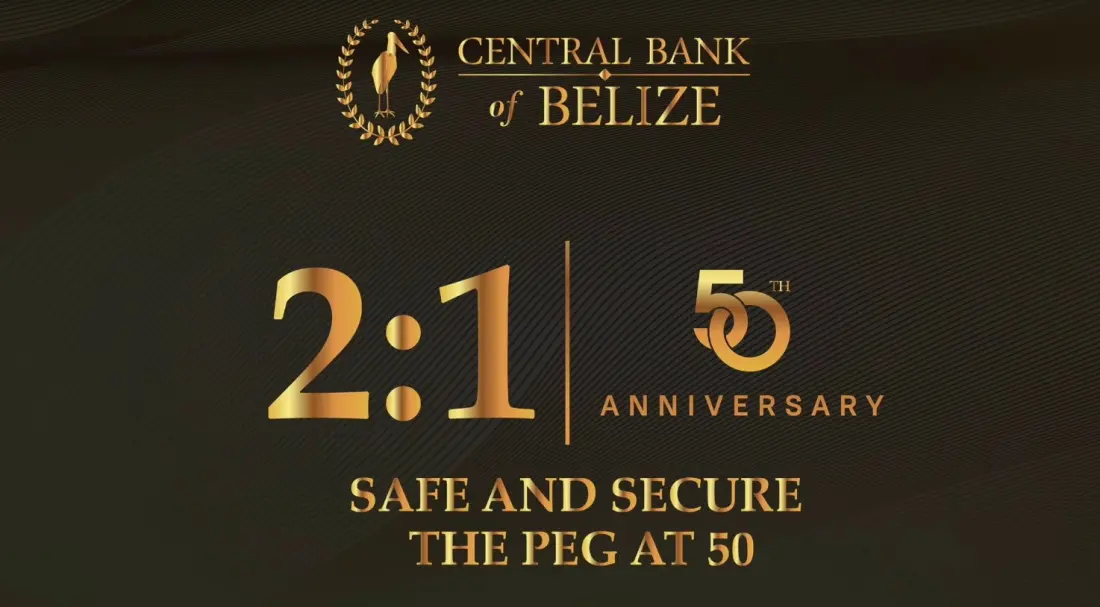
Belize has just celebrated a quiet but significant anniversary: fifty years of the Belize dollar holding steady at two to one against the US dollar. The Central Bank of Belize marked the milestone at an event on September 23rd, looking back at a peg adopted on May 11, 1976 and still intact today.
For visitors, this is one of the more traveller-friendly currency arrangements in the region. Whether you're paying for a snorkel trip off Ambergris Caye, a room in Placencia or groceries in a village shop, the mental maths is simple: whatever the price in Belize dollars, halve it and you have the US figure. No fluctuating conversions, no guessing whether today's rate differs from last week's.
The stability didn't come out of nowhere. Central Bank Chief Economist Emory Ford told the anniversary event that the peg has survived because of the institutions built to protect it. Under the old currency board, reserve assets had to back about 100% of currency in circulation; the requirement dropped to 50% under the 1976 Monetary Authority Ordinance, then to 40% when the Central Bank opened its doors in 1982. The bank still has to hold external assets worth at least 40% of its domestic liabilities, and it manages credit growth specifically to protect those reserves.
The history goes back further than 1976. In 1894, when Belize was the British colony of British Honduras, its currency sat one-to-one with the US dollar. A 1949 peg to the British pound triggered an exchange rate crisis that, Financial Secretary Joseph Waight noted, actually helped fuel the country's nationalist movement. The return to a US dollar link in 1976 was informed, he said, by watching the economic troubles other Caribbean nations ran into. Government Senator Christopher Coye recalled how earlier generations lived without wage or savings certainty during those currency shake-ups. Waight called the two-to-one rate "almost sacred and untouchable" — strong words in central banking.
Why should a traveller care? Because a predictable exchange rate removes one of the annoying unknowns from trip budgeting. You can price out a week of diving, inland cave tubing and beach time months in advance and know the numbers will still hold when you land. The Central Bank frames the peg as an anchor for trade, investment and pricing, and that predictability filters down to tour operators, hotels and restaurants alike. Many tourism businesses quote prices in US dollars anyway, so the peg keeps the two currencies interchangeable in everyday practice.
Officials were careful to note the anniversary isn't just a pat on the back. Keeping the rate fixed for another fifty years depends on fiscal discipline, healthy foreign reserves and confidence in the institutions running monetary policy — especially through external shocks like hurricanes and global downturns. But for now, the practical takeaway for anyone planning a Belize trip is refreshingly simple: the rate you see is the rate you get, and it has been that way for half a century.