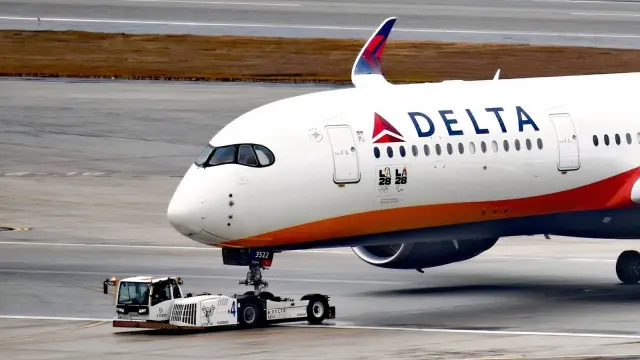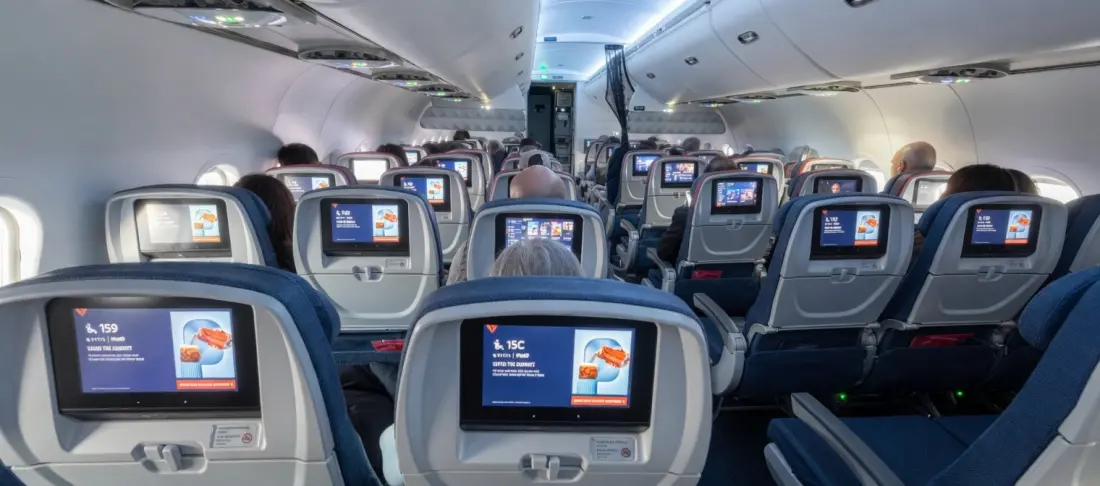
Delta passengers may be waiting years for the fast wifi that rivals already offer. According to reporting by aviation watcher JonNYC, Delta CEO Ed Bastian told employees at internal events that the airline passed on SpaceX's Starlink — the satellite service now rolling out across much of the industry — because it didn't want to work with Elon Musk. "We do not want to be with Elon Musk. Trust me," Bastian reportedly said, adding at another event: "If you know his reputation, it's all true what they say about him."
The business logic matters as much as the personalities. Starlink's low-earth-orbit satellites deliver notably quick, low-latency internet in the cabin, and installation is fast. United and Southwest are racing through fleet-wide rollouts, American and Alaska are building real coverage, and a long list of international carriers — British Airways, Iberia, Lufthansa, SWISS, Air France, Emirates, Qatar Airways, Korean Air, Virgin Atlantic, SAS and more — have signed up. JSX was actually first out of the gate.
Delta instead chose Amazon's competing low-earth-orbit service. The catch: it won't even enter beta until next year, it's unproven in the air, and Delta only plans to equip roughly half its fleet. The upside for the airline is financial — a cheaper deal, potentially bundled with Amazon content and cloud services, plus the ability to route wifi through Delta's own Sync login portal. And that last point may be the real story. Musk responded publicly that SpaceX refuses to put Starlink behind a portal: the service has to "just work" like home broadband. In other words, Delta may have wanted a gated, logged-in experience that Starlink was never going to allow.
For travellers, the takeaway is simple: if gate-to-gate, genuinely fast wifi influences which airline you pick, Delta will lag its US competitors for the next couple of years, and even then only on part of its fleet. Meanwhile Bastian's remarks weren't all about connectivity — he also claimed Delta would generate about 70% of the industry's profits on roughly 20% market share, a bold estimate given the airline accounted for around 55% in 2025.
Who should care? Frequent flyers who work from the plane, stream on long-haul routes, or simply hate clunky login portals. On United, Southwest, Qatar, Emirates or any of the European carriers adopting Starlink, expect near-instant browsing without signing into anything. On Delta, expect to wait — and to log in when it finally arrives. The spat is a reminder that in-flight internet has become a genuine competitive battleground, and that corporate relationships, not just technology, decide what you get at 35,000 feet.
View from the Wing