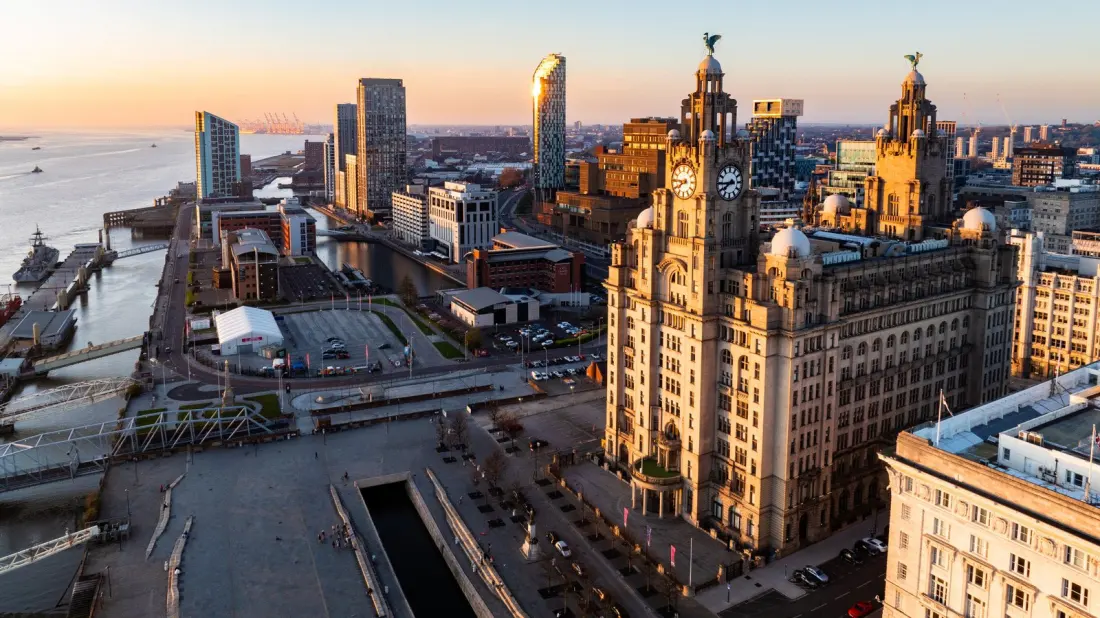
Liverpool is one of England's most characterful cities, and part of that character comes from a set of unspoken rules locals expect visitors to pick up quickly. Get them right and you'll be welcomed like a regular; get them wrong and you'll stand out as a tourist in all the wrong ways.
Start with the trains. The city has two main central stations and mixing them up is a classic rookie error. Liverpool Lime Street is the mainline hub, with direct services to and from London Euston taking roughly two to three hours. Liverpool Central, despite the name, is mostly a Merseyrail commuter station serving places like Chester, Southport and New Brighton. If you're arriving from elsewhere in the country, you want Lime Street.
Next, the accent. The Scouse accent, whose name reportedly comes from 'lobscouse', a sailor's stew from the city's maritime past, is distinctive and sometimes tricky to follow. Locals are happy to chat, but resist the urge to imitate it, especially if you're from the south of England. Even friendly banter about the accent can land badly from a stranger.
One rule really is non-negotiable: don't buy or bring up The Sun. The newspaper's false reporting after the 1989 Hillsborough disaster, in which 97 Liverpool fans died, cemented a decades-long citywide boycott that persists despite a 2004 apology. You'll see references to 'The S*n' on signs and shirts, and 'Never Forget the 96' remains a common phrase. Visitors should simply steer clear.
Quirkier customs exist too. Men wearing visible white socks risk some light-hearted ribbing on streets like Bold Street — a local in-joke that may be fading but hasn't disappeared. Meanwhile, be ready for small talk. Liverpudlians chat in queues, on buses and at bus stops, and thanking the bus driver is standard manners. If a stranger strikes up a conversation, it's friendliness, not a scam.
If your trip overlaps with the Grand National meeting at Aintree in April, Ladies' Day on the Friday is a spectacle — locals treat it as Liverpool's answer to the Met Gala, with elaborate hats and race-day finery. Tickets run from around £50 to over £1,000 depending on hospitality.
Pub culture has its own code. At a busy bar, don't form a neat queue; find a spot at the counter and wait your turn, letting anyone who was there before you order first. Know your round before you reach the bar, or the bartender will move on.
Finally, don't stay confined to the centre. The walkable core packs in the Royal Albert Dock, the Beatles Story and the Anglican Cathedral tower views, but outer neighbourhoods and easy day trips by Merseyrail are half the point of coming. Note that the International Slavery Museum and Maritime Museum are temporarily closed for refurbishment, so check ahead.
Liverpool rewards travellers who meet the city on its own terms — warm, direct and fiercely proud of its history.
Original source: Islands