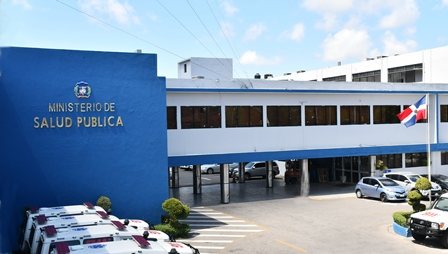
If you're flying into Punta Cana, Santo Domingo or any other Dominican gateway in the coming weeks, you may notice health screening getting a little more attention at arrivals. The Ministry of Public Health has stepped up epidemiological surveillance at the country's airports, ports and land border crossings as a precaution linked to a health incident under investigation in Russia.
Here's the background: a worker at a Russian research institute has died, and authorities there are still working out the cause. As of 7 October, there has been no confirmed link to pneumonic plague, though the possibility is being examined. The World Health Organization is following the case and has asked Russia for more information.
Pneumonic plague sounds alarming, and it is a serious illness — it's caused by the bacterium Yersinia pestis, attacks the lungs and can pass between people through respiratory droplets during close contact. But it's also treatable with antibiotics, especially when caught early. That combination of severity and treatability is exactly why health authorities tend to err on the side of caution with monitoring, even when risk is low.
For the Dominican Republic, that means extra focus on identifying and monitoring travellers arriving from areas considered potentially at risk, so any suspected case could be detected, evaluated and reported quickly under existing protocols. Officials have been clear that these are routine preventive measures, not a response to any case found in the country or any local transmission. They've also stressed there's no reason for alarm.
For context, the Dominican Republic is not a place where plague occurs naturally. According to the Pan American Health Organization, natural plague foci in the Americas exist in Bolivia, Brazil, Ecuador, Peru and the United States — and even that list doesn't mean those countries have active outbreaks, just that the bacterium can exist in the environment there.
What does this mean for your holiday? Practically, very little. If you're travelling to the Caribbean on a beach or city break, none of this changes how you'd plan or enjoy your trip. Screening measures at borders are a normal part of global public health infrastructure and typically invisible to most arrivals unless there's a specific reason to check someone. The ministry says it will keep coordinating with national and international surveillance systems and reassess the risk level if new information emerges.
The broader takeaway for travellers is that health authorities in major tourist destinations monitor global disease events continuously, and precautionary screening is usually a sign of a system working as intended rather than a warning sign. Keep an eye on official travel health advice if a situation genuinely develops, but there's nothing in this story that should alter plans for anyone booked on a Dominican Republic getaway.
Reported by Dominican Today.